NTSB Release Bounty Report

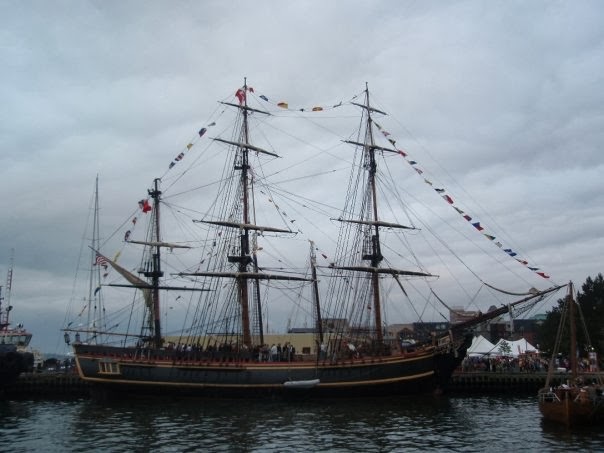
The US NTSB released its report into the Sinking of the Bounty. The Bounty was Built in Lunenburg for the 1962 MGM Movie. You can find all our coverage of the Sinking Here (Above: Bounty from tall ships 2009  Below: from Tallships 2012, 2 months before her sinking)

From the Release:
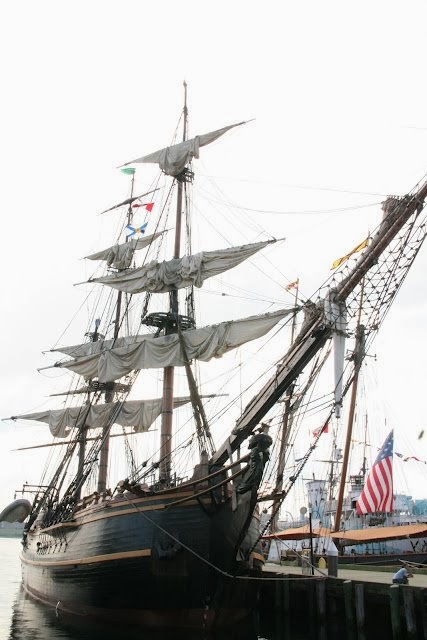
A captain’s “reckless decision to sail into the well-forecasted path of Hurricane Sandy” was the probable cause of the sinking of a ship off the North Carolina coast in October 2012, the National Transportation Safety Board said in a report released today. The captain and one crewmember died in the accident. Three other crewmembers were seriously injured.

On the evening of October 25, 2012, a day after a closely watched developing storm had reached hurricane strength, the 108-foot-long tall wooden ship, the Bounty, set sail from New London, Conn., for St. Petersburg, Fla., into the forecasted path of Superstorm Sandy. The 52-year-old vessel, a replica of the original 18th Century British Admiralty ship of the same name, was built for MGM Studios for the 1962 movie, “Mutiny on the Bounty.”

Prior to setting off from New London, some of the crewmembers had expressed their concerns to the captain that sailing into a severe storm could put all of them and the ship at risk. The captain assured the crew that the Bounty could handle the rough seas and that the voyage would be a success. Just a month earlier, in an interview with a Maine TV station, the captain said that the Bounty “chased hurricanes,” and by getting close to the eye of the storm, sailors could use hurricane winds to their advantage.

The 16-page report details how a mostly inexperienced crew – some injured from falls, others seasick and fatigued from the constant thrashing of 30-foot seas – struggled for many hours to keep the ships engines running and bilge pumps operating so the seawater filling the vessel would not overtake it.
In the early morning hours of October 29, 2012, about 110 miles southeast of Cape Hatteras, N.C., the Bounty heeled sharply to the starboard side after taking on more than 10 feet of water in the final hours of a three and a half day voyage that the NTSB said, “should never have been attempted.”
Despite hurricane winds gusting upwards of 100 mph, the U.S. Coast Guard was able to rescue all but two of the Bounty’s 16 crewmembers by hoisting them from the sea into three Jayhawk helicopters in the midst of the storm. The body of one crewmember was found, still in a protective immersion suit, about 10 hours after rescue operations had commenced. The captain was presumed lost at sea; his body was never recovered.

“Although this wooden ship was modeled after an 18th century vessel, the Captain had access to 21st century hurricane modeling tools that predicted the path and severity of Hurricane Sandy,” said NTSB Chairman Deborah A.P. Hersman. “The Bounty’s crew was put into an extraordinarily hazardous situation through decisions that by any measure didn’t prioritize safety.”

Prior to setting to sea, the Bounty had been in a Maine shipyard for maintenance and repairs, most of which was accomplished by a crew with little experience in such specialized work. One of their tasks was to caulk and reseam a wooden hull, which had known areas of rot, with compounds supplied by the captain, including a silicone sealant marketed for household use.

The entity that owned and operated the ship, HMS Bounty Organization, LLC, did nothing to dissuade the captain from sailing into known severe weather conditions. The NTSB said that such a lack of effective safety oversight by the vessel organization contributed to the sinking.

The entire report is available at www.ntsb.gov/investigations/fulltext/MAB1403.html
Update on AOPS

Today Federal Ministers offered an update on the AOPS Project.
The first 2 of 7 phases of the 288 million definition contract were completed on time and on budget. This contract was announced in March 2013. an additional 2 phases of the 7 phases have now authorized, valued at 53 million. (presumably phases 3 and 4) Phases 3 and 4 Include 

Engineering Design Phase 2 – This task will include the system engineering activities, integrated logistical support analysis and supplier engagement activities that are necessary to demonstrate that the Arctic/Offshore patrol ship design is a complete and integrated solution that meets all the contract design specification requirements with acceptable risk and within the cost and schedule constraints. 

Engineering Design Phase 3 – This task will include the system engineering activities, integrated logistic support analysis and supplier engagement activities that are necessary to demonstrate that the Arctic/Offshore patrol ship design is a complete and integrated solution that meets all of the contract design specification requirements and is ready for the start of vessel construction.

UPDATE: the 2 additional packages authorized were actually 3 and 5, Which are Engineering Design Phase 2 and the Project Implementation Proposal Development. The Project Implementation Proposal Development

Project Implementation Proposal Development – This task will encompass all the procurement, engineering, production and estimating activities required to develop the detailed project implementation proposal, including the required plans and a substantive cost for the implementation contract.

No Number of vessels has been set yet  – So it still stands at the vague 6-8

Fusion at Anchor

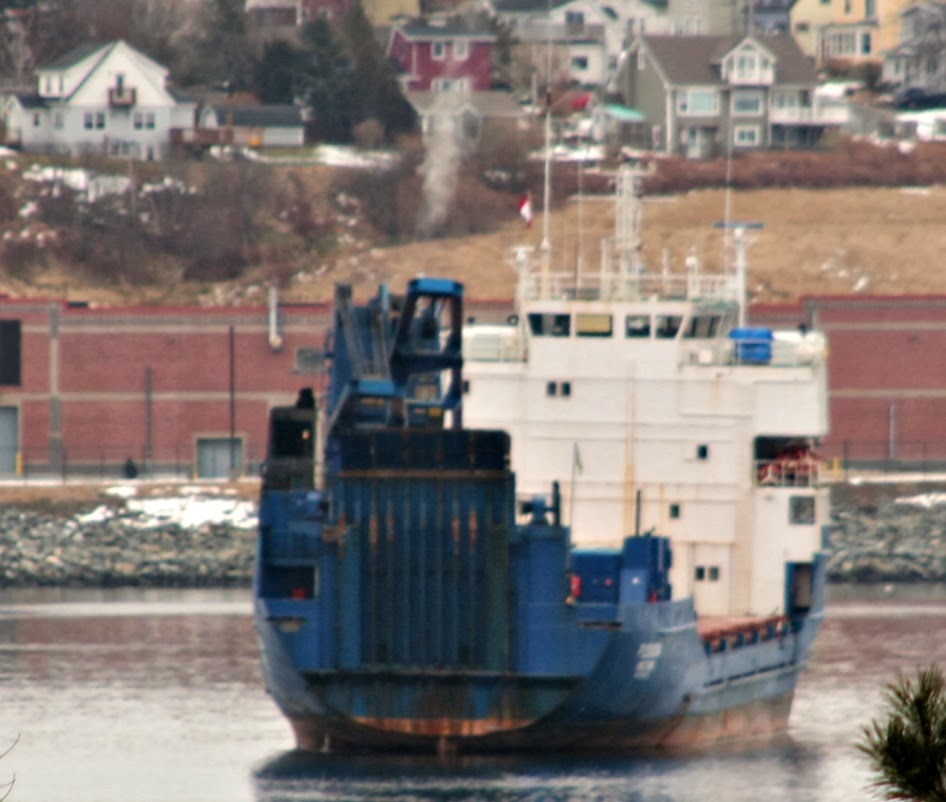
Regular caller Fusion arrived and went to anchor this morning. Her birth at pier 36 was occupied by Oceanex Sanderling. While Sanderling offers regualr service to St Johns NF, Fusion offers regular service the the French Islands of St Pierre and Miquleon, just south of the Avalon Peninsula.

Fusion has holds, and can carry container and RO-RO cargo.

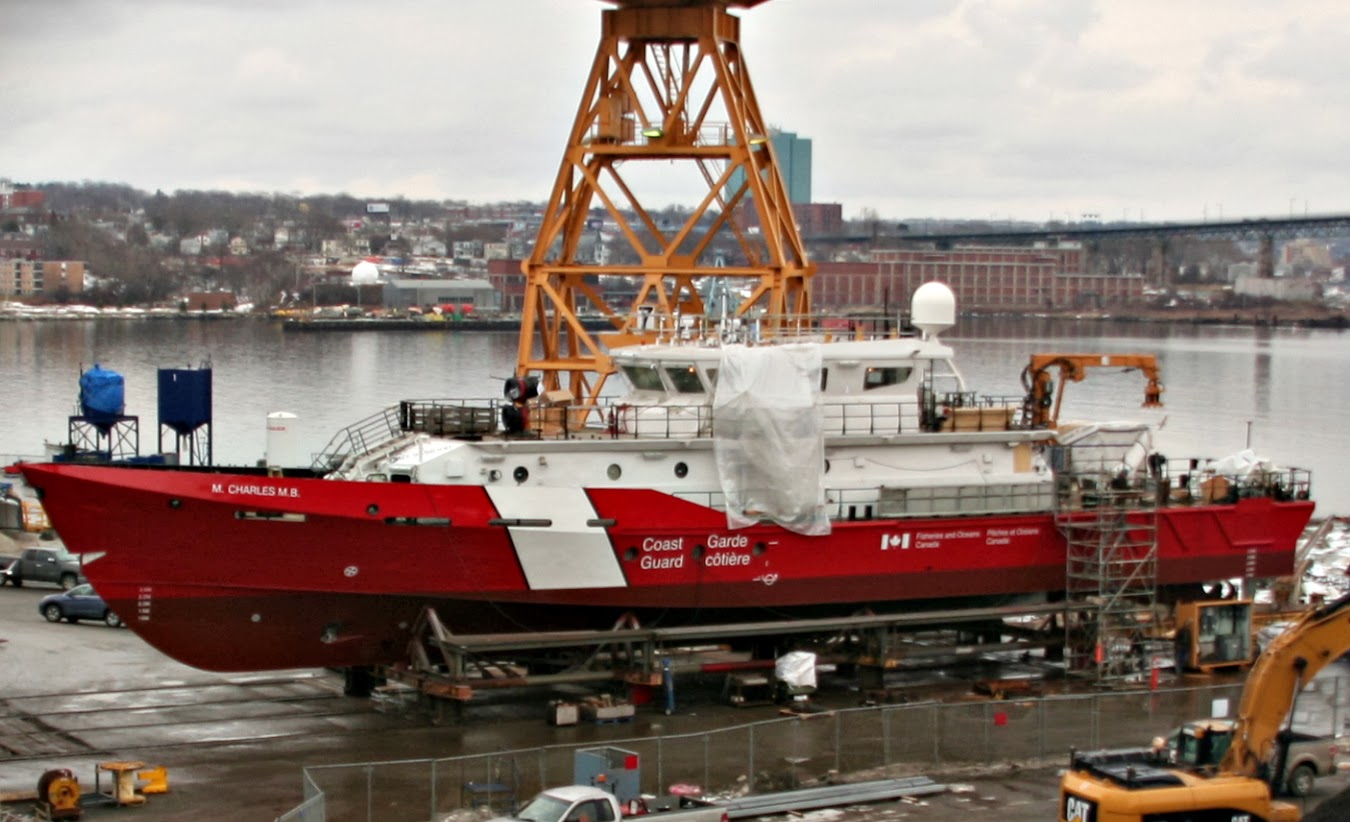
Hero #8 Rolled out – CCGS M. Charles

The second to last hero class vessel was rolled out on the weekend, after the delayed launch of CCGS A. Leblanc occured last weekend.

She was rolled out for painting way back at the Beginning of October. Much work that is normally completed in the yard appears to have been done indoors, inducing installation of the crane on the rear deck, and some antennas and other equipment. Once the mast is installed, launching should occur fairly quickly.

Irma loading Wood Pelets

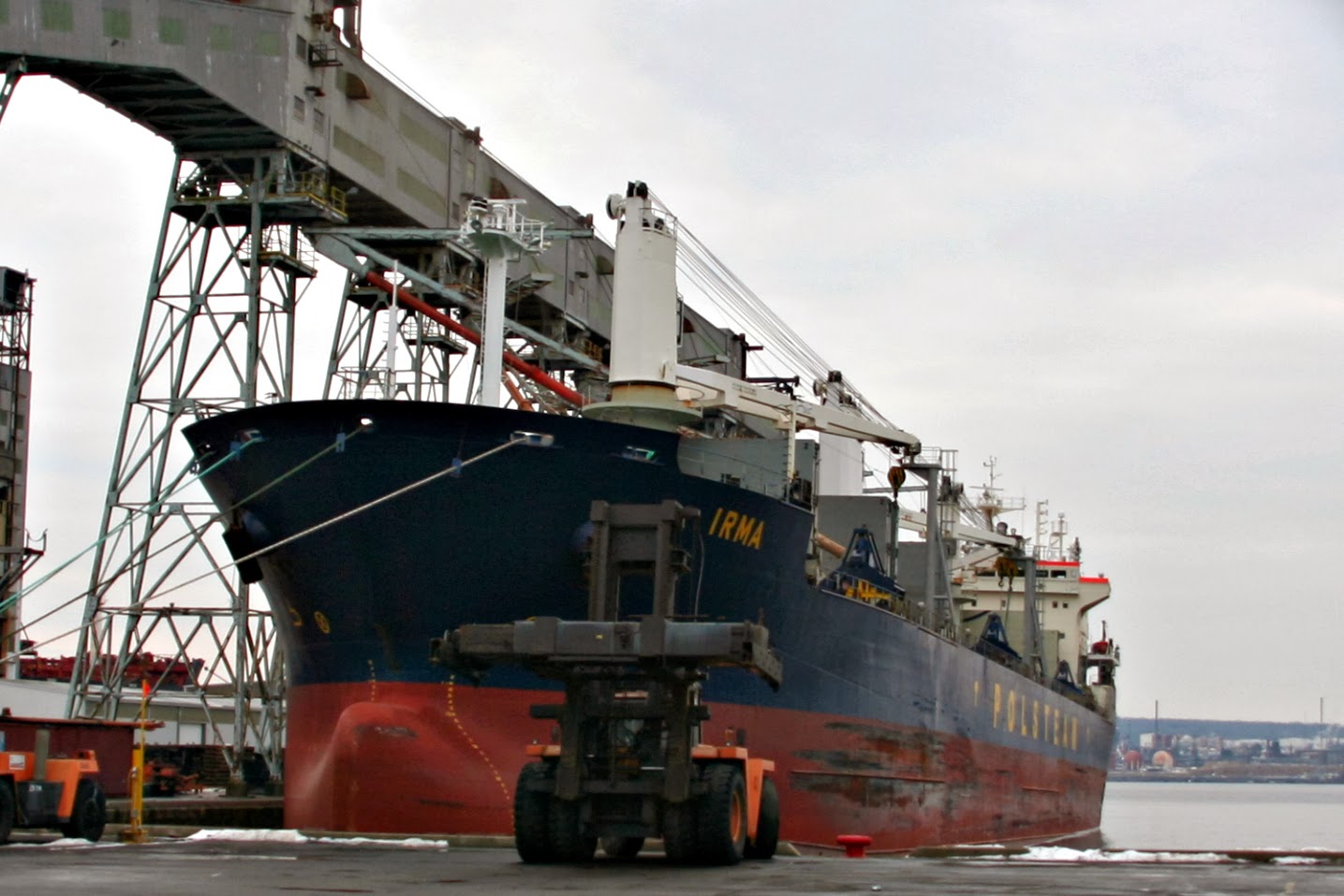
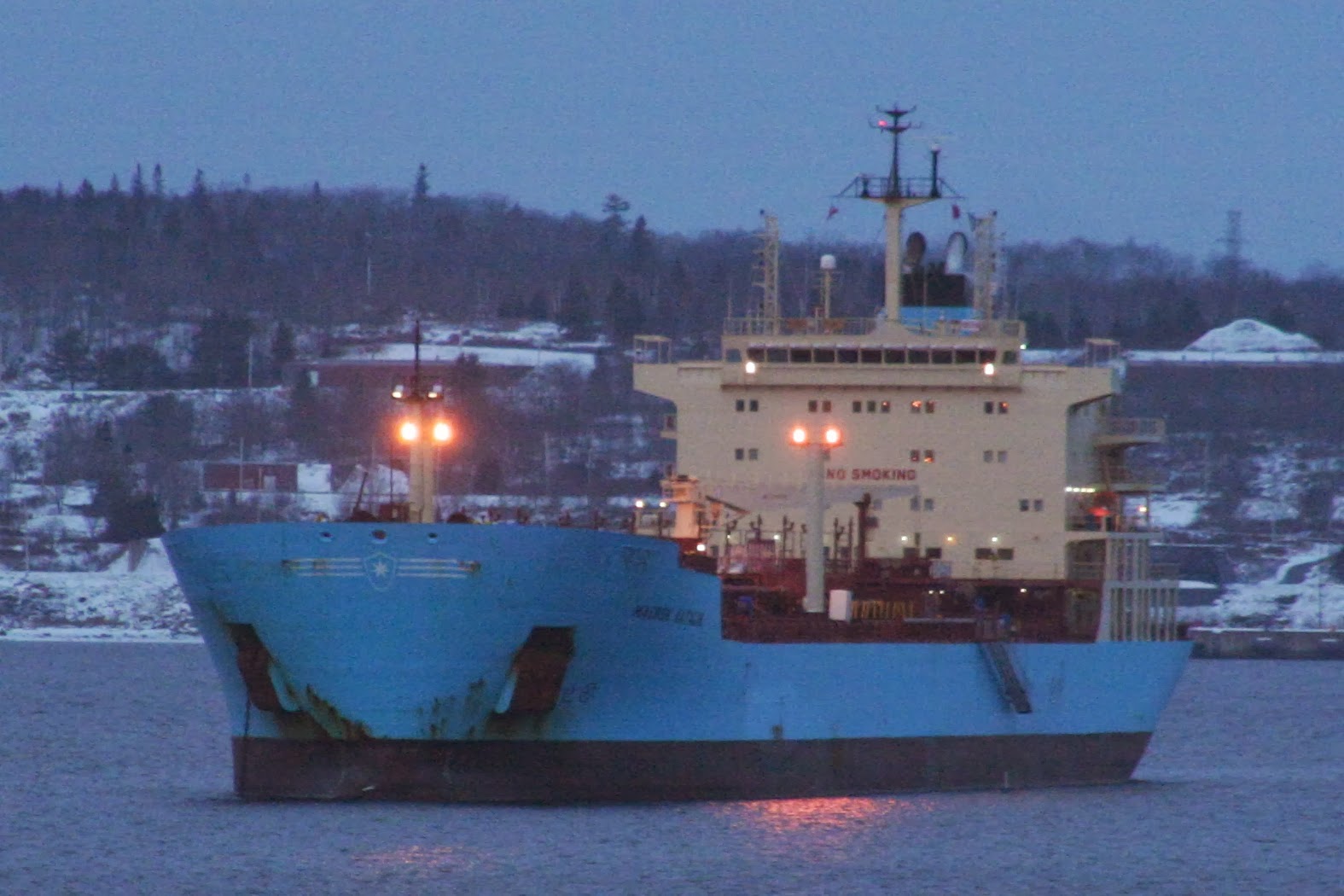
The Bulk carrier Irma arrived this morning for a load of grain. This year was apparently a good year for grain, and ice was causing problems on the seaway before it closed for the winter, potentially requiring changes to shipping arrangements. Draft restrictions usually cause larger bulkers to top up in Halifax, However given how high Irma is out of the water, she is empty.

Update: I received an Email from the the Port Authority. Irma is being loaded with wood pellets, not grain. I was also informed that this is the first shipment of wood pellets in a number of years.


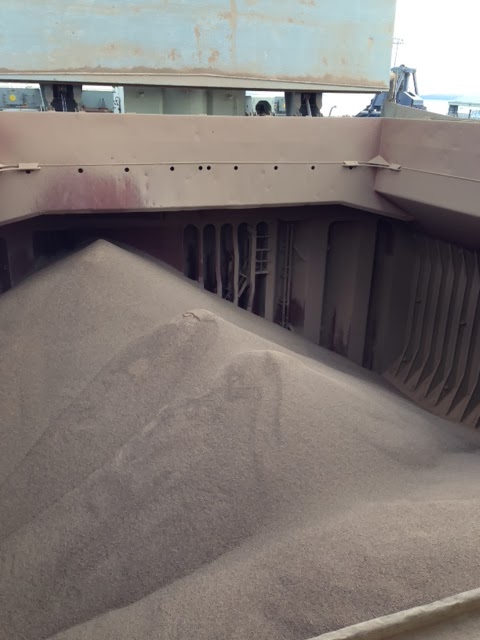
Grain Pellets were flowing from one of the spouts when I was by this morning.  For a View of the process, this post shows the loading of Patron last year.

Addtional Update: The wood pelets in question are from the Scotia Atlantic Biomass Company, which was formed when Viridis Energy acquired a pellet plant that was dormant in 2012. It was renamed Scotia Atlantic Biomass Company Limited and refurbished before opening in September of 2013. The plant is based in Middle Musquoboit, Nova Scotia with storage and port loading facilities in Halifax, Nova Scotia.

In 2013 Viridis signed a contract with Ekman & Co., based in Sweden to distribute our pellets throughout Europe for power generation, district to heating and residential heating. Halifax is just over 3,000 km to Rotterdam, the hub import for Europe. The tremendous location enables the company to take advantage of the rapidly growing demand for pellets in Europe.

Irma is currently loading 25,000 tonnes of wood pellets that are bound for Ghent, Belgium. The value of the shipment is 3-4 million dollars. She is due to Sail on the 5th. (Below our some loading shots, Courtesy of a friendly Longshoreman (thanks!))

Cabot to Pier 9 A

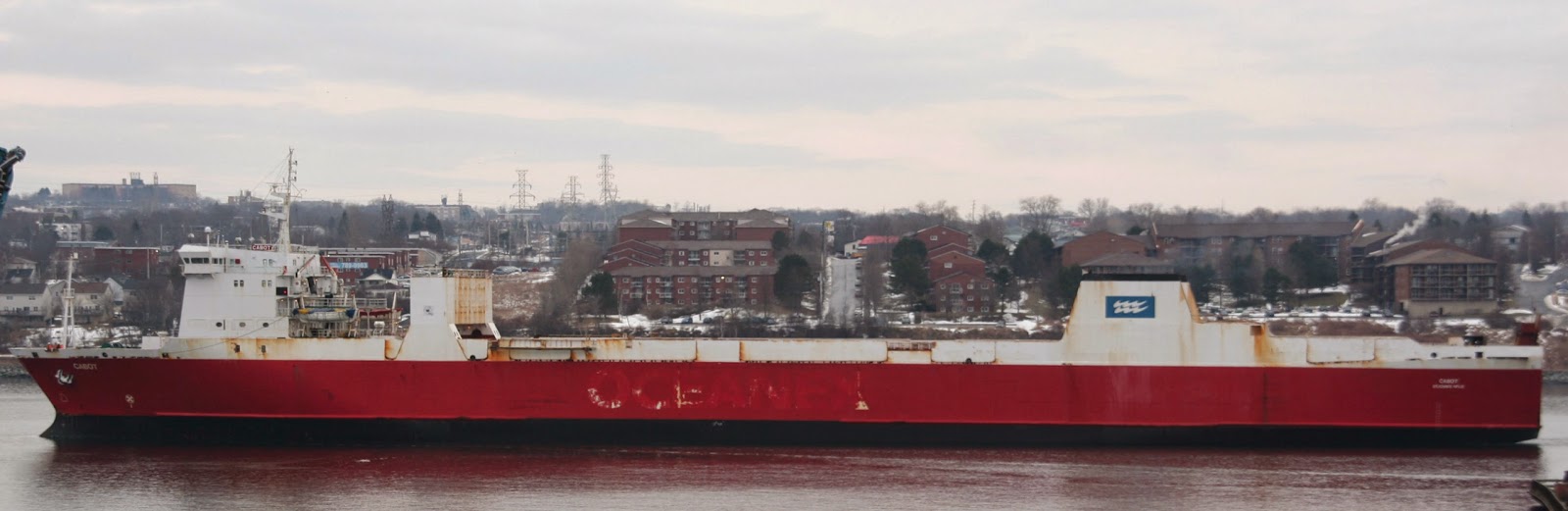
With Oceanex Connaigra back in service after some propeller work in Boston, Cabot can once again go into layup. Cabot normally operated the Montreal – St. Johns route, and is being replaced by the Connaigra. When displaced by Connaigra’s arrival, she laid up in Montreal. it appears she will now spend some time at Pier 9a in Halifax.

Navy Cuts to CFAV Vessels

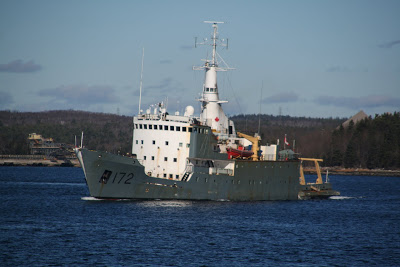
The Navy recently cut service on firebird to normal Business hours, monday to friday. It was also Announced by the CBC that CFAV Quest had the remainder of her sailing days cut for this fiscal year.

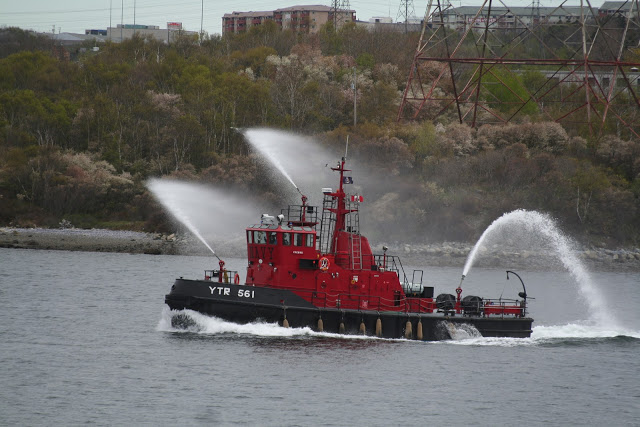
The cancelation of the FireBird evenings and weekends is really not a major issue. Atlantic Oak, and Atlantic Willow, are both equipped for firefighting – in fact – Firebirds days were numbered anyway, and the large tug replacement project specified the new tugs to replace the Glen class had to include fire capability. I am also only aware of her being used once in recent memory – back in 2008.

Quest Supports the work of the Defence Research Establishment. It is likely that Quest will continue to be funded, though out of research budgets of DRDC and not operational budgets of the Navy. DRDC is getting a new building at the French cable Wharf in Dartmouth, and their research activities have expanded in recent years, so it seems unlikely they would be left without a vessel. Given there are only 2 months left in the fiscal year, the number of sailing days cut is probably minimal.