Yearly Archives: 2025

The Ocean is 120

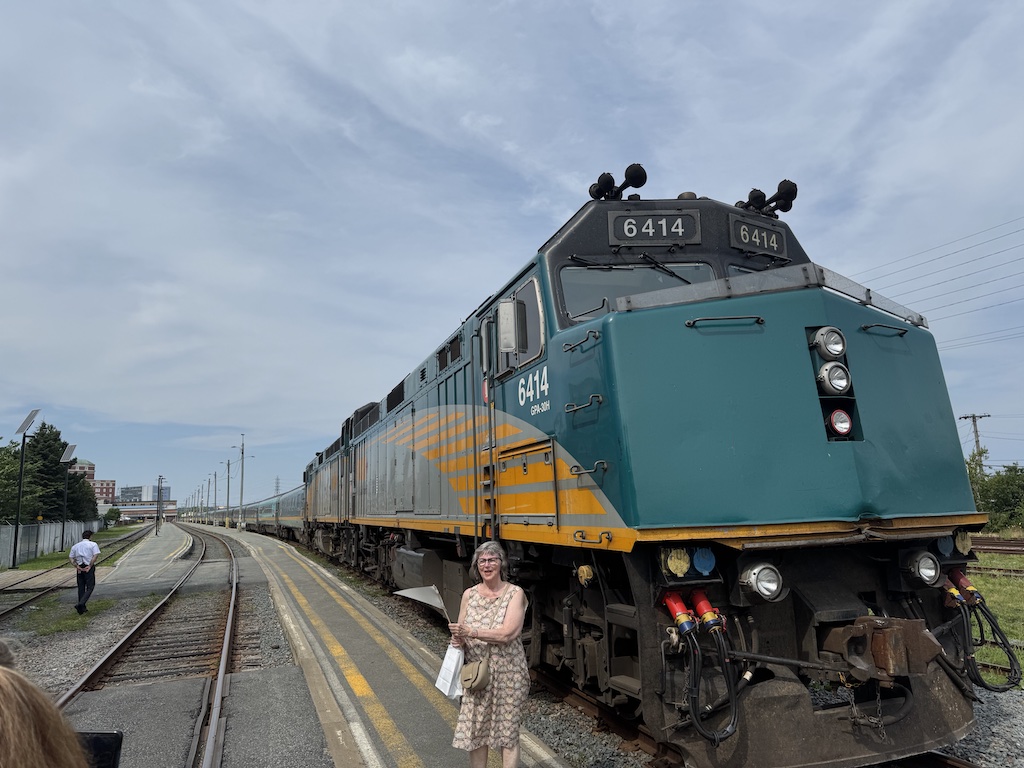
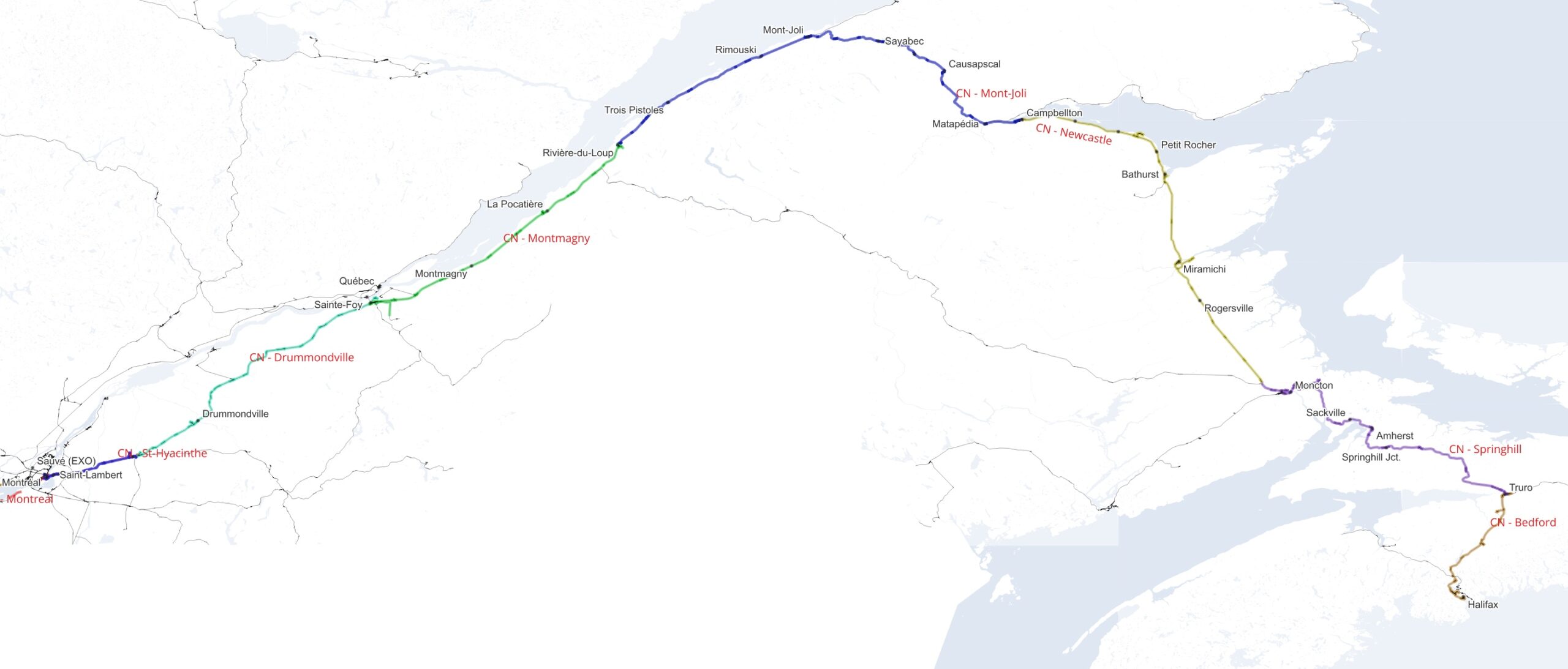
Today VIA Rail hosted in open house to celebrate the 120th year of operation of the Ocean, Making it the Oldest named train in Canada. The train first appeared on Intercolonial railway schedules connecting Halifax to Montreal on July 03 1904.
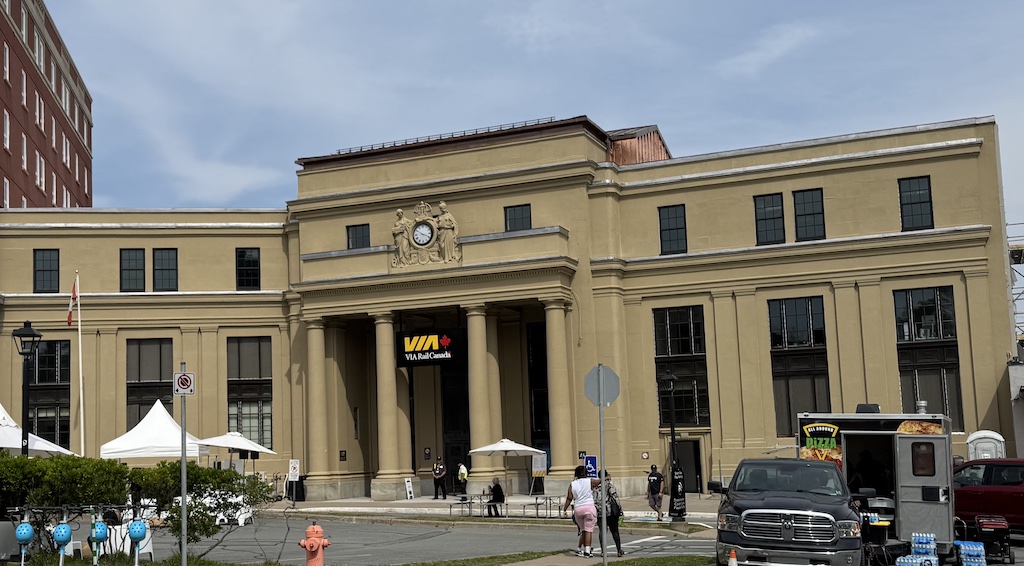
The event also marked the completion of restoration work on Halifax Station. Of note is the return of the clock to the sculpture above the main entrance.
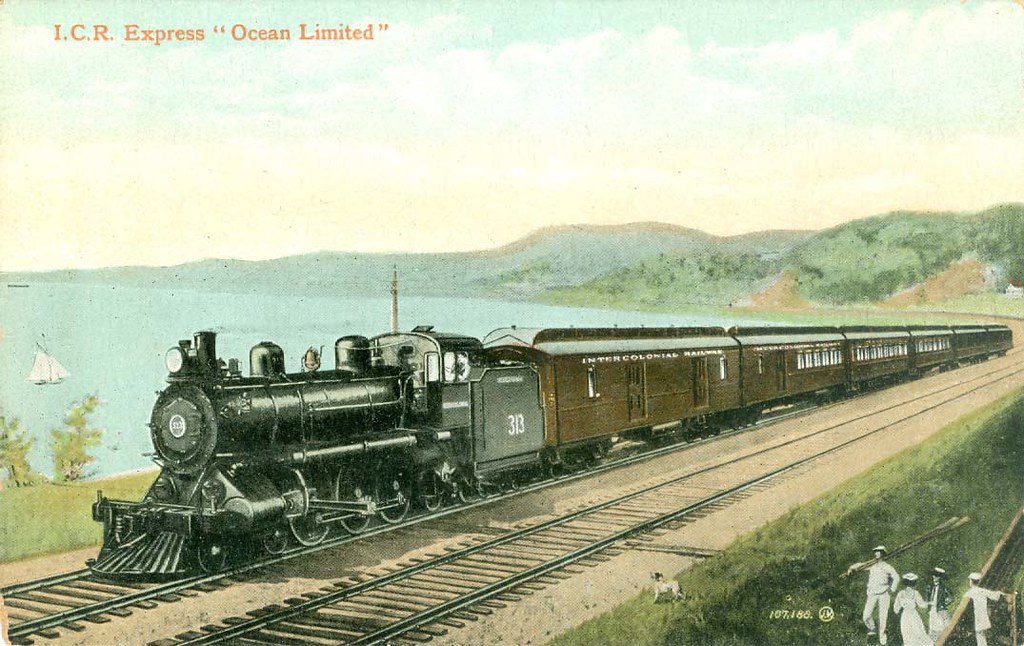
The Ocean Limited began as a summer only train, and its operation was taken over by CN when the ICR was folded into Canadian National in 1918. It Remained, when CN spun off its passenger operations to VIA Rail in 1978.

The Ocean in 1948

The Ocean once ran as a daily train, going down to 3 days a week from 1990-94, it regained a 6 day/week schedule until 2012. it now runs three times per week with a mix of 2000’s Renaissance equipment, and 1950’s Budd stainless steel cars.

The Renaissance equipment was originally built for the the NightStar – a proposed nighttime sleeper train to complement the Eurostar through the Channel Tunnel – the train was cancelled before the equipment was finished, and VIA bought it all. Despite being the newest equipment in the fleet, prior to the entry of the Siemens Venture/Charger sets, The Ren equipment with their European heritage have proven problematic, and they are primed for replacement.
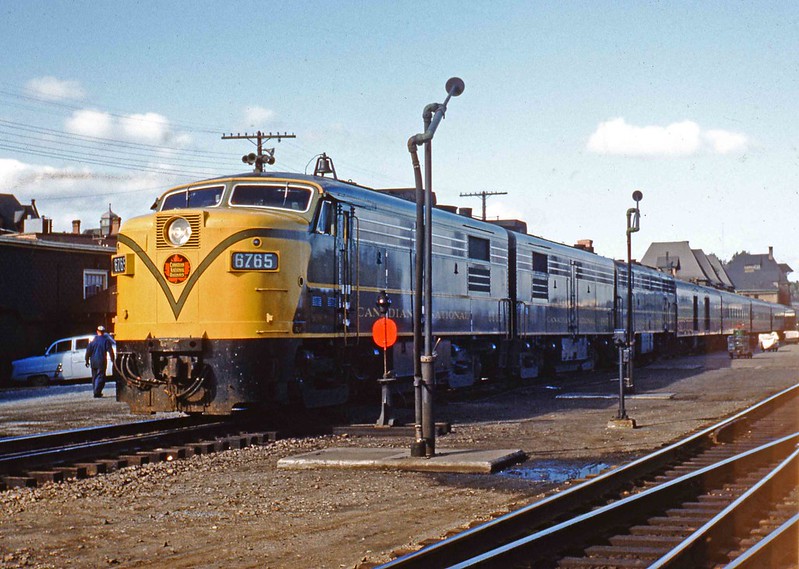
The much older Budd equipment is finally reaching the end of its service life. The fleet was purchased by Canadian Pacific for launch of The Canadian in 1955. VIA bought additional Budd cars second hand from other railways and converted them for service.
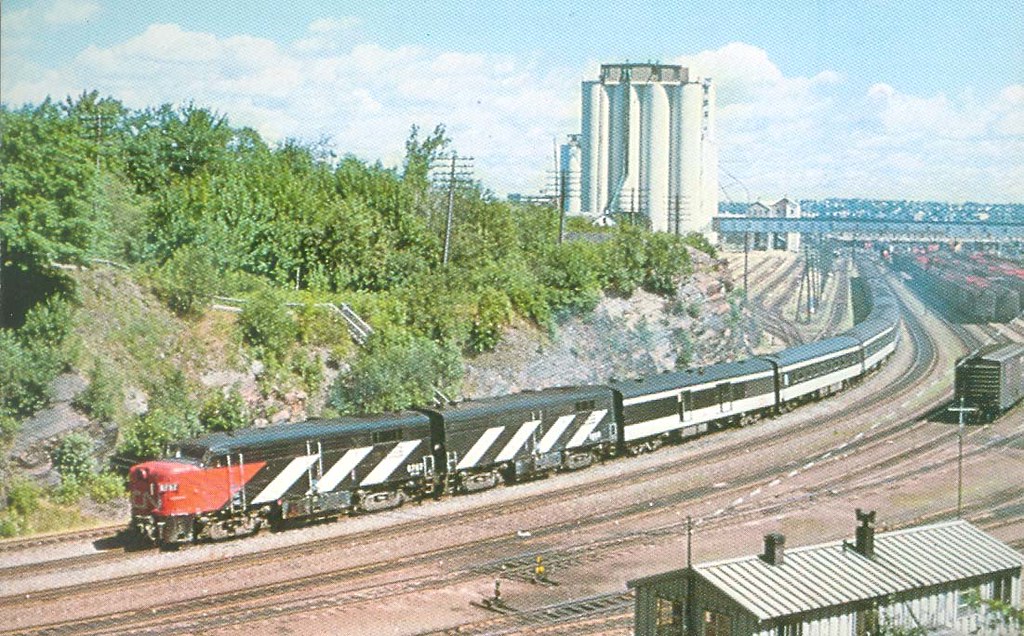
Prior to the Ren equipment, CN/VIA ran the ocean with a mix of Pullman smooth side cars.
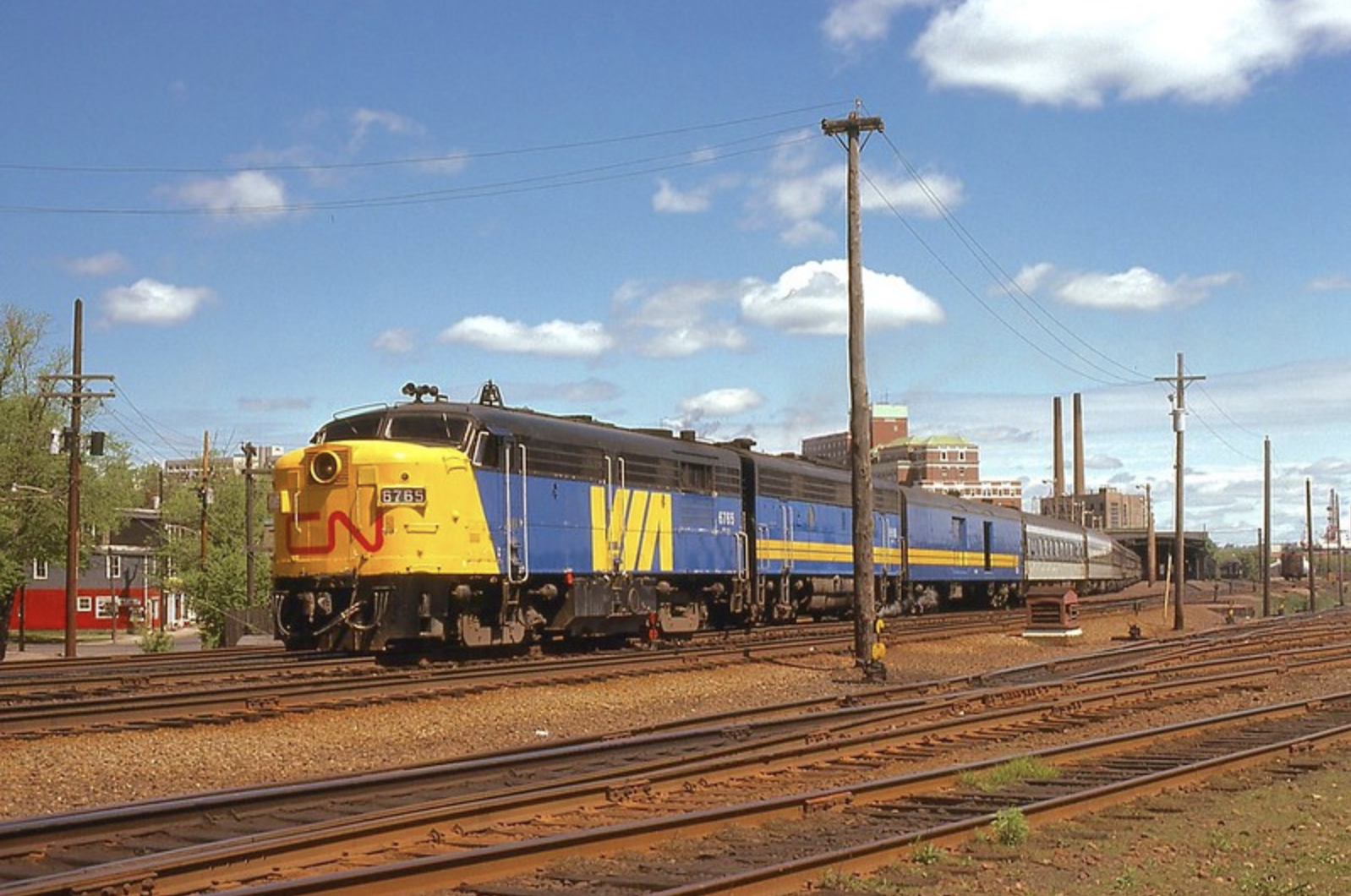
In 1958 the Ocean departed Halifax at 11:45am, and arrived in Montreal at 7:30am the next day. The train currently departs Halifax at 11:30, and arrives at 9:53. and runs 2 hours and 20 minutes slower. the Departure from Halifax was moved up in June 2024, from 13:00 to better accommodate slow orders on route.
Screenshot

A 2016 employee timetable showed maximum speeds of 30 mph for passenger trains on a 59.2-mile section of the Newcastle Subdivision from milepost 48.4, near Rogersville, N.B., to MP 107.6, near Nepisguit, N.B requiring 1:58 to cover that distance. at 90mph, that distance takes 40 minutes, of course, since 2016, track conditions have worsened,

I have taken the ocean several times in both directions. the most recent was in May 2024, when it served as the first leg on my trip across the country by train.

Laser Cut Map

I have posted Harbour Cartography in the past, notably, my 1 month of traffic maps (2012, 2016, and 2020). recently i acquired a laser cutter, so it was time to make a bathemetric map.

I Originally tried this project using cardstock and a Cricut. The cardstock cut decently well, and the project assembled nicely, but the margin limitations made it difficult to print any street networks, and have it line up with the cuts.

The contours are 15m, and were extracted from my nautical chart file (see post, how to make a Nautical Chart) each contour as its own layer.

Each layer was created as a print layout in QGIS and exported as an SVG, then imported directly into LightBurn, and cut on 3mm Birch Ply from the local big box store. The map is 6 layers in total. I lightly sanded and Stained the top layer to give it a Nautical chart like colouring, then each layer is painted in Behr Flat Paint and primer (221ml sample size) Colours are (top to bottom) Sydney Harbour, Yacht Blue, Treasure Map, Shipyard, and Superior blue.

these are available for sale, $75 each. Contact me for details.

French Research Vessel l’Atalante

The French Research vessel l’Atalante Arrived at BIO on April 22nd, and spent today (April 26th) at anchor in the basin.

The ship is owned by a french research institute, and operated by the French navy’s oceanographic office. it may be here to complete annual science that would have been accomplished by the Hudson, and will be taken over by the new oceanographic research vessel under construction at Seaspan in Vancouver.

The ship features a manned submersible and several science labs.

SailGP Back for 2026

SailGP just announced the first 6 race locations for 2026, and Halifax is back in June! From the Release:

In 2026, the Rolex SailGP Championship will set sail in Perth, Sydney, Rio de Janeiro, Bermuda, New York, Halifax, Portsmouth, Saint-Tropez and Dubai, followed by the winner-takes-all Grand Final in Abu Dhabi….

The full calendar – including remaining host cities and dates – will be confirmed in due course…
This 2025 Season, SailGP welcomed a record fleet of 12 national teams, including two new additions to the start line: the Mubadala Brazil SailGP Team and Red Bull Italy SailGP Team. The championship has confirmed plans to add two new expansion teams to its roster in 2026.

As far as the 2025 season goes, the Next race is Rio was cancelled after Australia suffered a wing failure in San Francisco. SailGP has identified a defect in the wings. New Zealand had also suffered a similar failure in a previous season. Both teams boats were built and sailed in the 2017 Americas Cup. The Next event will be in June in New York.

E-Ship 1 visits Pier 9

Enercon’s E-ship 1 made its first call to Halifax this week, delivering components for a windfarm currently under construction in Lunenburg county. The Components are being stored on Pier 9 untill they are needed then trucked to the site.

E-ship 1 is propelled by 4 Fletner rotors, which make use of the magnus effect to propel the ship. Essentially the spinning rotors create a low pressure area, which then pulls the ship forward.

E-ship 1 has called on sheet harbour in the past, but this is the ships first call in Halifax.

Topping up Tufts Cove

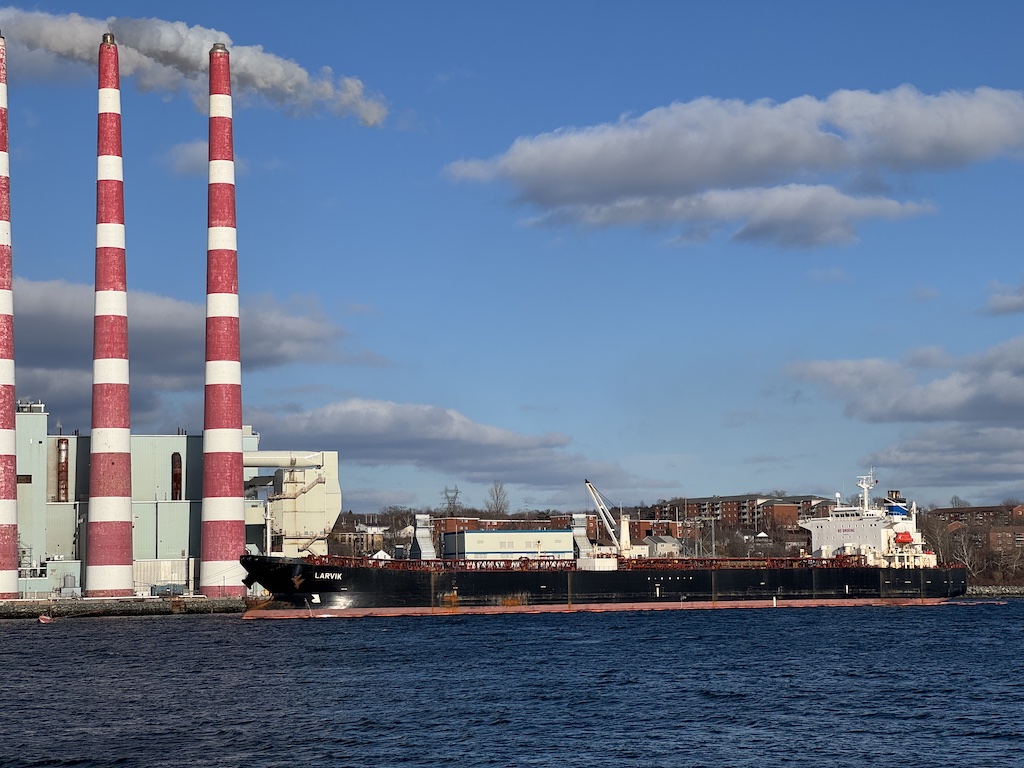
The Tuffs Cove power station is able to produce power using with natural gas or Bunker C Oil, and maintains a supply of Oil. the power plant is visited by a tanker usually around once a year to top up the tanks.

Larvik sailed from Houston, and arrived March 2. the ship was built in 2006 by Sumitomo Heavy Industries Marine & Engineering in Yokosuka Japan. its commercial operations are run out of Norway, but the ship is manged from Singapore.

Lake Shirasagi at Pier 9

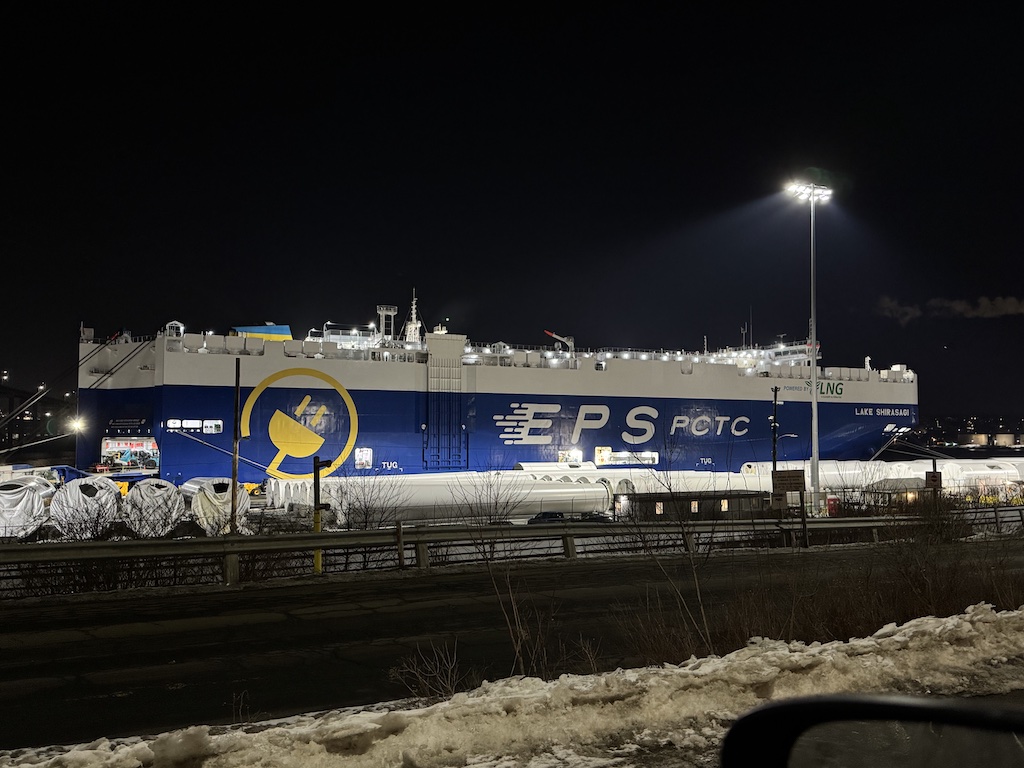
Lake Shirasagi is the 3rd of 10 new ships to be built in China for Eastern Pacific Shipping. These vessels run on LNG (Liquefied natural gas) as its primary fuel. The ship is also able to connect to shore power where available, as denoted by the giant plug painted on her side.

Lake Shirasagi moved to autoport after discharging heavy equipment at pier 9.

The ships namesake is the lake in Japan created by the Ishitegawa Dam in 1973, and serves as the water reservoir for Matsuyama City.

MSC Baltic III Grounds in Newfoundland

On Feb 15, the container ship MSC Baltic III, Montreal for Cornerbrook, was sailing off the coast of Newfoundland when it lost power and drifted onto the shore. The 20 crew were rescued by an RCAF Cormorant out of Gander.

T&T marine salvage have been hired by MSC, and the coast guard is standing by, however work is being hampered by weather

View our Initial report:

And Latest update.

Crews are currently evaluating the situation. No pollution has been detected, however several containers have been damaged. and the hull is showing signs of stress.