Author Archives: Peter

About Peter

is a Blogger. Photographer. Longshoreman. IT Guy. also the brains behind HalifaxShippingNews.ca and BuiltHalifax.ca Personal site ziobrowski.net

the HSN guide to LRT

There is lots of talk about installing Light Rail Transit or LRT in Halifax. Everyone loves trains, and the tracks exist, so a project in theory could be implemented quickly and relatively affordably. So why hasen’t it.

What we once had

Until the 1990 VIA Rail Cuts, Rail Diesel Car service was operated out of Halifax to other points in the Maritimes. there was daily service from Halifax with stops in Armdale, Rockingham, Bedford, Windsor Junction and out to Kentville with 3 trains daily in each direction. Trains also ran from Kentville to Yarmouth.

DAR timetable from 1977

Other trains operated to Cape Breton and Moncton.

Rapidly implemented rail projects

Original Bombardier Talent, on the original paved platform with flip up platforms at the doors.

The Original Ottawa O-Train project is a good example of what I think people think Halifax should do. The Original O-Train used an existing rail line – CP’s Ellewood Subdivision, which at the time saw sporadic freight traffic. The original trains were 3 Bombardier Talent DMUs, that were built as options for a German railways order that were not exercised. 2 would operate on the line, one in each direction, meeting and passing in the middle, with the third available as a spare. Platforms were sparse, and had flip up sections at the doors to allow clearance for fright trains.

The project cost 21million to build in 2001, and cost 4 million a year to run.

Alternatively, there was talk about operating a GO train like service, with VIA rail operating the trains. There is some question if VIA has available serviceable equipment to run the service, but in the end the CN issue remains.

So why cant we do that?

So far the big roadblock to doing anything rail transit related is CN. CN’s position is that even if the city builds new track on their right of way, CN will control it, and will not guarantee they wont block it with a freight train. So the city could spend a bunch of money to build track, and still not have a reliable train.

Canadian National was a crown corporation until it was privatized in 1995. CN was led by Hunter Harrison, who was a big proponent of something called precision scheduled railroading. The gist of PSR is that you run big trains on a semi regular schedule, and as a result can remove a bunch of “unneeded” track. removing track makes a railroads financials look better, since it reduces the operating ratio, which is a measure of revenue per mile of track. This is why much of the double track on the Bedford Sub was torn up.

This also explains why GO Transit in Toronto, Operated by metrolinx is able to buy track from CN. CN maintains some running rights, but can remove that track from its operating ratio. Also most fright trains use a more northern route to directly access the Macmillan yard.

what is LRT anyway?

LRT is a poorly defined term, and can encompass a number of distinct platforms and technologies.

Trams

Trams are typically what people think of when they think of light rail. A low floor vehicle that often operates in streets or on their own right of way adjacent to streets. The Alstom Citadis Spirit is a Tram-Train – its supposed to operate like a tram but also a train, except its a new design and has some issues with tight curves and high speeds. These trams can operate in Pairs, with a single operator, though most of the line is automated, and the operator is mostly monitoring operations.

Diesel Multi Units

A Diesel Multi Unit (DMU) or Electric Multi unit (EMU) is typically a double ended 3 car train that is powered by diesel or electric motors. the Alstom LINT is a 3 car DMU, that is directly powered by diesel motors via a gearbox. These typically are a high floor vehicle, but can be considered “light rail” as they don’t meet heavy rail crash standards.

Light Metro

Vancouver’s Sky train, and Montreal’s REM, are both good examples of Light Metro. Both systems use short 2-4 car trains, and are both fully automated, with no train operators aboard. these systems are fully grade separated, and operate on dedicated Right of ways.

Non “Light” trains

For the sake of completeness, and to show an obvious comparison, I’ve included typical heavy options.

Heavy Metro

Heavy Metro features longer trains with 7 or more cars. In systems like Toronto, NYC and Chicago, the trains are Stainless steel, and run on rails, and feel very train like. The Montreal metro, with its AZUR trains probably feels a bit lighter for a Heavy Metro, but that is what it is. These trains feature operators, who actually drive the trains.

Heavy Rail

Montreal’s AMT and Torontos GO Transit are good examples of this service. these services operate with dedicated diesel electric locomotives, and Bi-Level coaches, and are built to Heavy rail collision standards.

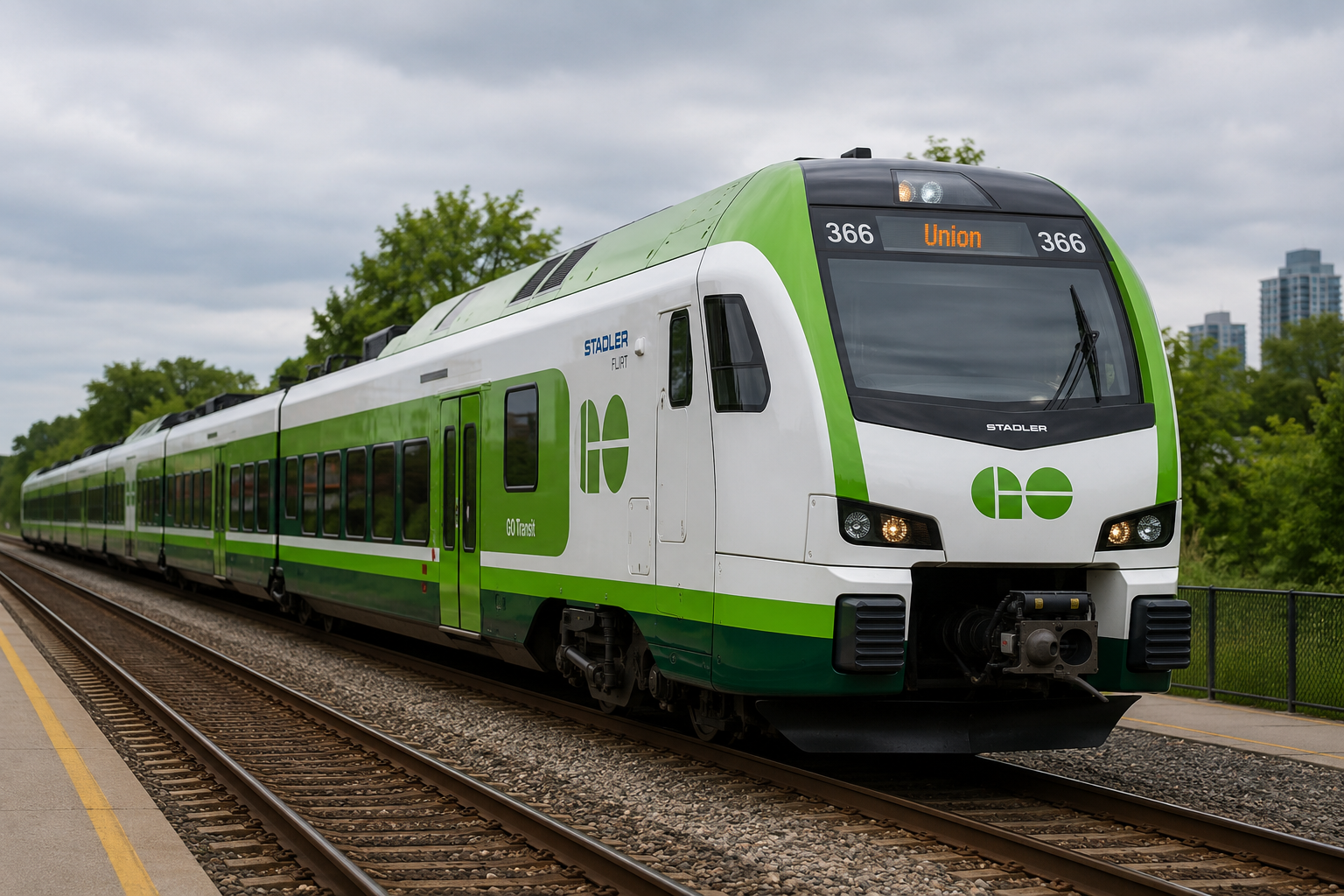
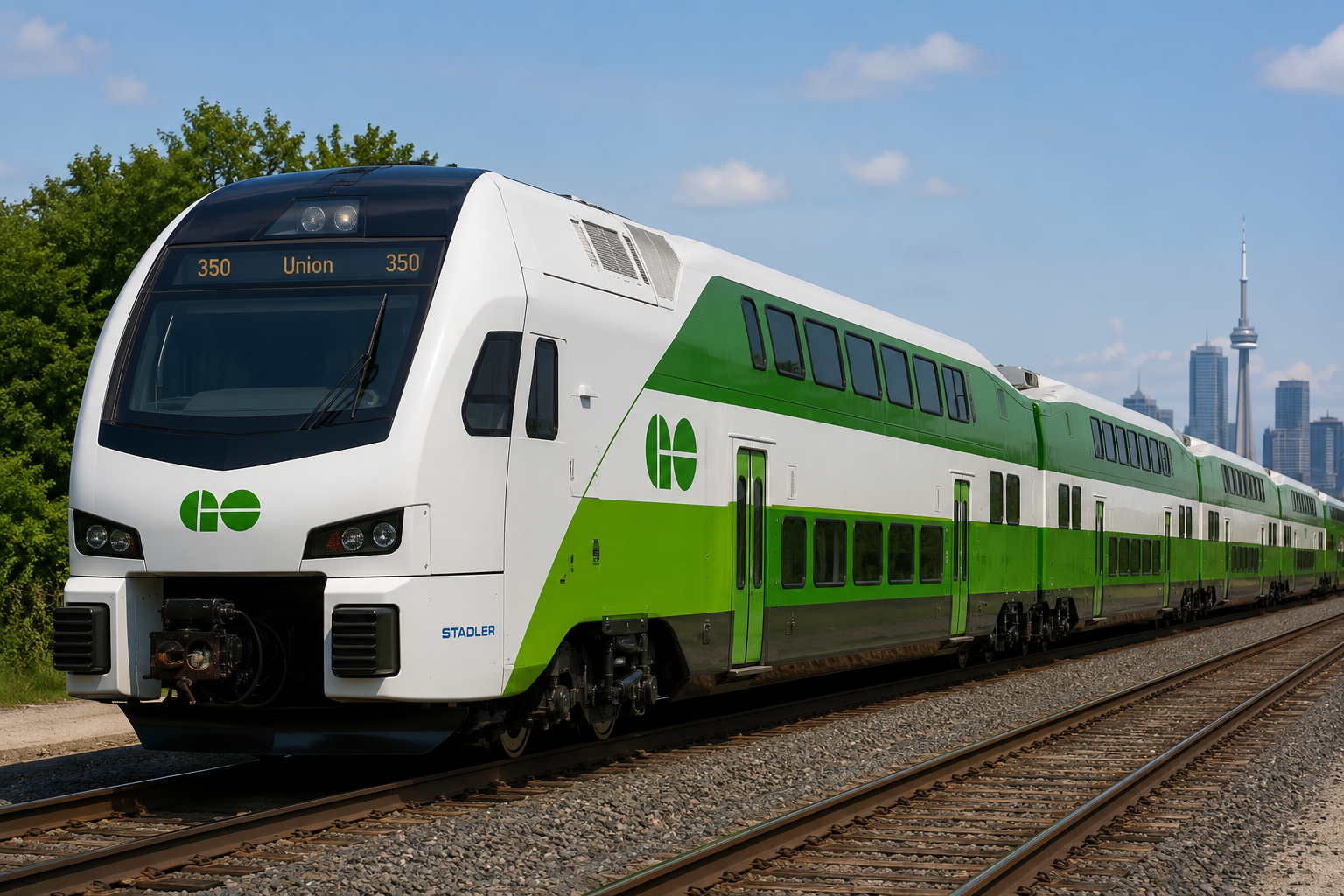
Trains like the Stadler FLIRT are also considered Heavy Rail, though they are built more lightly, they meet FRA Crash Worthiness standards.

Stadler FLIRT and KISS for GO Transit

A small comment on a reddit thread let me to generate some Stadler trains in GO Transit livery. GO operates heavy rail service around the GTA and Golden horseshoe using a Bombardier BI-Level Cars and a mix of diesel Locomotives. (Above) FLIRT is a single level car. this trainset is already in use in Ottawa. (Below)KISS, is a bi-level version.

These Images were generated by ChatGPT, and are pure fantasy.

A Site Update.

So for those of you who follow the blog, You probably noticed that up until this week, I haven’t posted since May 2025. And your likely wondering why. Its a perfectly legit question to ask, and one i find myself asking when something I’m following goes silent.

First, some history. I moved to Halifax in April 2008. I worked from home, and had a harbour view. As stuff would sail by my window, i would wonder it was, and do some research. I figured others might be curious, so I started a blog. The first iteration of this website was called the Armchair Captain, and its still up on Blogger at https://armchaircaptn.blogspot.com/

I never really liked the Armchair Captain name, and so it became Halifax Shipping News in 2010. In 2016 I moved the blog to wordpress, and began self hosting when what i wanted to do with the site out grew what i could do on blogger. Last year my hosting provider since 2016 got out of the hosting business. I now use Dartmouth based Websavers, and the site is hosted in Canada. The big advantage to self hosting is i have control, HSN doesn’t exist at the whims of some tech giant.

Yet the giants lurked

Back in 2012 @HFXShippingNews joined Twitter. Twitter was Fantastic. I built a lovely community there, where folks in the know could tell me whats going on, and i could share the blog with the world. twitter drove growth of the site. As someone who works with computers, I always had a Tweetdeck browser tab open, and had real time updates on well everything.

that was great until 2022 when Musk Bought twitter. In 2023 Tweetdeck became paid. Worse, the chronological feed went away, and suddenly my nice community was interrupted by tweets from the worst people imaginable, and a bunch of Nazis.

I hate algorithmic feeds. Nothing annoys me more with some site shows me relevant content a week or more after the event occurred. Worse, I get fed crap don’t want to see. I left twitter in 2025. Deleting all my posts, but leaving the account active to keep the handle from being claimed by others. More recently I have removed Facebook from my phone for many of the same reasons. Instagram brings little value..

With twitter gone, and my presence there being tied to the site, left a big hole. I’m active on BlueSky, which is a better platform, but smaller then twitter.

Then AI Happened. Google now scrapes sites and presents their contents to users, without them needing to visit the site. This steals revenue, since that is based on ad clicks and page views, which dont happen if people get your content without visiting your site. I’m not looking for Halifax Shipping News to make a ton of money, but I would like it to cover its costs. in this vein, google ad revenue is down, and the ads are larger and more intrusive, which I’m not super happy about.

All that to say i needed to take a break to figure out what i wanted to do. I figured Shipfax had us covered. though that has sadly been silent since January.

Right now, were back. Expect to see regular posts going forward, and some back posts for things that happened in the past year that I haven’t posted about. I’m also contemplating a rebrand to HSN Transport, which better reflects the broader rail and aviation coverage I provide, and also mirrors the YouTube Channel. There will probably also be a Merch Store, and I’m contemplating getting rid of the ads entirely.

As always, I love to hear from readers, so leave a comment or drop me a line with your thoughts.

You can also find me at :

FGS Gorch Fock

The German Navy’s Tall ship Gorch Fock took to anchor for a port visit. She will tie up on Thursday, and presumably be open to the public. This Gorch Fock was built in 1958. Built to a Blohm &Voss Design, she is a modern version of the original Gorch Fock, which was built in 1933, and was taken as war reparations from Germany after WWI. Her sisters include NRP Sagres, USCG Eagle, and Mircea. The 1933 Gorch Fock is now a museum in Germany.

Four additional ships were built to this design. Arc Gloria is the Oldest of the Modern Set of 4, Having been built in 1968  at the Astilleros Celaya S.A. shipyard in Bilbao. Her contemporaries Include Cuauhtémoc (1982 Mexico) , Guayas (1977 Ecuador) and Simon Bolivar (1980 Venezuela)

Mircea, Operated by the Romanian Navy was in port July 19-22

New Locomotives for VIA Rail

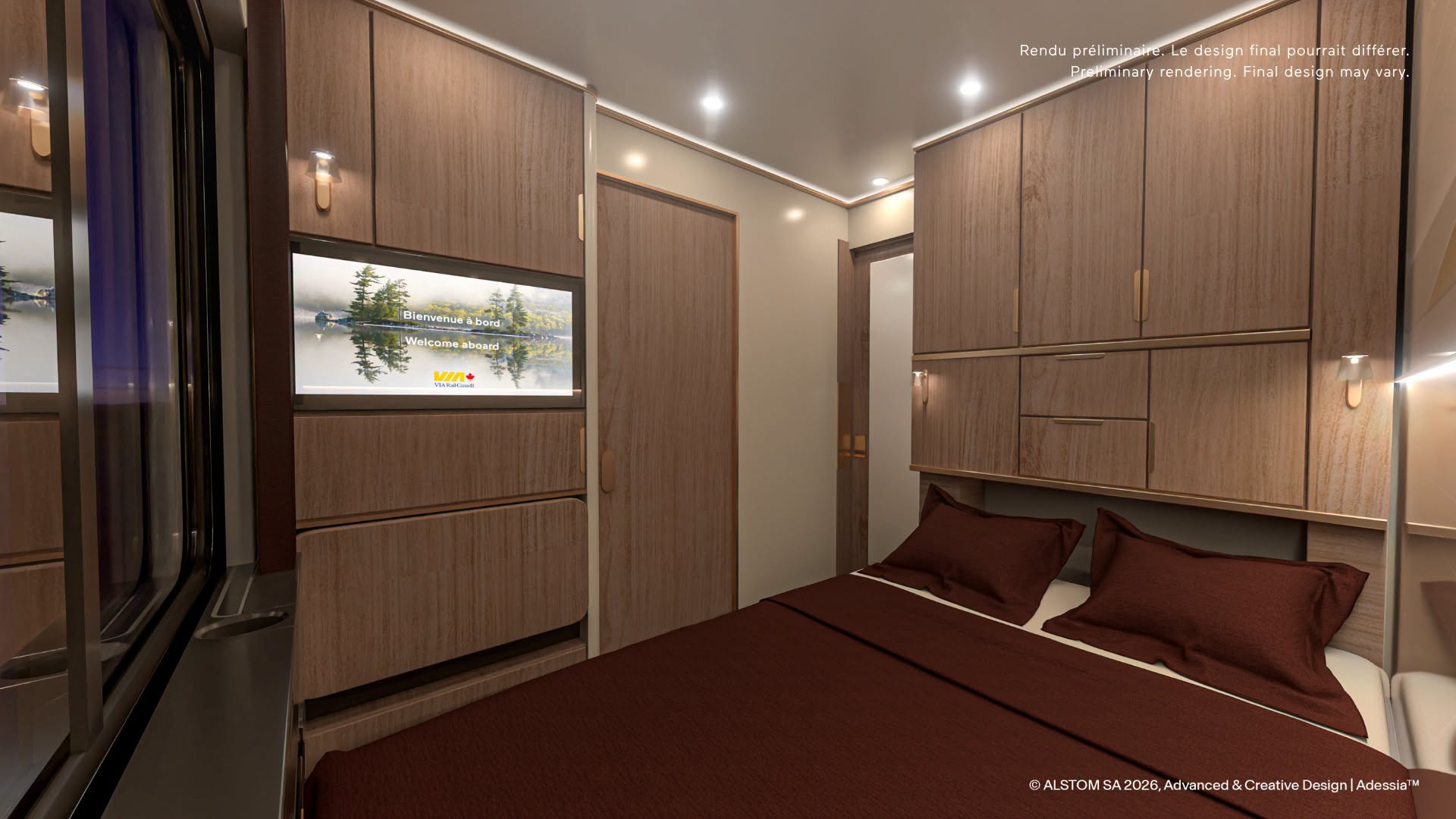
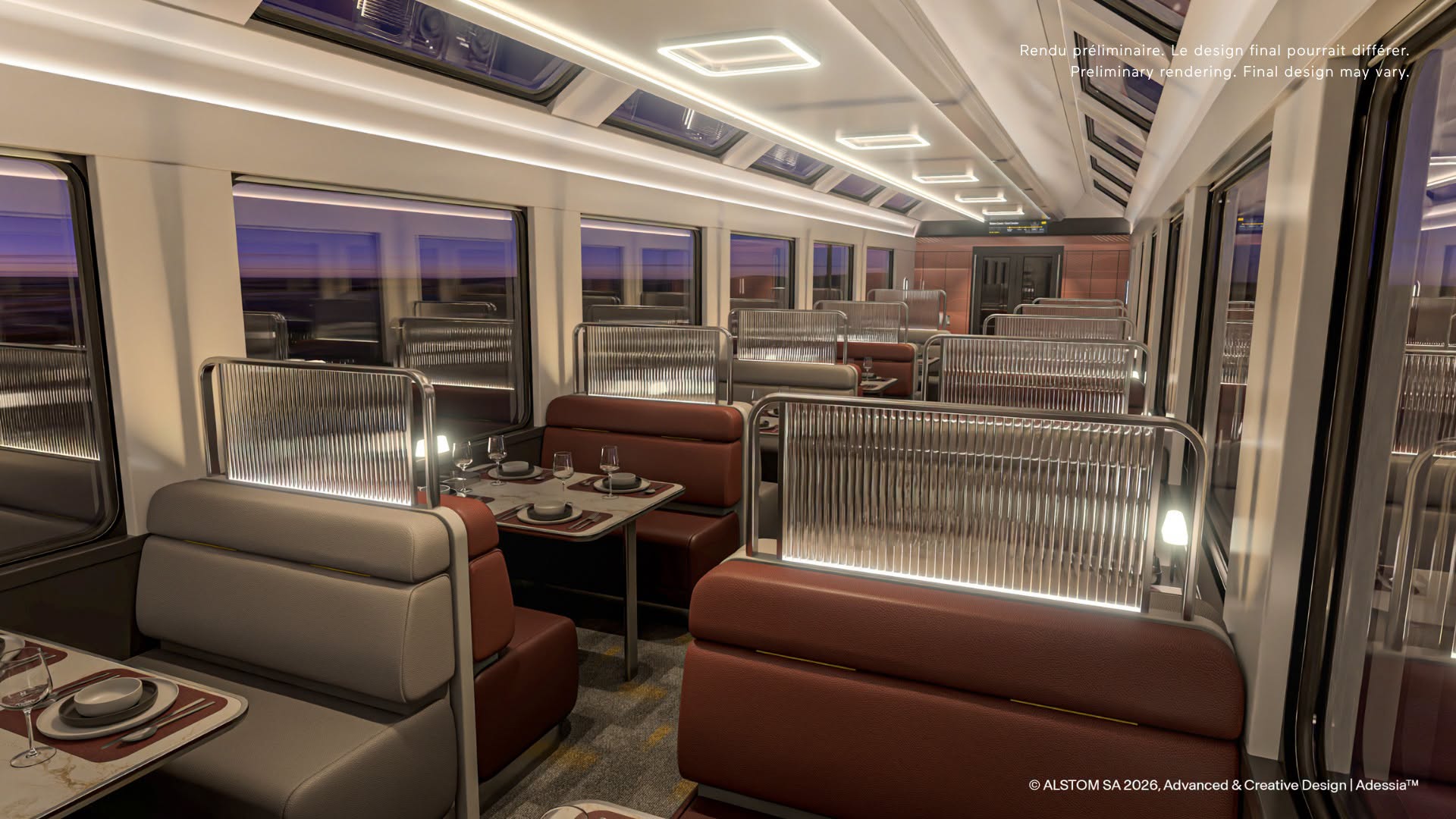
The Feds announced a new Stadler Rail Facility in Montreal this morning, to build 36 new long distance locomotives for VIA Rail. Additional early models will be built by Stadler in Spain. These locomotives will be used on the Non-Corridor routes, including the Ocean, Canadian, Prince Rupert and Churchill trains.

The renderings bear a resemblance to the EMD F125, which was built from 2015-2021 for Metrolink in California. EMD is now Progress Rail, and is owned by Caterpillar. The F125 was built with design assistance from Vossloh Rail Vehicles of Spain, which was acquired by Stadler in part due to their ability to build licensed designs from Progress Tail. The F125 is a Eurolite variant, Which are powered by a Cat diesel.

The new locomotives are hybrid, and feature ABB Battery technology that is also made in Quebec. Diesel locomotives are generally hybrid now, with the diesel motor turning a generator which delivers power to electric traction motors to drive the train. Through a process called dynamic breaking, the traction motors can become generators, and assist in slowing the train. the power generated is dissipated as heat in the large flared blister you can see on the top of Locomotives. The addition of a battery means that waste energy can be captured and stored and used to improve power efficiency on the train.

Stadler Manufactures thier FLRT series of trains in Utah for North American Sales. Ottawa’s O-Train Line 2 runs with 7 Stadler FLRT Train sets. Stadler trains also operate in the Swiss Alps (Bernina Express, Glacier Express, and others), Norway and kazakstan. Stadler also built dome cars for the Rockey Mountaineer, which means they have a good chance of supplying the long distance train sets for VIA Rail.

VIA Recently put Siemens Charger Locomotives and Venture trainsets into service on the corridor to replace the GE P42DC locomotives and mix of LRC, REN and BUDD coaches in use, all of which are past their service lives.

UPDATE: Stadler has posted a release with more details. the project also calls for 20 years of support. read the release at https://www.stadlerrail.com/en/media/media-releases/stadler-to-supply-45-hybrid-locomotives-to-via-rail

Snowbirds Bid Farewell

I caught the Snowbirds departing Summerside PEI at the end of June. In May, the Federal Government has announced the procurement of new aircraft for the team, and as a result they will be stood down after this season until the arrival of the new planes in 2030.

The current Canadair CT-114 Tudor jets date back to the 1960’s but are Canadian, and to my eye anyway look great. They were used as the primary jet trainer from 1963 to 2000, and the snowbirds have been flying them since 1971.

The new planes will be CT-157 Siskin II (based on the Swiss-made Pilatus PC-21 turboprop). A turboprop design, these planes have more power and beter performance then the tutors, and will be really unique in the Airforce demo squadron realm. I look forward to them.

Neoline Origin

The Neoline Origin made her first call to Halifax. The French RO-RO Ship is powered by 2 large sails, and can cross the ocean while burning minimal fuel. The Ship began construction in 2021 this is its second voyage. the ships maiden crossing had stops in Saint Pierre and Miquelon, and Baltimore. Problems with the sail system sent the ship back to France.

A fully enclosed RO-RO vessel, the ship carries container internally, and has contracts with Michelin, so it should be a regular caller going forward.

With fuel cost rising, shippers are looking at other options. E-Ship One uses Fletner Rotors to supplement propulsion, and called at Pier 9 last year. Beluga Shipping also tried a skysail, basically a large Kite. I covered some of the advances in a return to sail video on Youtube.

I originally covered the Neoliner for the Herald in 2021.

SailGP Returns

SailGP returned to Halifax, and once again the weather made things interesting. On Saturday, after strong gusts all day, by race time the wind died off. This led to a much shortened course, and for the first time a split fleet, where each race was run twice, with an A and B fleets. the Grand final featured 4 boats for the first time, the top two from the A and B fleets.

the A and B Fleets were arranged based on season point standings. Evidently this worked so well that sail GP Announced the rest of the season will be run this way.

the final Results were Spain with the Win, followed by Sweden and Switzerland. Perennial front runner Australia came in 4th. the Black Foils and GBR did not make the final, so the new format certainly mixes things up.

SailGP is back for 2027, this time May 15 and 16. This early event should also bring more questionable weather, and will take place a earlier then the inaugural 2024 event.

The NorthStar Canada boat spent much of the weekend tied up off Queens Marque.

Halifax does well hosting SailGP. it has one of the best venues, and runs with top international destinations. The City looks great, and if we are wanting to promote ourselves as a ocean technology hub, this is the exact sort of event we should be hosting. the Province would do well to put a sponsorship on the Canadian team.

Province beef up Aerial Firefighting

The Province of Nova Scotia contracted four Air Tractor AT-802 water bombers and one Cessna Caravan Bird Dog from Forest Protection Limited to supplement the provinces wildfire crews. Based in Debert, these aircraft can manage drops and place retardant to control the forward spread of flames. I found myself with an hour to kill in this area, so drive by to take a look.

The $6.5million contract for these planes was announced on May 13. It will run until September 30 but can be extended if needed.

the Air Tractors primarily drop retardant, and need to be reloaded on the ground with pumps. The Debert airport has a refilling setup established with a water supply and tanks for mixing retardant.