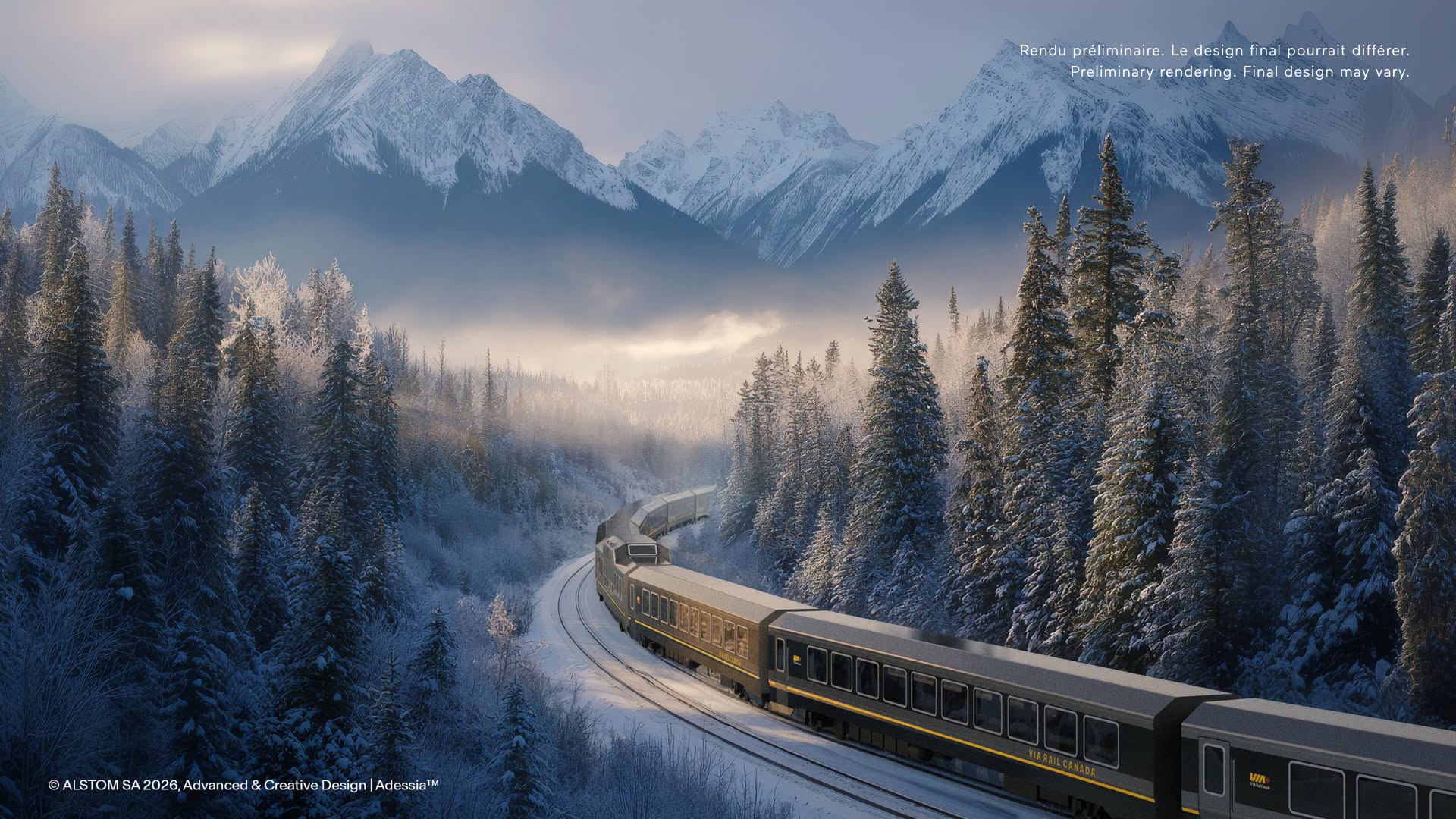
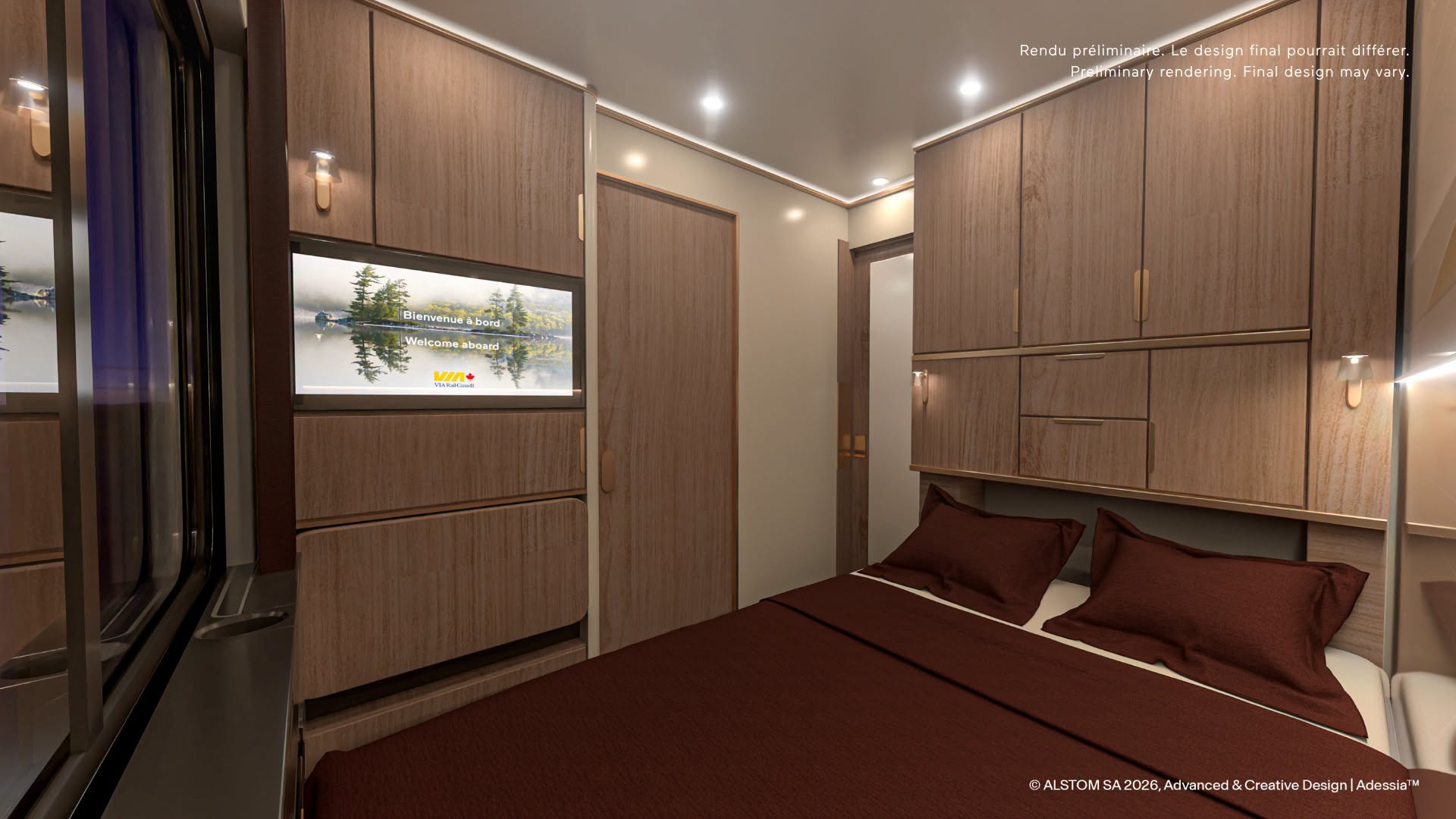
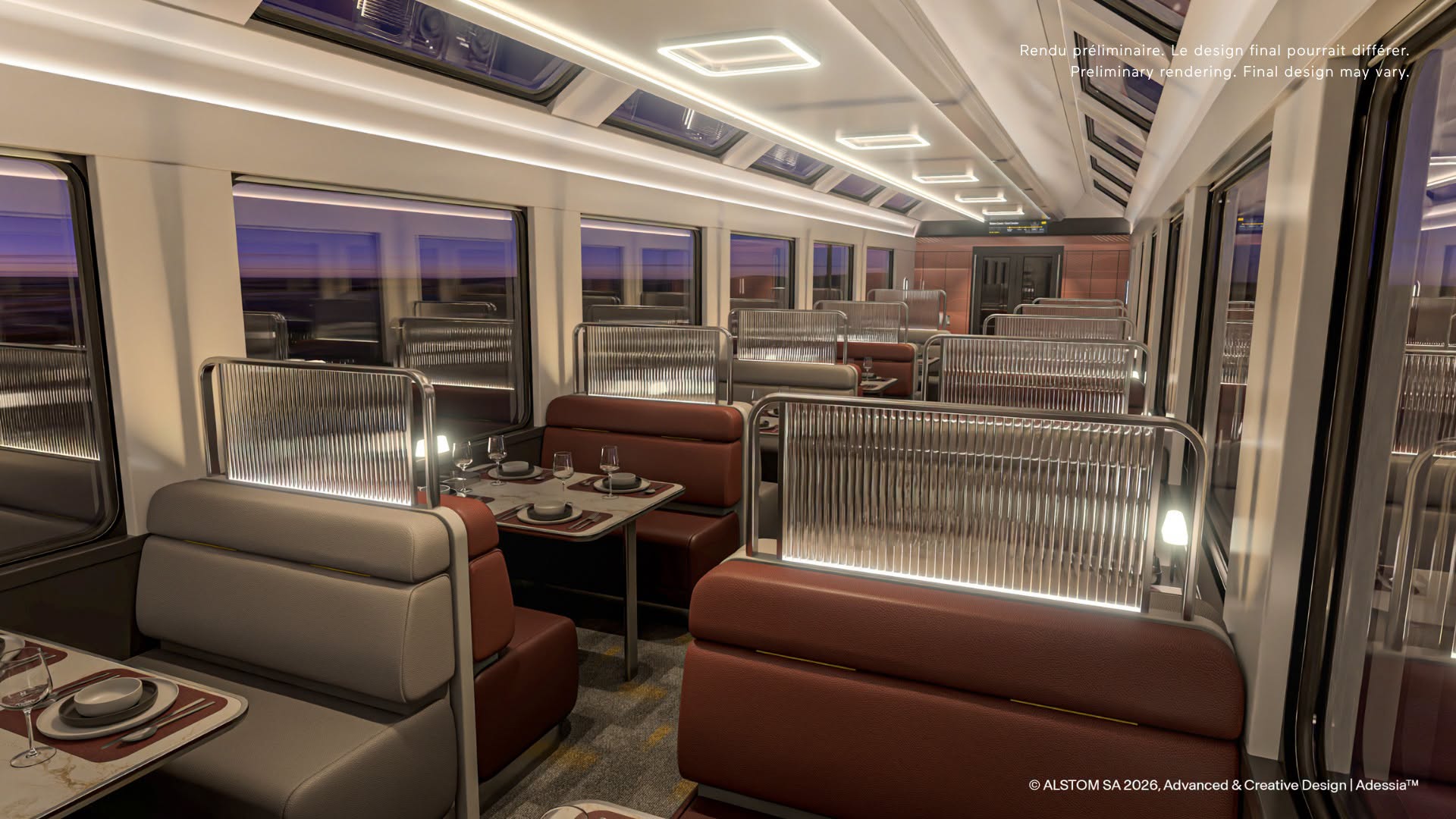
The feds announced today they are spending $4.7 billion for VIA Rail to acquire and maintain 313 new passenger rail cars from Alstom Canada for its long-distance, regional and remote services. These cars will be manufactured in Thunder Bay, Ontario, and La Pocatière, Québec, with design and engineering taking place in Saint-Bruno-de-Montarville, Québec.
Sleeper cars
78
Coach cars
58
Panorama cars
38
Baggage cars
29
Accessible sleeper cars
26
Dome cars
25
Dining cars
20
Prestige sleeper cars
20
Berth cars
19
Total
313
The new cars will be used on the Ocean, Canadian, and 6 other non-corridor routes. the 313 cars and new locomotives previously announced will enable service expansion The first passenger cars are expected to enter service in 2031, with full deployment expected by 2035.
The Feds announced a new Stadler Rail Facility in Montreal this morning, to build 36 new long distance locomotives for VIA Rail. Additional early models will be built by Stadler in Spain. These locomotives will be used on the Non-Corridor routes, including the Ocean, Canadian, Prince Rupert and Churchill trains.
The renderings bear a resemblance to the EMD F125, which was built from 2015-2021 for Metrolink in California. EMD is now Progress Rail, and is owned by Caterpillar. The F125 was built with design assistance from Vossloh Rail Vehicles of Spain, which was acquired by Stadler in part due to their ability to build licensed designs from Progress Tail. The F125 is a Eurolite variant, Which are powered by a Cat diesel.
The new locomotives are hybrid, and feature ABB Battery technology that is also made in Quebec. Diesel locomotives are generally hybrid now, with the diesel motor turning a generator which delivers power to electric traction motors to drive the train. Through a process called dynamic breaking, the traction motors can become generators, and assist in slowing the train. the power generated is dissipated as heat in the large flared blister you can see on the top of Locomotives. The addition of a battery means that waste energy can be captured and stored and used to improve power efficiency on the train.
Stadler Manufactures thier FLRT series of trains in Utah for North American Sales. Ottawa’s O-Train Line 2 runs with 7 Stadler FLRT Train sets. Stadler trains also operate in the Swiss Alps (Bernina Express, Glacier Express, and others), Norway and kazakstan. Stadler also built dome cars for the Rockey Mountaineer, which means they have a good chance of supplying the long distance train sets for VIA Rail.
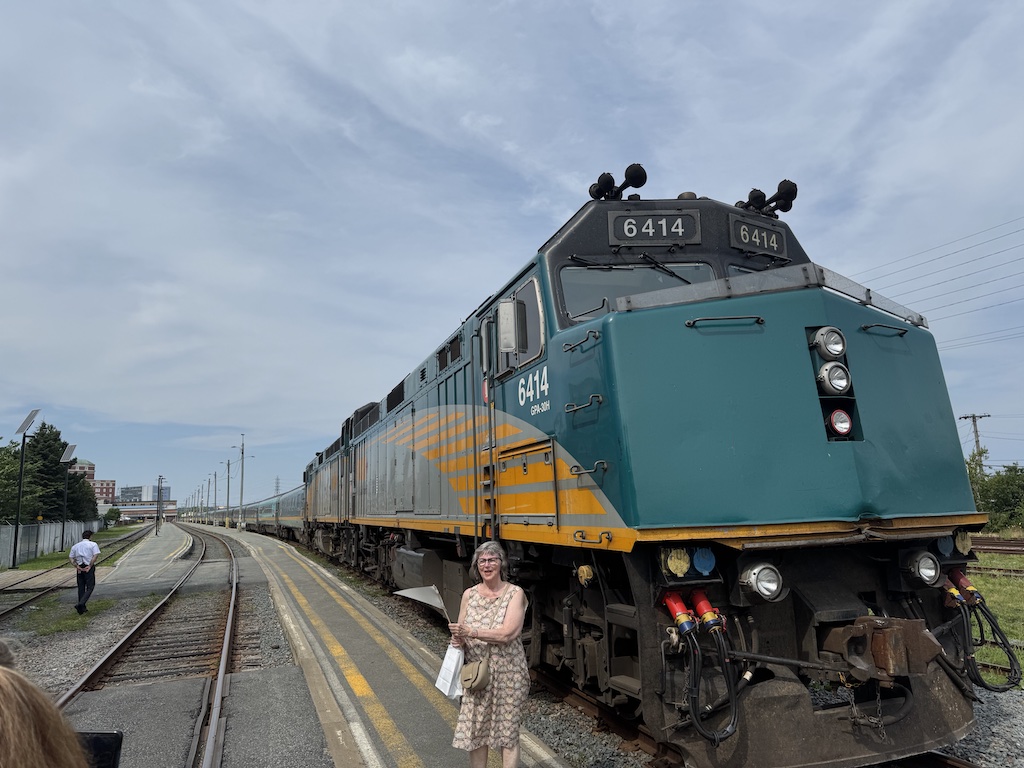
VIA Recently put Siemens Charger Locomotives and Venture trainsets into service on the corridor to replace the GE P42DC locomotives and mix of LRC, REN and BUDD coaches in use, all of which are past their service lives.
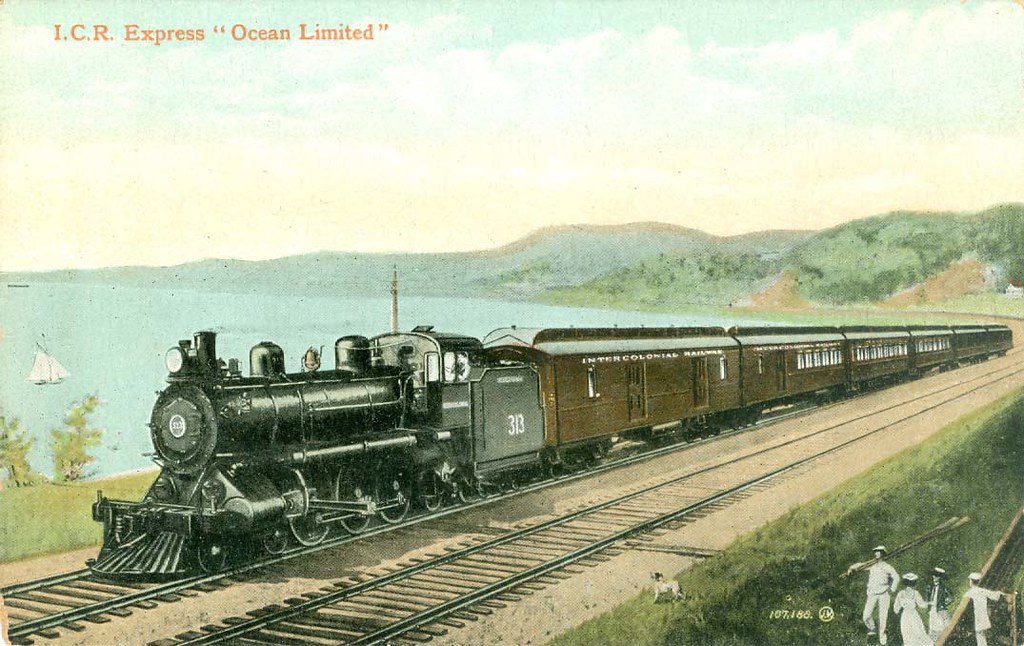
Today VIA Rail hosted in open house to celebrate the 120th year of operation of the Ocean, Making it the Oldest named train in Canada. The train first appeared on Intercolonial railway schedules connecting Halifax to Montreal on July 03 1904.
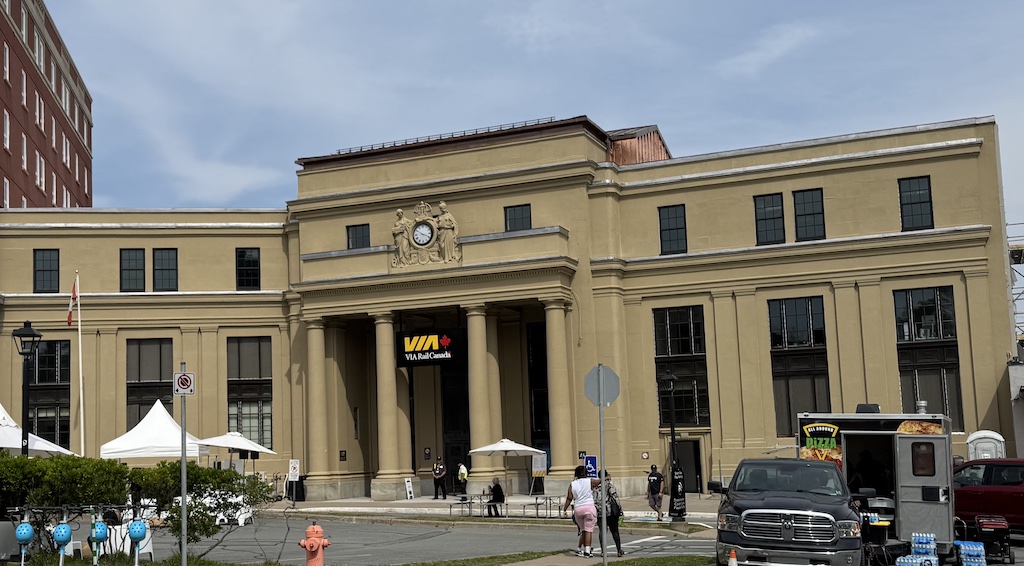
The event also marked the completion of restoration work on Halifax Station. Of note is the return of the clock to the sculpture above the main entrance.
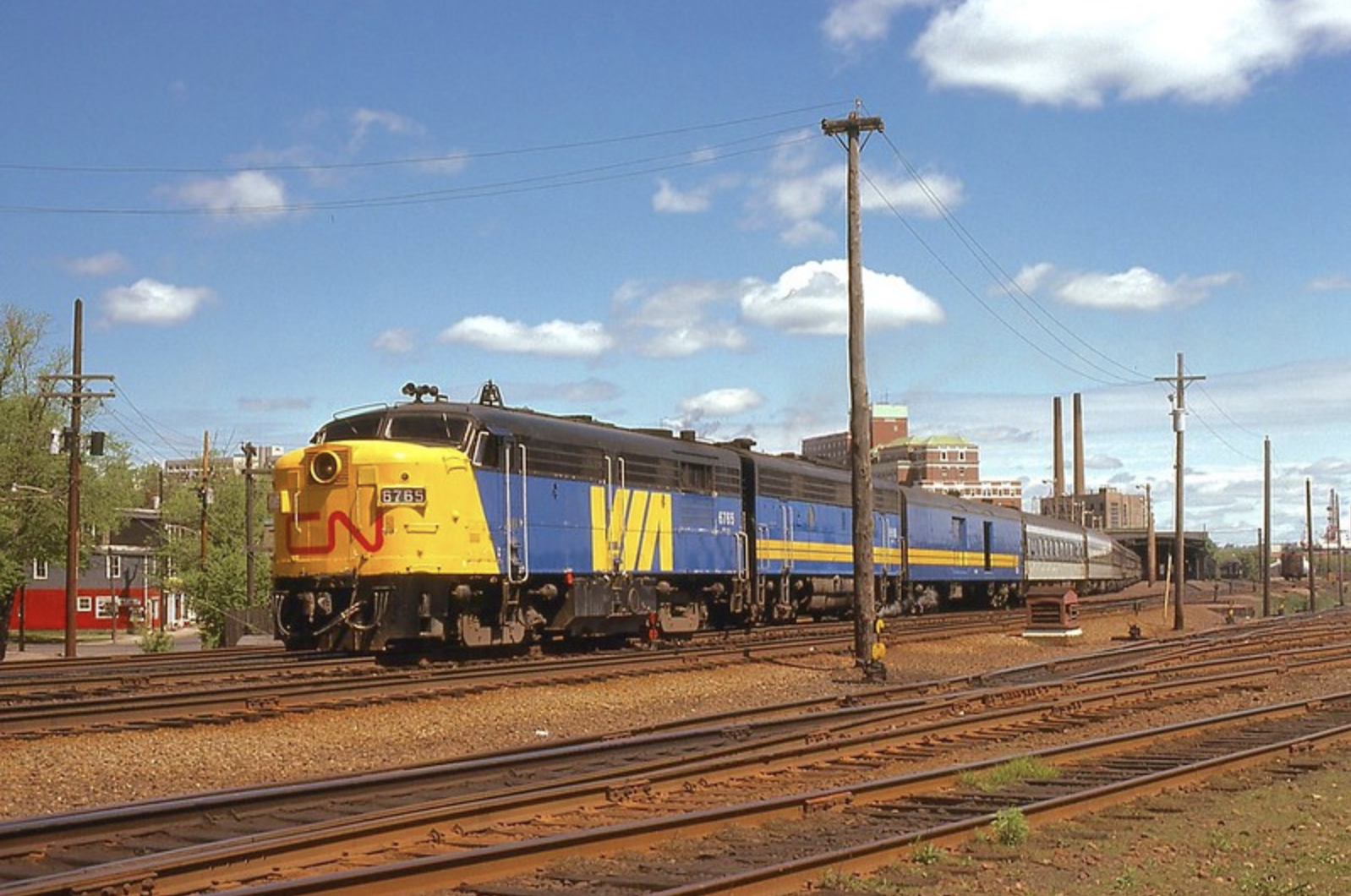
The Ocean Limited began as a summer only train, and its operation was taken over by CN when the ICR was folded into Canadian National in 1918. It Remained, when CN spun off its passenger operations to VIA Rail in 1978.
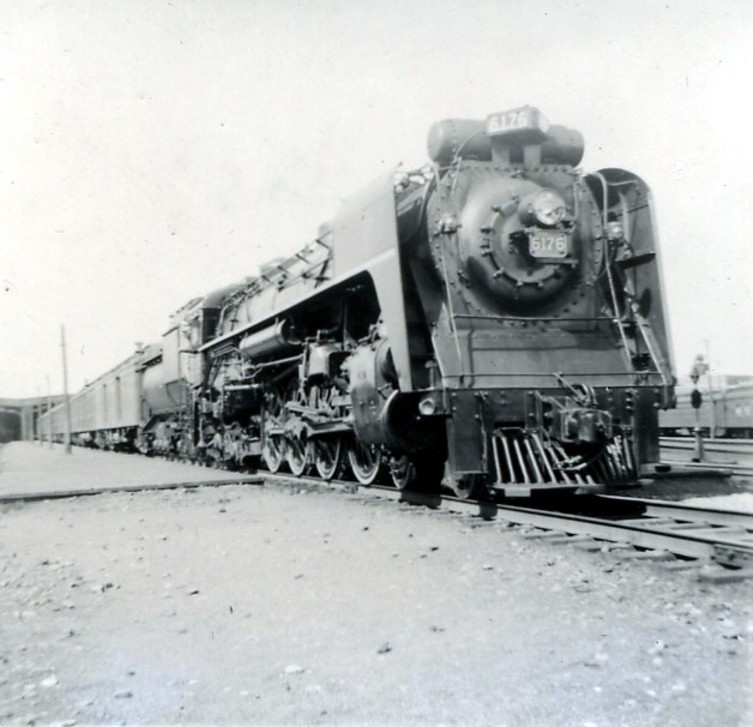
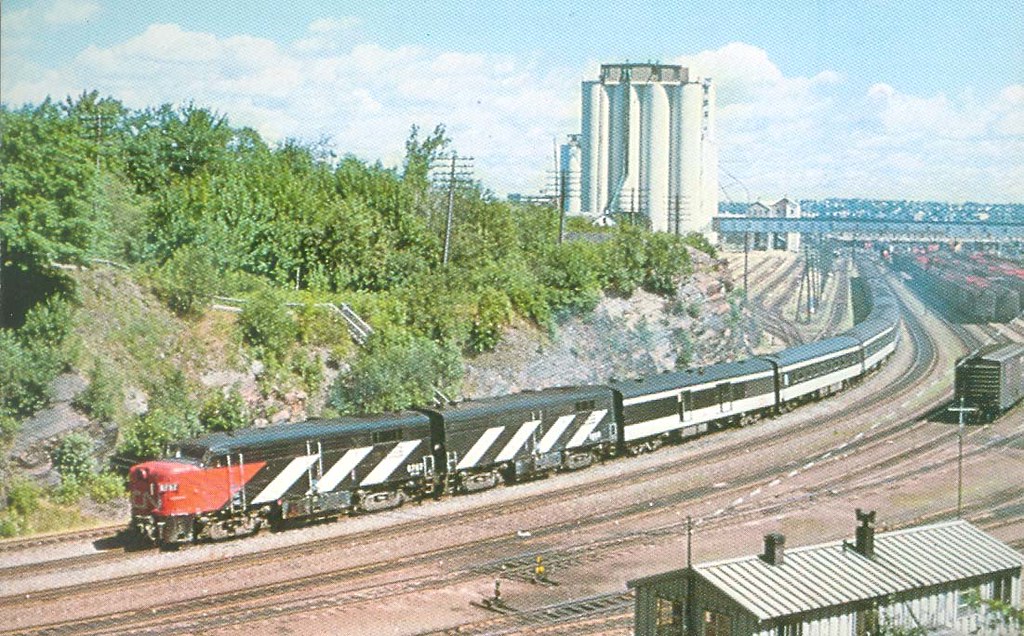
The Ocean in 1948
The Ocean once ran as a daily train, going down to 3 days a week from 1990-94, it regained a 6 day/week schedule until 2012. it now runs three times per week with a mix of 2000’s Renaissance equipment, and 1950’s Budd stainless steel cars.
The Renaissance equipment was originally built for the the NightStar – a proposed nighttime sleeper train to complement the Eurostar through the Channel Tunnel – the train was cancelled before the equipment was finished, and VIA bought it all. Despite being the newest equipment in the fleet, prior to the entry of the Siemens Venture/Charger sets, The Ren equipment with their European heritage have proven problematic, and they are primed for replacement.
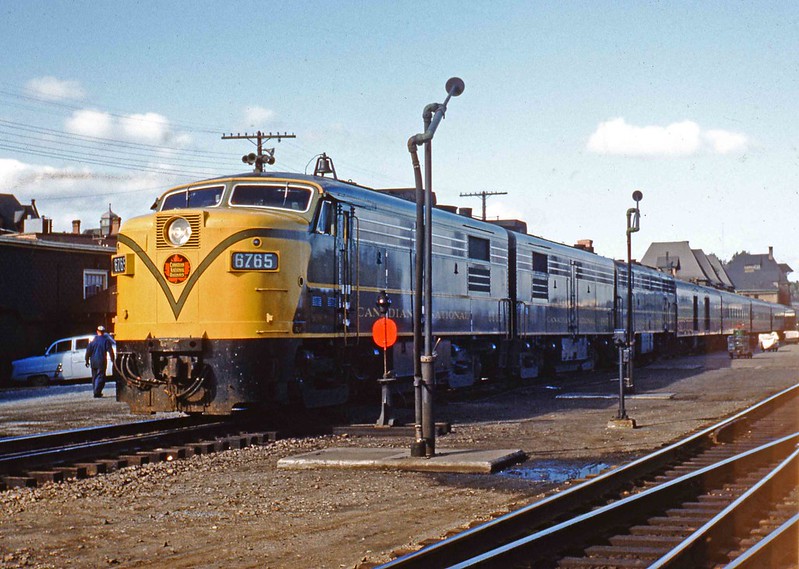
The Ocean, 1958
The much older Budd equipment is finally reaching the end of its service life. The fleet was purchased by Canadian Pacific for launch of The Canadian in 1955. VIA bought additional Budd cars second hand from other railways and converted them for service.
Prior to the Ren equipment, CN/VIA ran the ocean with a mix of Pullman smooth side cars.
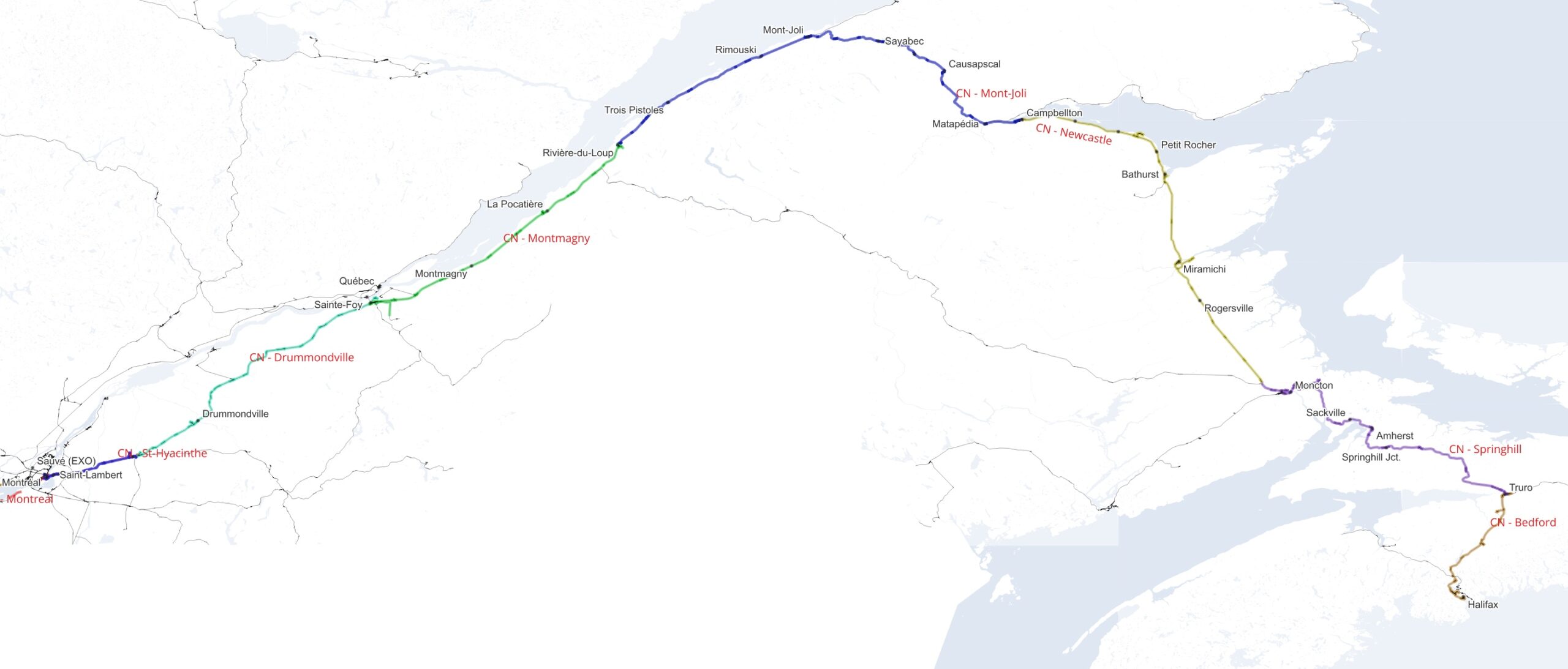
In 1958 the Ocean departed Halifax at 11:45am, and arrived in Montreal at 7:30am the next day. The train currently departs Halifax at 11:30, and arrives at 9:53. and runs 2 hours and 20 minutes slower. the Departure from Halifax was moved up in June 2024, from 13:00 to better accommodate slow orders on route.
Screenshot
A 2016 employee timetable showed maximum speeds of 30 mph for passenger trains on a 59.2-mile section of the Newcastle Subdivision from milepost 48.4, near Rogersville, N.B., to MP 107.6, near Nepisguit, N.B requiring 1:58 to cover that distance. at 90mph, that distance takes 40 minutes, of course, since 2016, track conditions have worsened,
I have taken the ocean several times in both directions. the most recent was in May 2024, when it served as the first leg on my trip across the country by train.
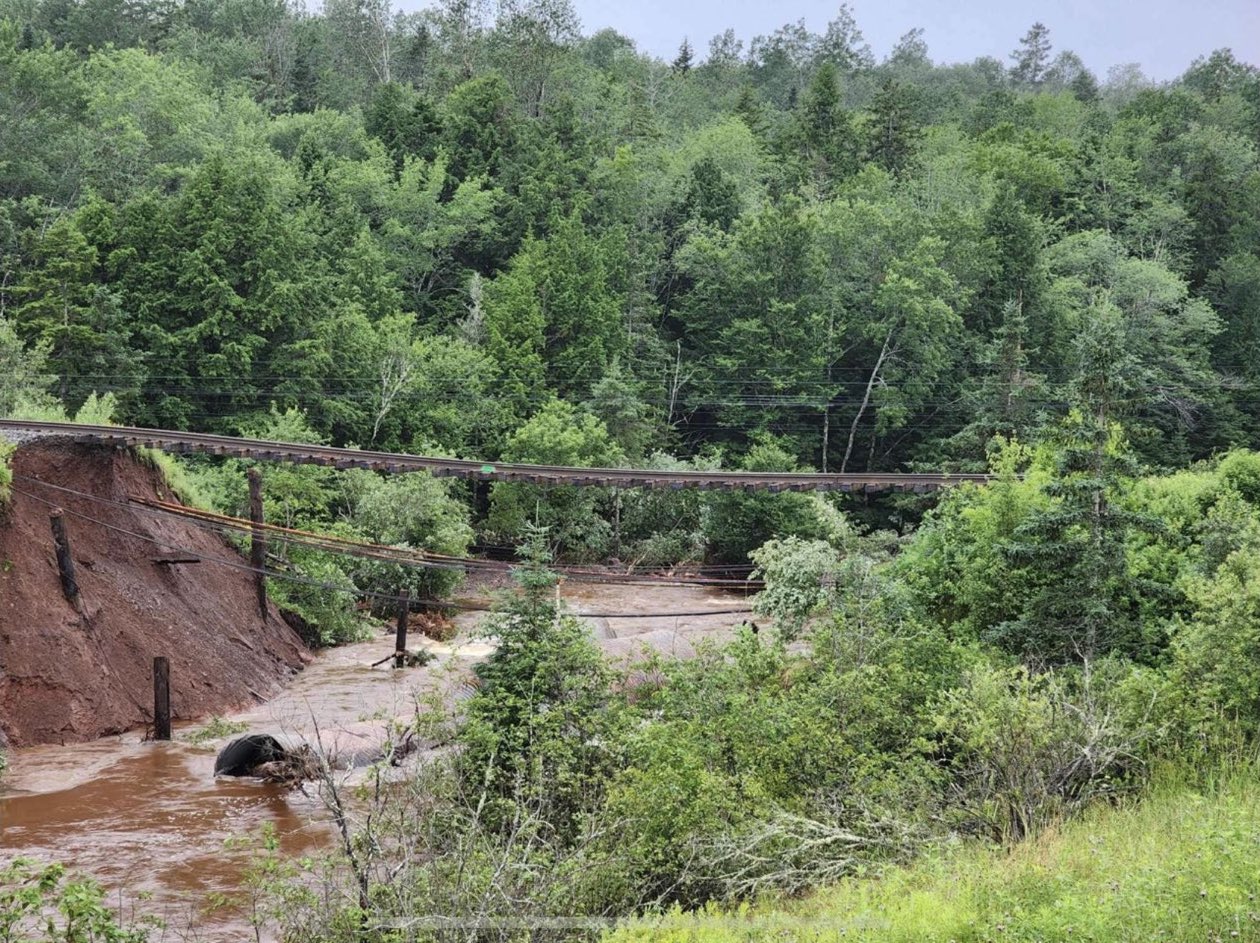
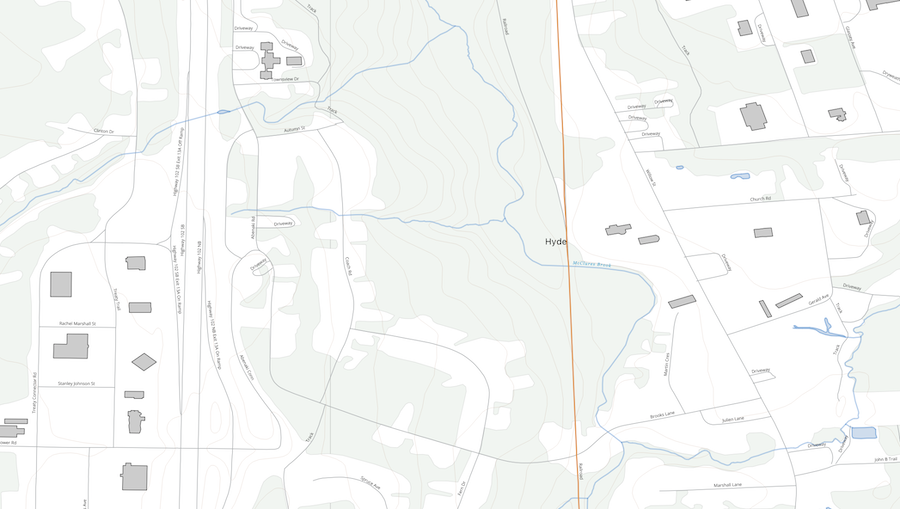
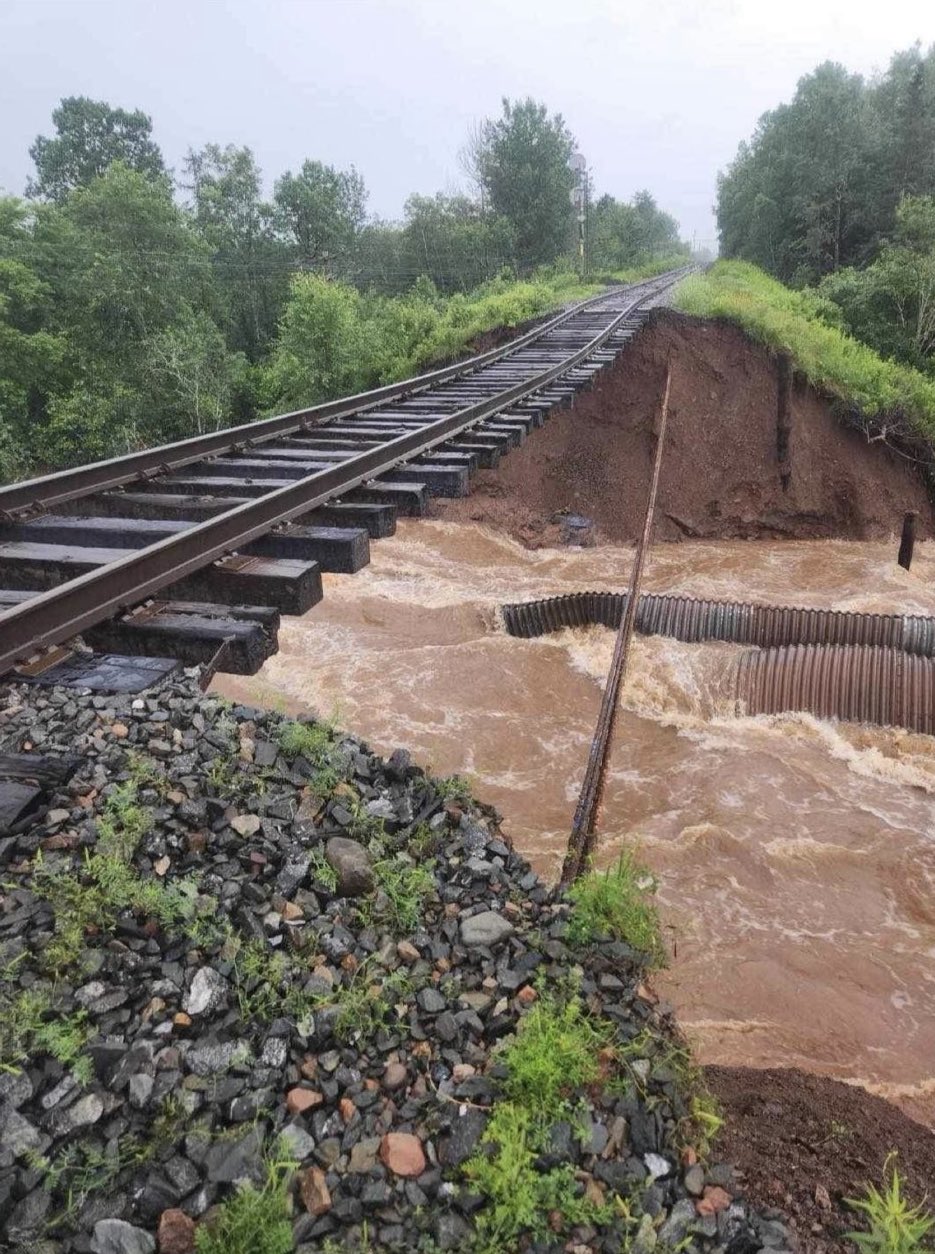
Friday and Saturdays 300mm+ of rain has caused a significant washout on the CN Main line at Mile 61.5 on the Bedford Subdivision. For reference, Truro Station is mile 64. The washout is located on McClures Brook, behind the Milbrook Band Council offices.
CN Reports the washout should be repaired by Wednesday.
The washout means trains are unable to enter or leave Halifax. I suspect 120 will still run as far as Moncton, with cars bound for Halifax moving the rest of the way once the line is open. I have been told that there are currently 3 trains staged between Moncton and Truro. CN508 (Moncton to Dartmouth general Freight) is stopped at the Truro Yard. two CN120 trains are stopped on sidings at Belmont (Springhill Sub mile 4.8) just before Truro, and Springhill. Once the line reopens, the plan is to Send train 121 currently in Rockingham yard out, then bring the Belmont 120 train in, turn around its power, and send another 121 out, while bringing the Springhill train in.
It seems unlikely that a few days closure will cause ship diversions – Cargo is likely already here, though dwell times at the terminals may increase.
Yesterdays inbound VIA Train was stopped in Moncton, and passengers were bused to Halifax. today’s departing Ocean, will see passengers bus to Moncton.
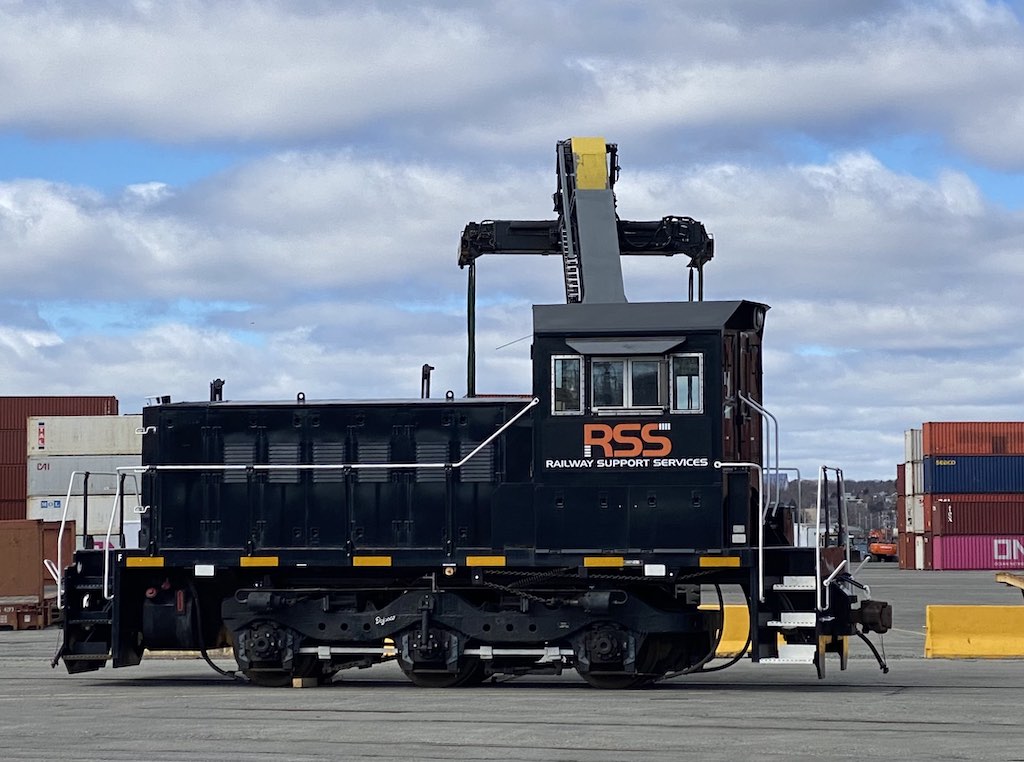
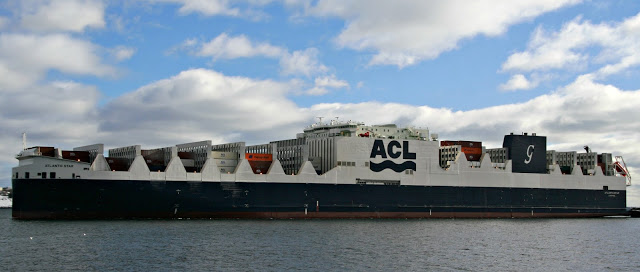
This little Locomotive was unloaded from an ACL vessel this week. The unit was shipped to the UK in February 2022 as a Demo Unit for RSS. It has now returned, and is rumored to be replacing the SW1500 switcher at Gold Bond, reportedly on its last legs.
Designed by Tractive Power Corp of North Vancouver, the TP56 is designed for Industrial Switching. The Locomotive is built on a 3 axle HT-C truck normally used in EMD’s much larger locomotives. This 80 ton unit has 375 horspower, and 56000lbs of tractive effort.
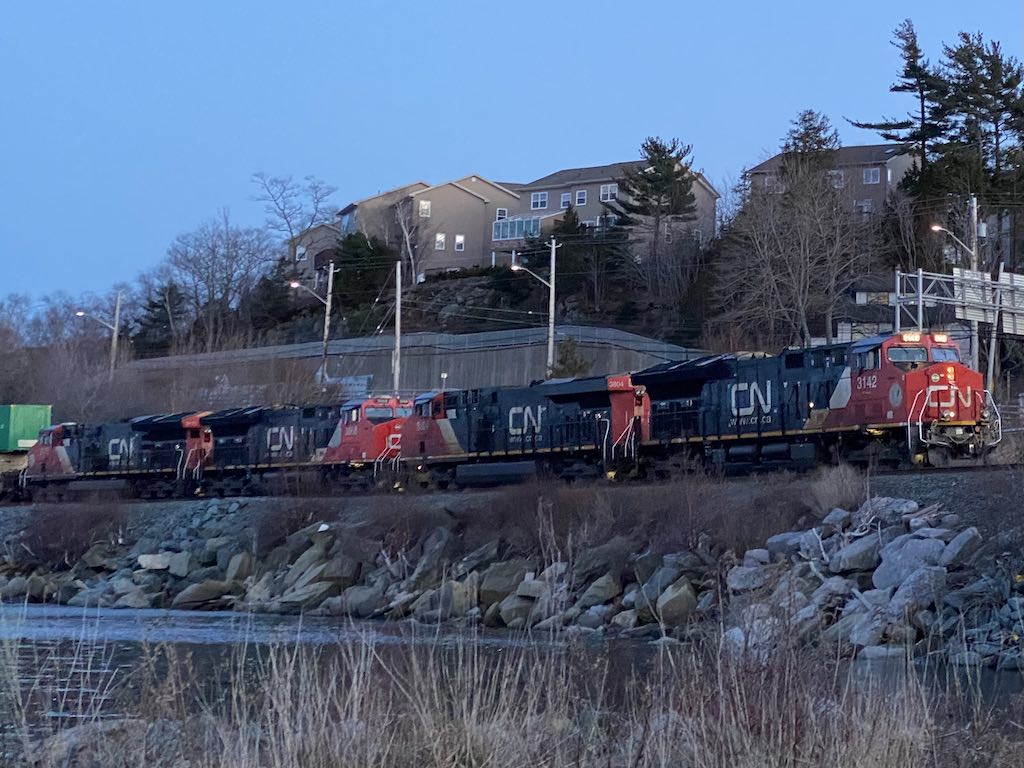
CN Rail has added two trains to Halifax. Q122 and Q123 begin this month, joining existing trains Q120 and Q121 (inbound and outbound respectively) . The trains offer 26-hour service to Montreal, 35 hours to Toronto, and 56 to Chicago.
CP has actively been marketing the Port of Saint John, so this improved service is seen as a way to compete.
CN also announced 15million in maintenance in Nova Scotia in the coming year, including replacing 4 miles of track, and several level crossings.
Recent rail blockages are beginning to severely effect the port of Halifax. Yesterday ACL announced they were no longer calling in Halifax as long as rail service is limited, routing traffic through New York instead. ACL has a contract with CERES until 2022, and calls twice a week with containers and RO-RO traffic.
Hapag-Lloyd, and the Alliance is still calling in Halifax, but is considering re-routing cargo, as is ZIM. Hapag-Lloyd released this statement Wednesday.
The blockades of key rail track and Port Infrastructure facilities throughout Canada continues and the Federal and Provincial Governments remain in dialogue as they seek a resolution with the Indigenous communities across the country.
There have been no material changes to the state of the blockades as communicated in our previous letter. CP Rail tracks remain comparatively clear.
Prince Rupert is now clear and the recovery is underway.
The blockade in Ontario remains in place, and CN’s Eastern Canadian network is more or less shutdown. A limited number of trains are operating in the Halifax/Montreal corridor. Various options to move /divert cargo out of Halifax are being explored.
It is not clear yet how long the protests could last and the disruption continues as the blockades enter their third week. There has been inevitable disruption to the Rail transportation of both domestic and International shipments for which we apologize.
This is a continuing situation and we will provide you with regular updates.
Hapag-lloyd Feb 19 Statement
Some trains working east of Montreal are moving, but as most cargo through Halifax is bound or from beyond the Belleville blockade, those services are affected. The port is stacking cargo bound for Toronto and points west.
Why are we here?
Coastal gas link is attempting to build a Natural Gas pipeline in BC. CGL have signed benefit agreements with several indigenous tribes along the pipeline route, and the project has broad support among elected councils and hereditary chiefs. 5 Hereditary Chiefs oppose the pipeline route across Wet’suwet’en Territory, and were blocking progress in Protest.
The supreme court ruled that the Wet’suwet’en territory is unceeded – it is not subject to a treaty, and the people were not conquered, therefore the Hereditary chiefs have legal title to the land.
Those 5 hereditary chiefs are not against the pipeline. they are against the current routing of the pipeline across their lands. The chiefs have proposed alternative routeing, which is actually in use by other pipelines currently. CGL rejected the proposed new routing, claiming it would delay the project by a year, and Cost 700 million more to build.
CGL went to court, and the BC Court granted an injunction ordering the protesters away. they refused, citing sovereignty over their territory. The RCMP then moved in and enforced the injuction. The Legality of the BC court injunction is likely to be challenged, however that will take time to work out.
In the Meantime, Mohawks have blocked the CN mainline near Belleville in solidarity with the Wet’suwet’en. An injunction has been issued against this blockade by an Ontario Court, however the OPP have yet to enforce this.
The above are the facts. they are not open to debate.
This protest is not anti-pipeline, its not about the environment, or moving oil. some have latched on to the protest to advocate for those ideas, however that is disrespecting the purpose of the protest- which is about respecting indigenous title to the land, which in this case clearly exists.
The OPP have likely chosen restraint in dealing with the Mohawks, frankly its likely the interruptions could become much more severe were they to forceably remove this blockade. The Mohawks were participants in the Oka Crisis which featured blockaded roads bobby-trapped with incendiary devices. as bad as the rail blockade is, shutting down the 401 would be much worse.
while the Trudeau liberals are rightly getting criticism for the handling of this issue, Calls for the prime minister to order the police to do something are wrong. Politicians do not and should not directly control the actions of the police. Support and calls for Vigilantes, or other citizens to take it upon themselves to intervene is also not a sound approach.
Fundamentally CGL chose to go to court rather then being a good neighbour. CGL, wanting to save time and money is now costing the Canadian Economy millions per day in losses, and several thousand people are out of work until this is resolved. the rest of the country is an externality to getting this pipeline built how CGL want it, and frankly more anger should be expressed to at CGL, and Corporate Canada should be demanding CGL apologize, and change the routing.