New CG Lifeboat Design Revealed.

The Federal Government unveiled the new design for the next generation of Coast Guard lifeboats to be constructed as part of the National Shipbuilding Procurement Strategy. Funding for the building of these vessels was announced on June 26, 2013, as part of an investment of up to $488 million in the Coast Guard’s fleet renewal.

 The completion of the design contract is the first step towards the construction of the next generation of Arun-class lifeboats. The design work for the lifeboats was completed by Robert Allan Ltd. of Vancouver, as the result of a $747,641 contract awarded in April 2012. These shore-based self-righting lifeboats will be capable of operations up to 100 nautical miles from shore. This procurement will replace Coast Guard’s existing Arun-type vessels which have an average age of 18 years.

These vessels are being built as part of the Government of Canada’s National Shipbuilding Procurement Strategy. Construction of the vessels is expected to begin as early as 2014, and the tender will be open to Canadian shipyards other than the two shipyards selected to build the large vessels.

The Robert Allan Ltd.  design is a new generation of more capable High Endurance Self-righting Search & Rescue Lifeboats for the Canadian Coast Guard. This new design was developed from the successful similar vessels known as the “Severn” Class operated by the Royal National Lifeboat Institution (RNLI) of the United Kingdom. The new Canadian design is larger with a greater range than the RNLI vessel and has been specifically designed to handle the worst weather encountered year around in the waters off Newfoundland and Nova Scotia. The new design is also for construction in aluminium rather than FRP as are the Severn Class.

The hull has a central skeg, and aft propeller tunnels, developing into flared, knuckled bow sections with double spray chines forward. The vessel is fitted with an elevated stern deck for towing operations, reduced freeboard amidships for recovering survivors from the water, and generous amounts of sheer and camber forward.

A large well-appointed enclosed bridge amidships provides maximum visibility and protection for the crew and enables the vessel to self-right in all loading conditions. A survivor space is located forward below decks, and the machinery space is aft. A bow thruster is fitted forward for enhanced manoeuvrability.

ormal vessel complement is a crew of four. Seating is provided for an additional two supernumeraries such as medical personnel, two survivors (on stretchers) and up to twelve survivors (seated). In support of the vessel’s secondary missions including Aids to Navigation, Environmental Response, Maritime Security, DFO Science, DFO Fisheries and Aquaculture Management and other Government Activities the vessel will occasionally be used to transport up to sixteen (16) supernumeraries in addition to the vessel’s crew.

The vessel’s particulars are as follows:

Length overall:
Length DWL:
Beam, moulded:
Depth, moulded, at midship:
Hull draft, nominal:
Power:
Speed:
– 19.0 metres
– 17.5 metres
– 6.3 metres
– 2.58 metres
– 1.67 metres
– 2,400 kW
– 23.5 kts

MarbleHead to Halifax Yachts

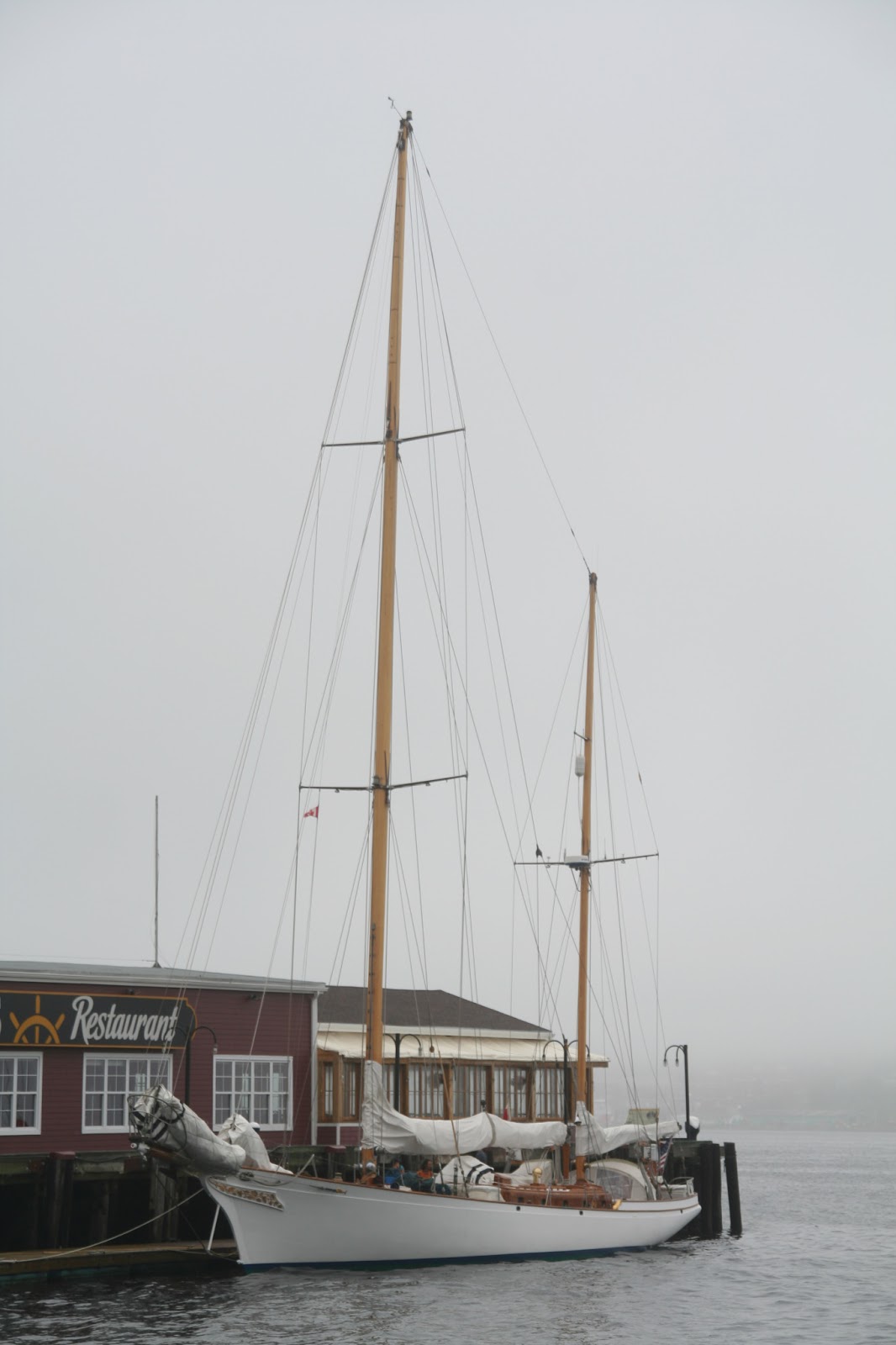
Every 2 years, the Royal Nova Scotia Yacht Squadron, and the Boston yach club hold a race form marblehead to Halifax. the Bulk of the Racers finished yesterday, with the fastest boats arriving Monday.

Some of them have tied up in the Harbour.

 Not sure if this last one (below) raced.

Odditeies

 (Above) Sable Sea being cold moved to pier 9. She was moved to Halterm last week, presumbaly to free up pier space for the cable ships.
(Below) Pilot boat APA No.1 tied up perpendicular to the dock. they appered to be working on her exhaust.

Japanese Maritime Self Defence Force Visitors

For the second time in recent memory, the JMSDF is on a world training tour, and making a stop in Halifax. The JMSDF undertakes to tours to give crews extended sea time. The three vessels arrived yesterday, and moved to the dockyard this morning. The ships Kashima, Shirayuki and Isoyuki will be in Halifax until Thursday, July 11.

(Above) JS SHIRAYUKI in the Anchorage this morning prior to moving to the dockyard. JS KASHIMA had already moved, but was here on the last trip August 2011.

The three-day port visit from the force’s Training Squadron is part of a five-month, 18-country tour fostering intercontinental goodwill.

As a part of the visit, local residents and media are invited to experience Japanese culture through world-class performances by the Squadron’s drum band at Grand Parade Square at 4 p.m. on July 9. Ship tours will be available to the public from 1:30-3:30 p.m. July 8-9 at Her Majesty’s Canadian Dockyard Halifax.

3 Proposals for Yarmouth Ferry.

The province has received business plans from three companies interested in operating a ferry in Yarmouth. The deadline for proposals was Thursday, July 4. The companies that made submissions are Balearia Caribbean, Ltd., P and O Ferries and STM/Quest. STM/Quest also bid on the last ferry rfp (details of that bid Here) Balearia Caribbean is owned by spanish company Balearia – who operates ferries from florida to the Bahmas, and Gibralter to Africa. P&O Ferries, operates several vessels in the English Channel and Irish sea, and is a european contemporary to Marine Atlantic.

A team of representatives from the Nova Scotia International Ferry Partnership and government departments will evaluate the plans as quickly as possible. The plans will be assessed based on criteria similar to the request for proposals. Criteria include financial stability, a management structure with expertise and a history of managing successful ferry services, and tourism and marketing experience.

The ferry partnership continues to play a key role by providing expert advice, promoting the opportunity, contacting companies, acting as a local contact and now evaluating plans. 

You can view the Request for Proposals Here (PDF)

OOCL Vancouver – A regular with a New Name

it looks like Halifax Regular Italy Express, has returned from a work period, and has returned to her pre Hapag Llyoyd name of OOCL Vancouver.

Hapag-Lloyd and OOCL operate a shared service to Halifax. Some OOCL Vessels on the service were operated by Hapag-Lloyd and therefore took Hapag-Llyod “express” names. Presumably the charters ended, and this may be part of the reson why some vessels aggined to the new G6 service made early appearances.