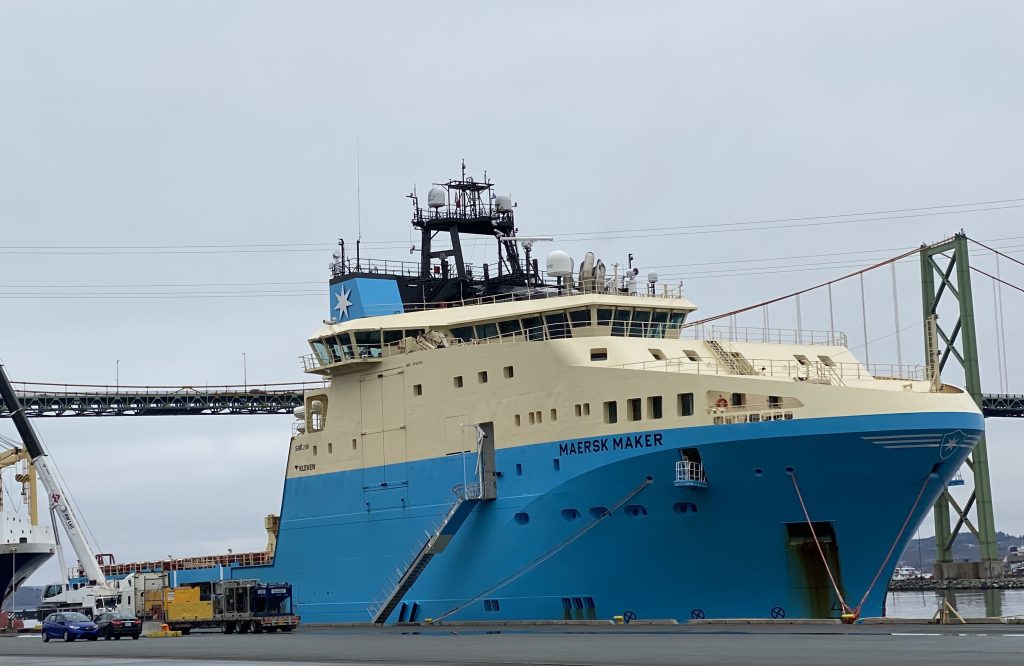
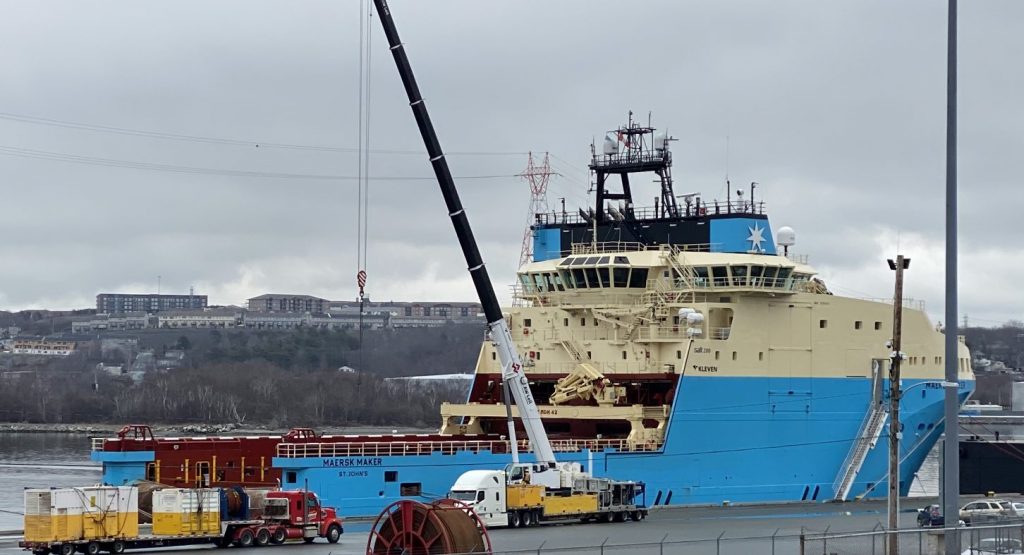
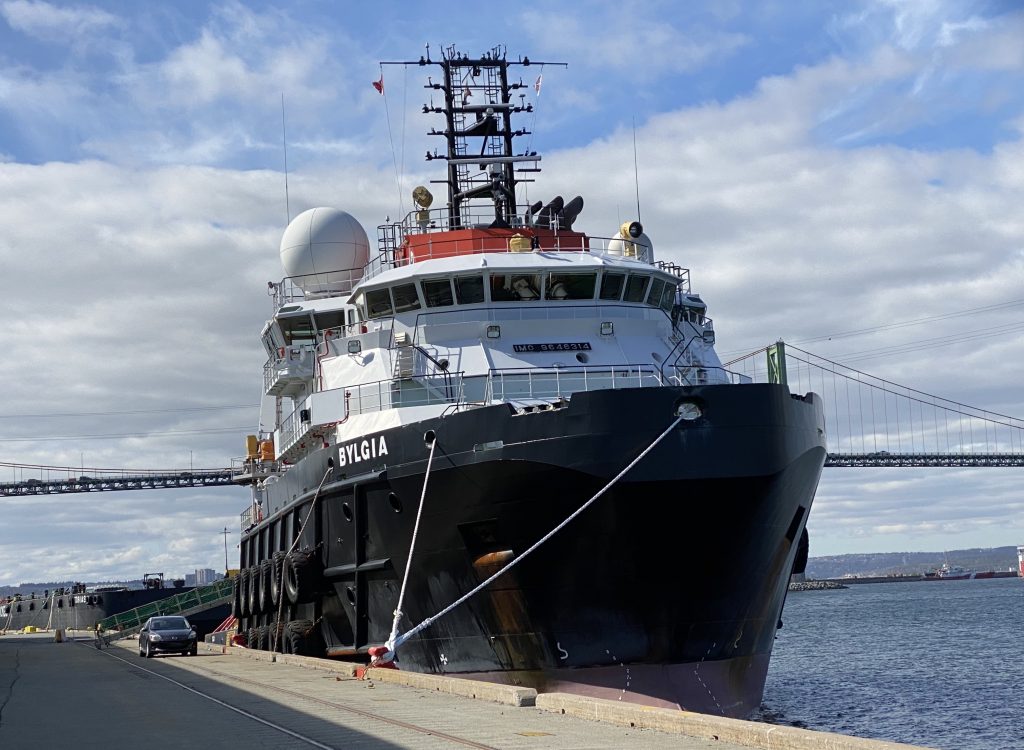
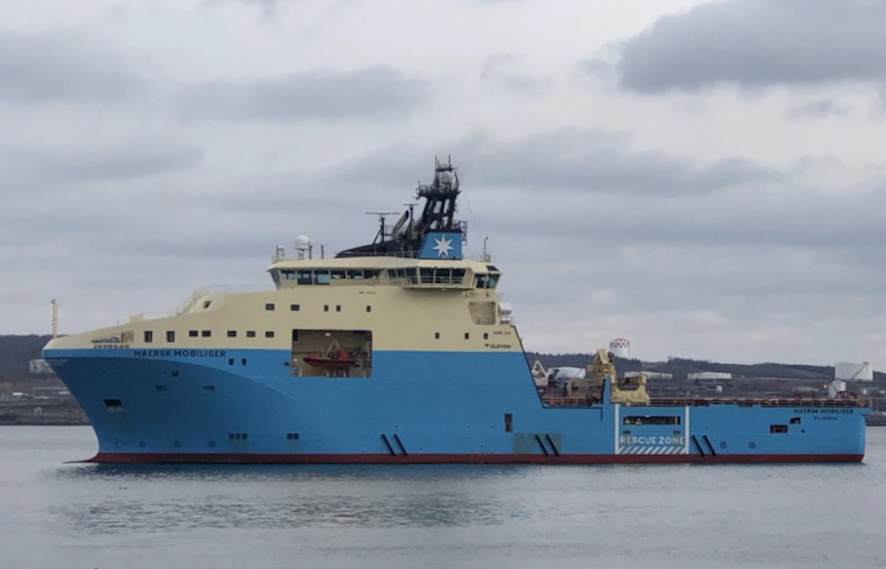
The brand New Anchor Handling Supply Tug Maersk Maker arrived this morning at pier 9, after spending yesterday with the crane ship Thialf. The Ship was Built in 2019, and is flagged in St. John Newfoundland.
From Maersk’s brochure on the ship:
Maersk Maker is a DP2 deep water anchor handling tug supply vessel (AHTS) of SALT design. This state-of-the-art vessel is built for deep water anchor handling and oilfield operations with reliability, safety and minimized environmental footprint as a top priority.Powered by five medium speed engines with total output of more than 23,000 horsepower, a fuel efficient and flexible hybrid propulsion system and fixed pitch on all side thrusters, the vessel provides good fuel economy, low emissions and excellent station keeping capabilities (ERN 4 x 99). Also designed for high safe deck operations, the vessel is equipped with a multi deck handler system, anchor recovery frame, gypsy handling system and other aid
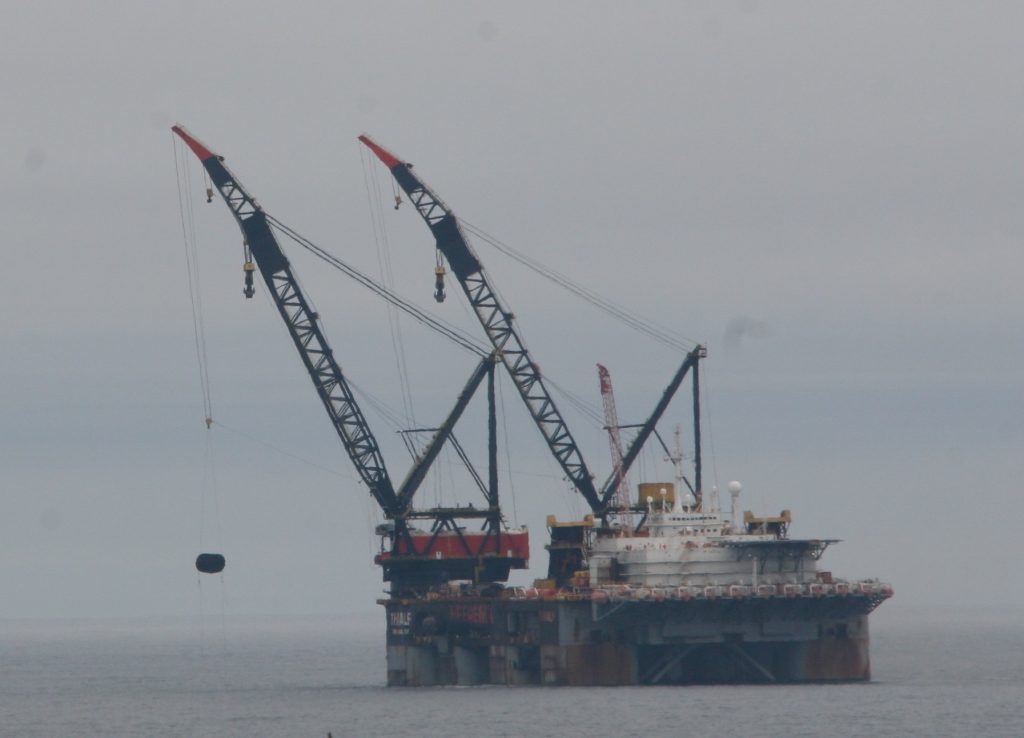
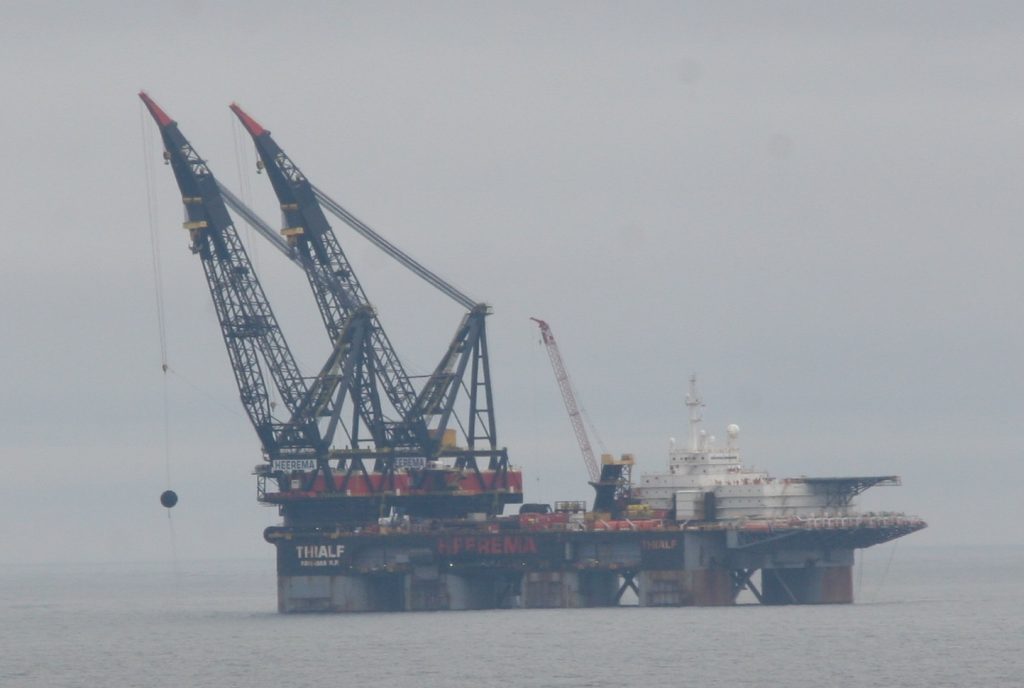
I have been getting alot of questions about the Crane Ship Thialf currently in the approaches. Thus, I present this Q&A
Q: Why is it Here? The Thialf is here to remove the topsides and Jackets from the Sable offshore filed. the Crane will lift the topsides, and put them on a barge. the barge will then be taken to sheltered waters, where it will be fastened for sea, and then taken to the UK for recycling. There are 7 platforms, so probably 14 total removals. (the jackets are the platforms legs sitting on the sea floor)
platform removal (SOEP.com)
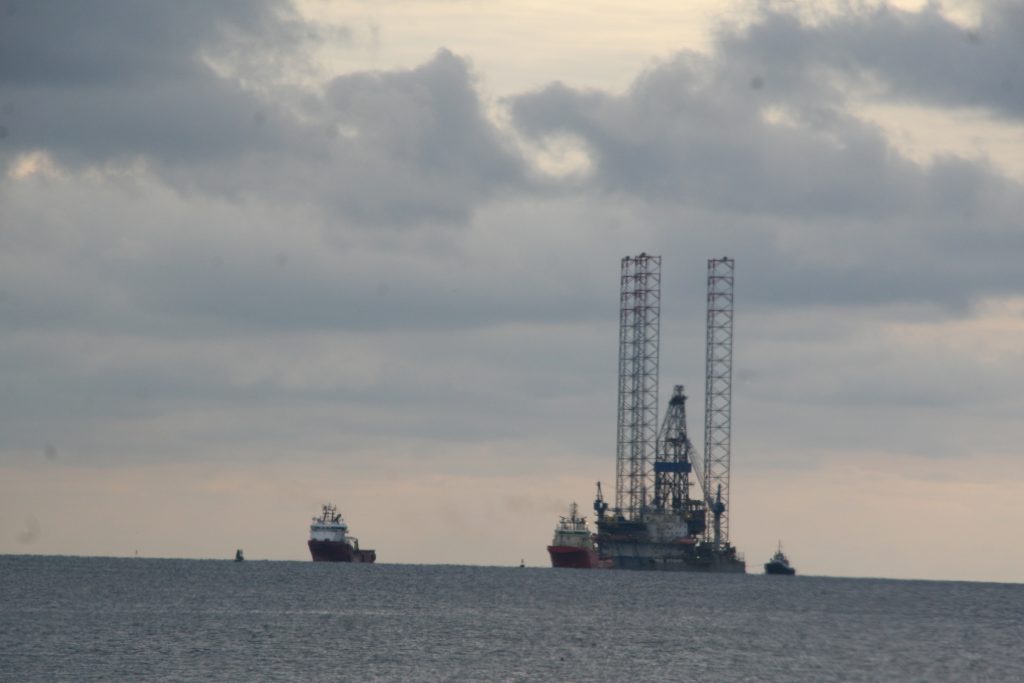
Q: Why is it not entering the Harbour? Cheaper to anchor out there, Plus no need to pay for pilots, tugs and anchorage in the harbour. Vessels like this have support vessels to bring supplies to them, in this case Atlantic Kestrel and Bylgia. Bylgia traveled from Amsterdam with the Thialf
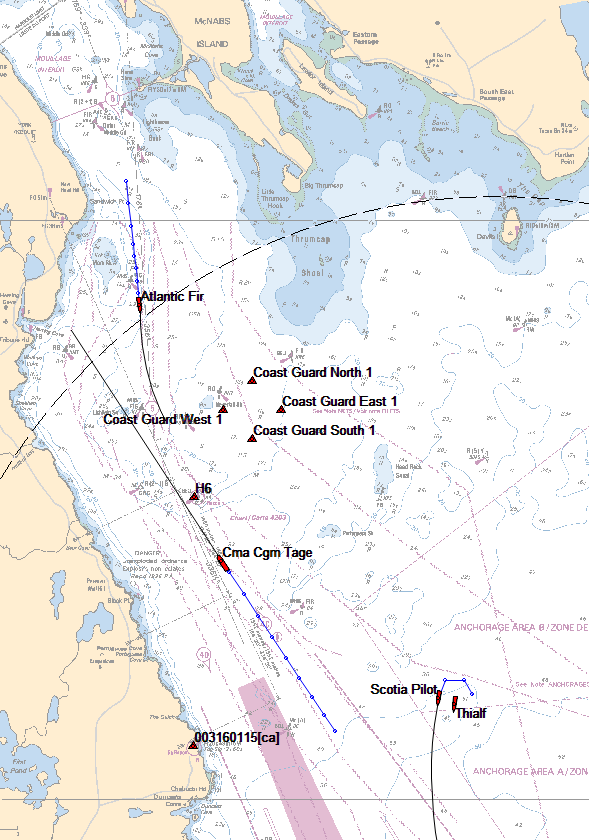
Q:Where is it Anchored? about 3nm East of Chubucto head.
Location of the Thialf, Bottom right corner.
Q: Wasen’t it here before? One of Heerema’s smaller crane ships, Hermod, was here around 2003. The original Sable Offshore installations were performed in 1998 by the Saipem 7000
Q: If this is the second largest, Whats the largest? Fleet mate Sleipnir. Built last year, it can lift 20,000tons. The Saipem 7000 is the third largest.
Q: you didn’t answer my question.. Ask it in a comment to this post, and i will
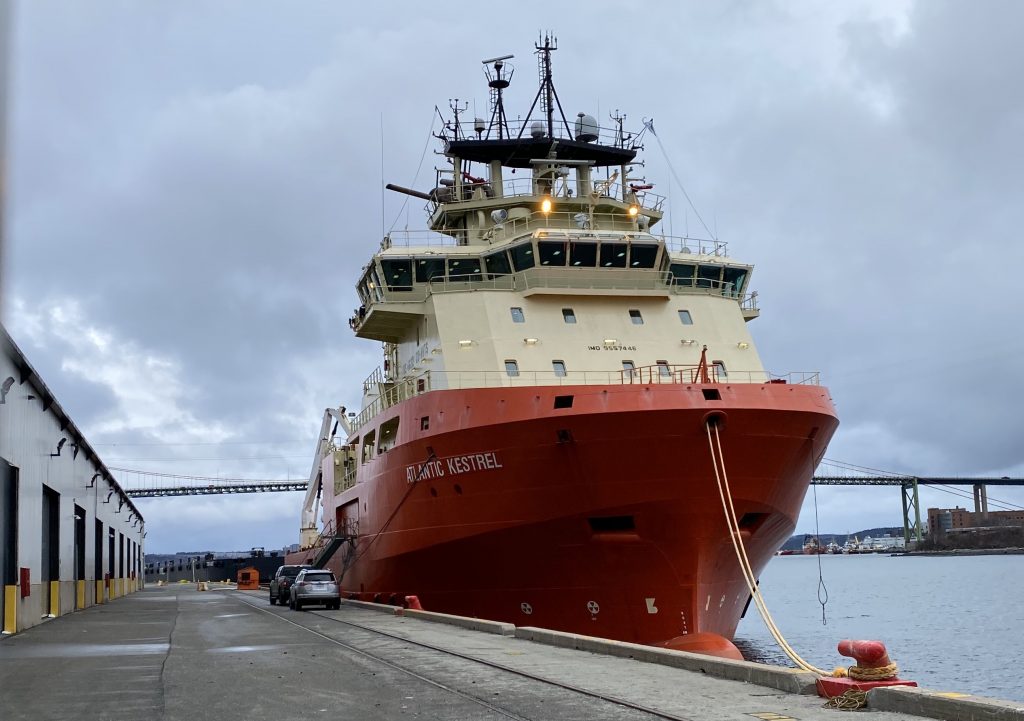
The Supply vessel Bylgia arrived with the crane ship Thialf, and had been standing by in the outer anchorage with the vessel. The Atlantic Kestrel took over, and the Bylgia tied up at pier 9 for supplies.
Both vessels are here for the Sable offshore Decommissioning project.
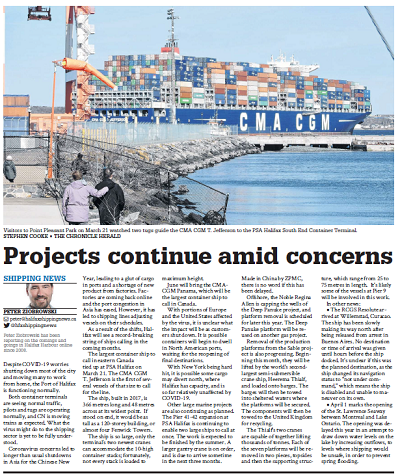
This week in the Herald, I discuss covid-19, and its impacts on the port, and large offshore projects. as well as the sting of record breaking container ships to call in the coming months.
Since submitting the article:
we have confirmation that the Siem Cicero has been denied entry to the port after the ship reported several ill Crew members.
We also learned that the Crane Ship Thialf arrived in the outer Anchorage this morning. there is no word if it will enter the Harbour, though Atlantic Kesterel paid it a visit this evening.
The worlds second largest crane ship Thialf arrived in the approaches last night after 33 days at sea. the Vessel sailed from Amsterdam, and will be used to remove the Sable Island Offshore Gas field production platforms.
The 2 cranes are able to lift a combined 14,200 tons.
Atlantic Kestrel tied up at Pier 9 earlier this week. The ship, buit in singapore in 2012 normally works off Newfoundland, but is likely here as part of the Sable island an Deep Panuke Offshore gas Decomisioning work.
the Noble Regina Allen returned to Halifax today, after sealing the wells of the Sable offshore Field. the rig tied up at woodside, where it will undergo a work period. in Febuary, it is scheduled to work for EnCana sealing the wells of the Deep Panuke project. When that work is complete in June, the rig is booked in Trinidad.
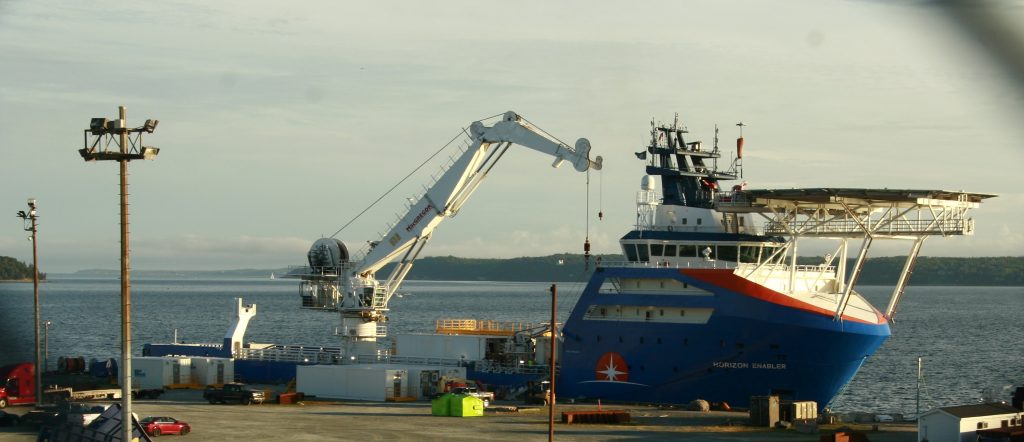
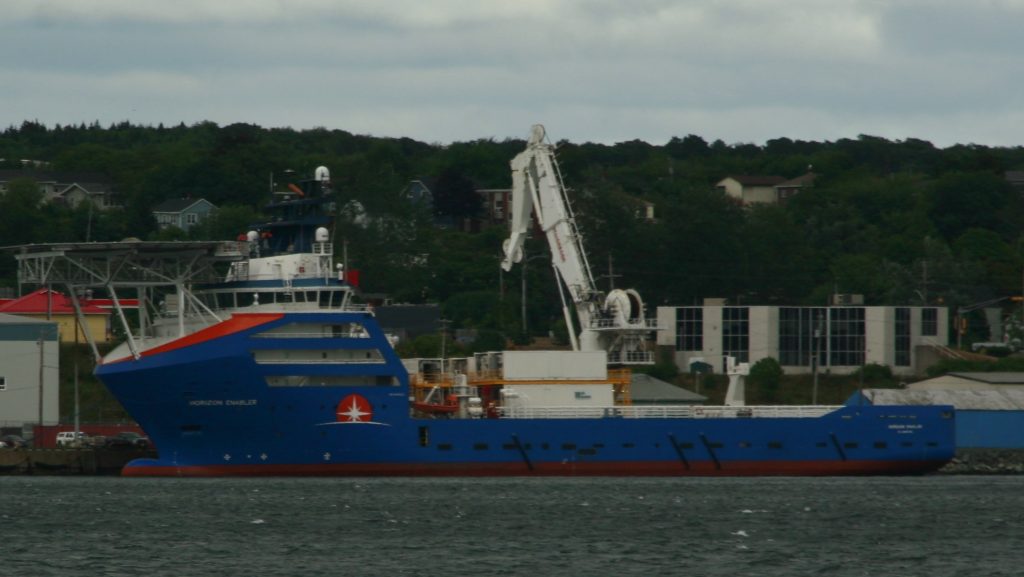
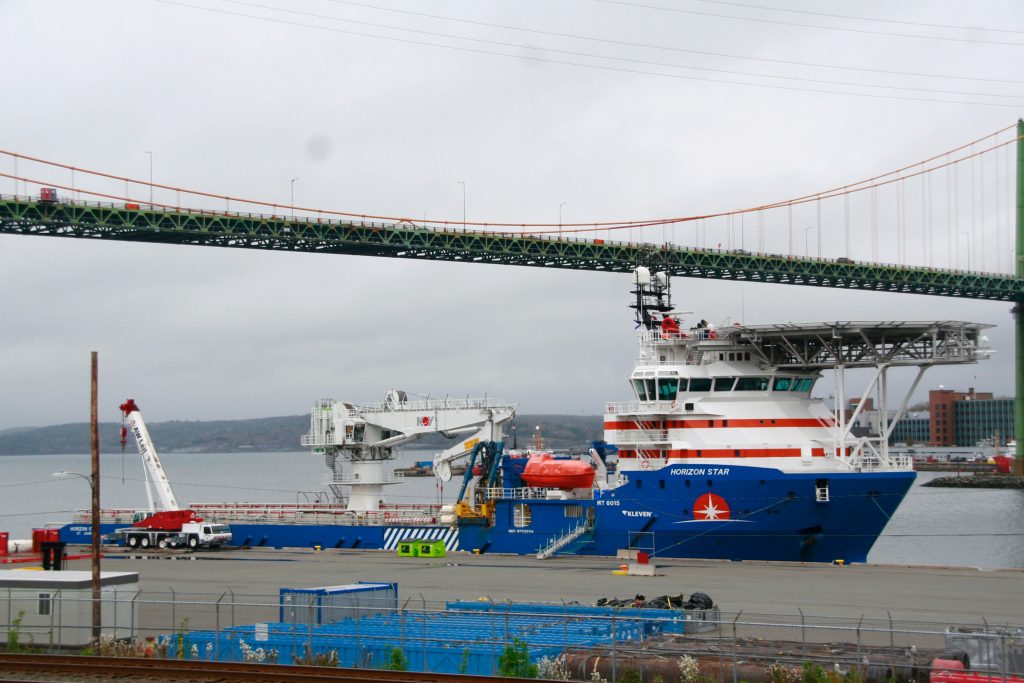
Horizon Enabler is headed out to do some international work, and was loading modules at Woodside last night. The modules are shipping container sized, and look to be a work space of some kind.
The Canadian International Trade Tribunal (CITT) has responded to a complaint by Heiltsuk Horizon Maritime Services, recommending a review of a key performance requirement in the process to procure two emergency towing vessels for the protection of Canada’s West Coast.
As a bid participant, Heiltsuk Horizon – a partnership of majority partner Heiltsuk Nation of Bella Bella, British Columbia and Horizon Maritime Services Limited, registered a complaint last August that the winning supplier did not meet important safety requirements of the tender process.
I wrote about the issues with the towing contract in this Chronicle Herald Piece when the Atlantic Towing vessels headed west. Heiltsuk Horizon has not publicly disclosed the vessels they bid on the project, though based on other charters they were likely tidewater tugs.
In
a letter to Heiltsuk Horizon, the Tribunal recommends the Department of
Public Works and Government Services Canada reevaluate the “bollard
pull” (towing power) of the
vessels in all bids received and also awards Heiltsuk Horizon costs
incurred in submitting the complaint.
“The contract was awarded in the absence of the required proof that the vessels met the mandated towing power,” said Chief Operating Officer Steven Widmeyer, Horizon Maritime Services Limited. “We hope this recommendation leads to a reconsideration of our Heiltsuk Horizon vessels, which are in accordance with recommendations of the 2018 Emergency Towing Vessel Needs Assessment by the Clear Seas Center for Responsible Marine Shipping.”
The
CITT letter recommends no further expenditures be made on the awarded
contract until a review is complete and also lays out potential actions
to be taken post-review,
including cancellation of the existing contract.
The
Heiltsuk Nation, currently in reconciliation discussions with Canada,
teamed up with Horizon Maritime to form Heiltsuk Horizon, following the
devastating
Nathan E. Stewart oil spill in its territory in October 2016.