DRDC Barge Moved Last Night

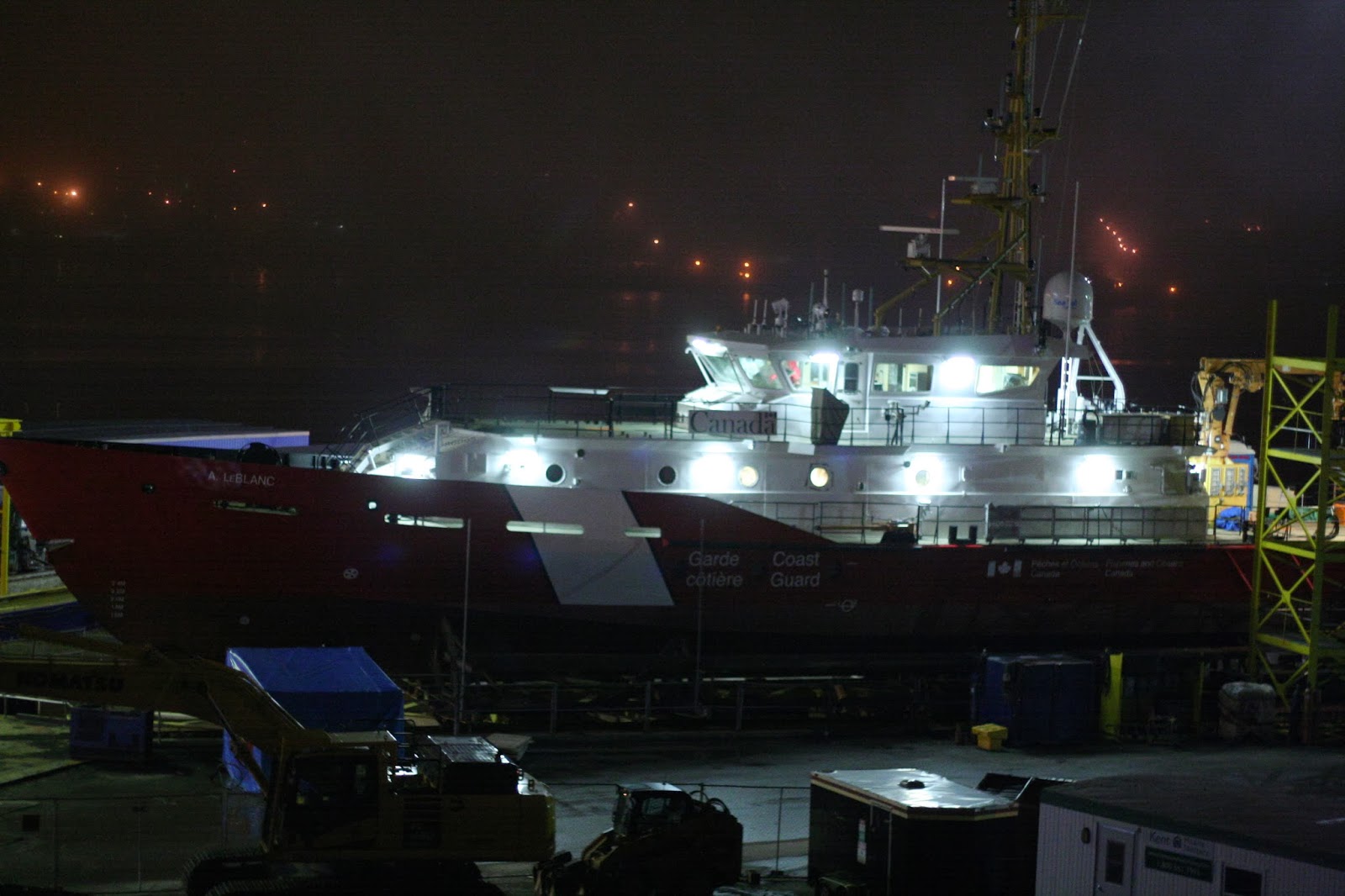
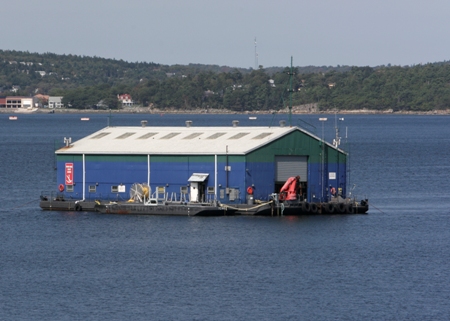
Those of you who commute the Bedford highway may have noticed the DRDC barge was missing. She was towed last night back to the naval dockyard, as she is due for her 5 year maintenance period.

When the work period is over, she should be returned though I have heard rumors budget cuts may discontinue her service.

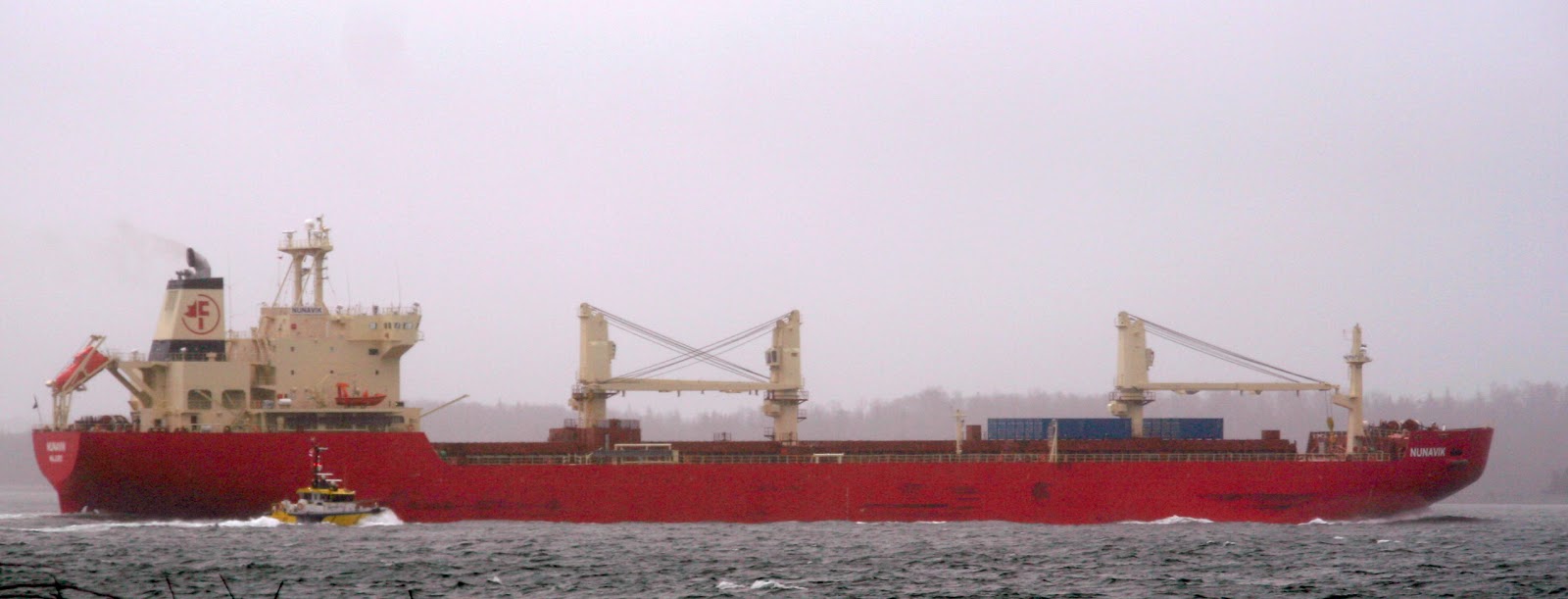
First Visit for Fednav Newbuild NUNAVIK

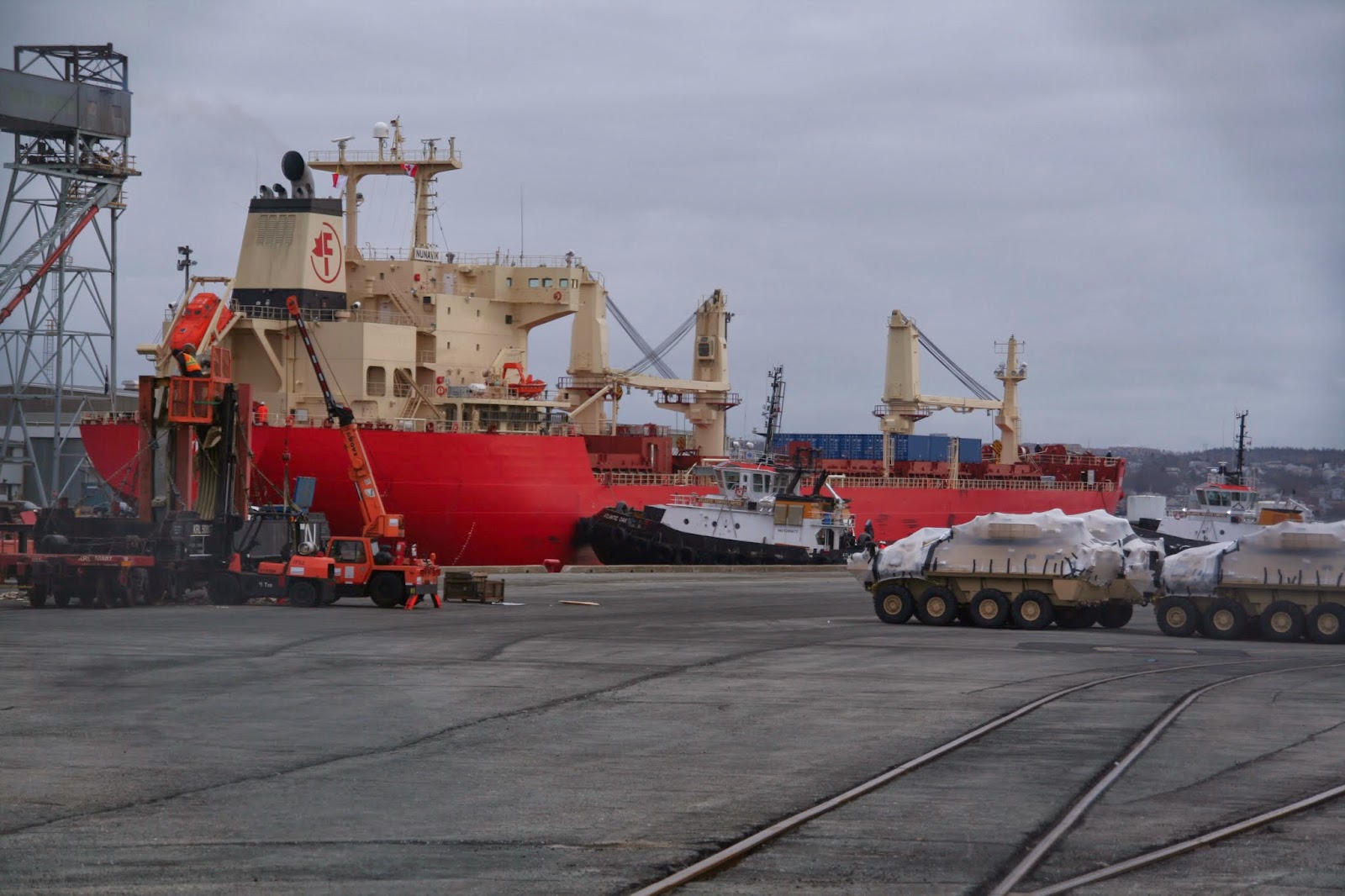
The newbuild bulk carrier Nunavik arrived this morning at pier 27. This was her first stop in Canada.
She was announced at the same time as Oceanex announced the construction of the Connaigra.

 The MV Nunavik. Built at JMU’s Tsu Shipyard in Japan, the ship will be used to export the concentrates produced at the Canadian Royalties owned Nunavik Nickel mine at Deception Bay in northern Quebec. The vessel will also supply the mine with equipment and fuel, year round.

Rated Polar Class 4, the Nunavik is the most powerful bulk-carrying icebreaker in the world. It is similar in design to the Umiak I, the Fednav ship servicing Vale’s Voisey’s Bay operation in Northern Labrador. The Nunavik will sail unescorted in Arctic regions and will operate in the extreme winter conditions of the Canadian Arctic. It is capable of maintaining continuous progress of 3 knots in 1.5 m of ice.
The vessel was designed by Fednav and JMU, and will sail between Deception Bay and Northern Europe on a year-round basis. The engine produces 29,600 hp, three times the power of a conventional bulk carrier of the same size. The Nunavik will be supported by Enfotec Technical Services, a Fednav subsidiary to provide up to date information on ice conditions as well as technical support to the inhouse IceNav navigation system. 
The Nunavik is equipped with the latest environmental technologies, such as a Tier II engine that reduces nitrogen oxide emissions by 20%, and the first ballast treatment system installed on a Canadian-owned vessel.

In naming this new ship Nunavik, Fednav wanted to recognize the inhabitants and the region in which it will operate as well as its project partner, Nunavik Nickel

She arrived earlier then scheduled, so was already tieing up when I arrived.

UPDATE 03/21:
She sailed yesterday just after 16:00, the weather was quite rough.

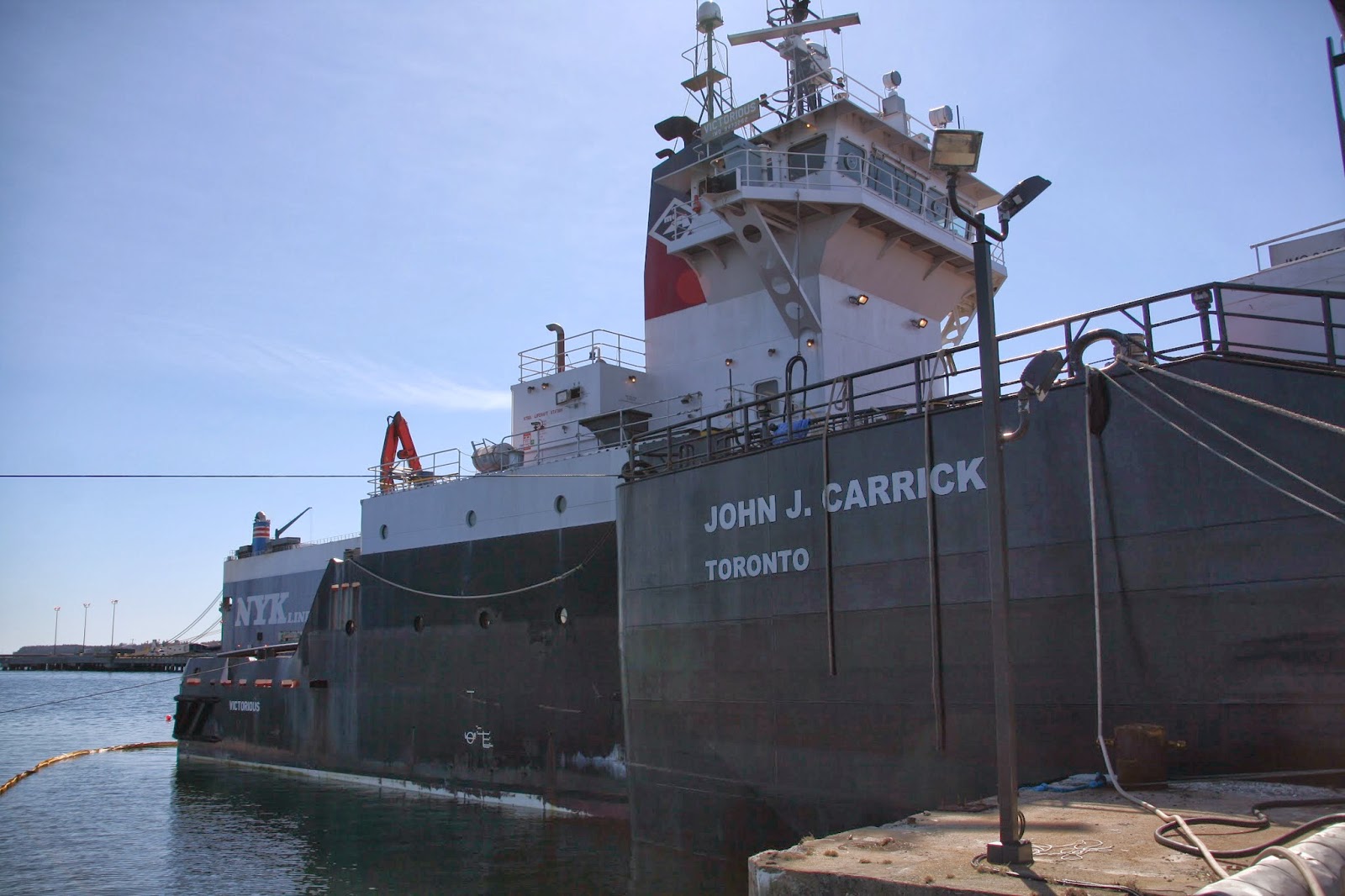
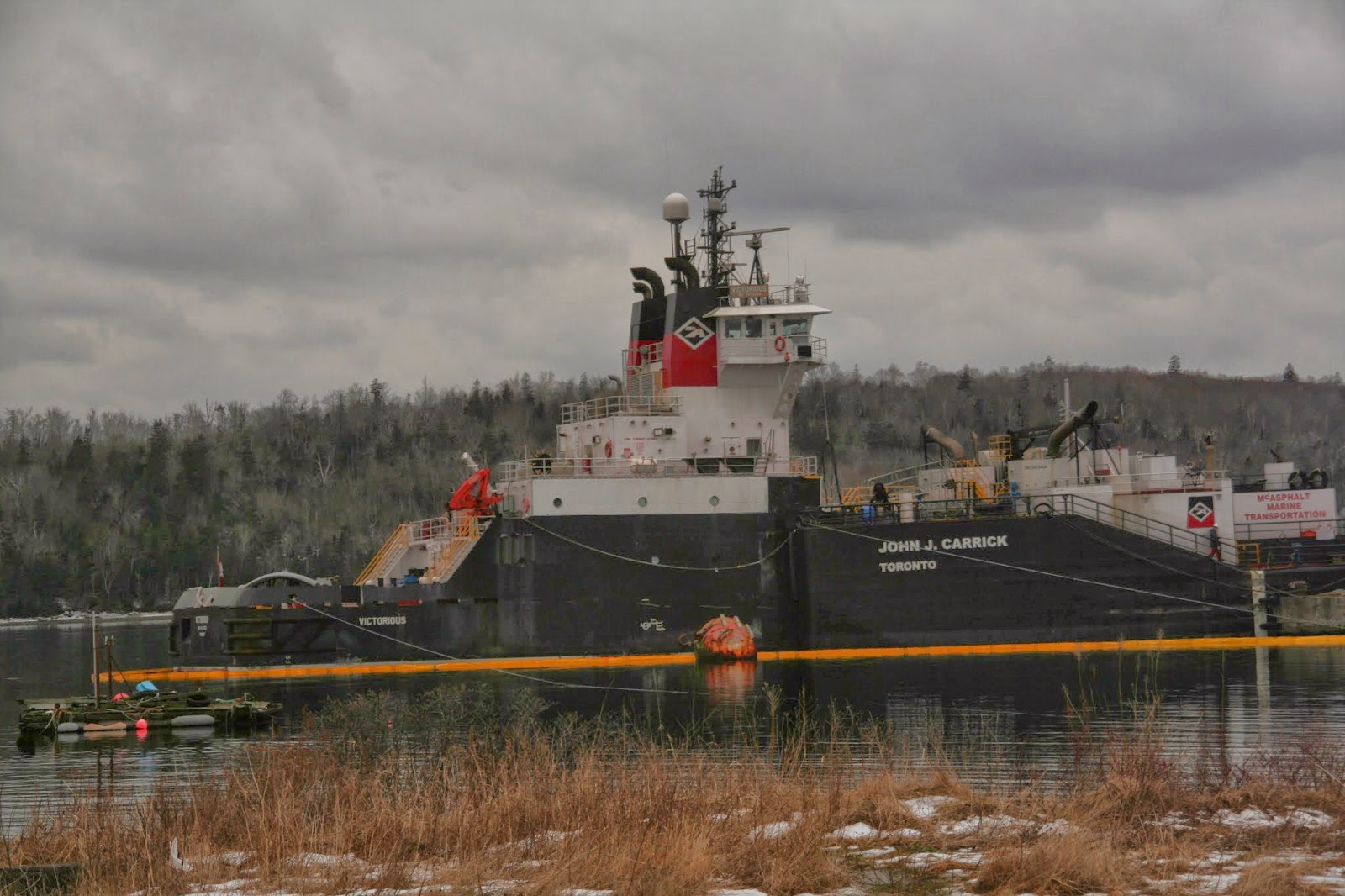
The Grand Tour of the Tug Victorious and the Barge John J Carrick

The Articulated Tug And Barge Victorious with John J Carrick have been frequent visitors to Halifax over the years. Typically they are delivering liquid Asphalt to the McAsphalt Dock in Eastern Passage. This year, they spent the winter in halifax, arriving on January 23rd. They served as a supply base for their sister company Stirling Fuels. Stirling Marine Fuels chartered the Algoma Dartmouth from Algoma, and is operating the Bunkering Service in Halifax, since imperial oil shut down the refinery, and announced they would no longer be importing Bunker C Fuel. The long term plans are unknown at this point, but the barge has enough oil left to fill Algoma Dartmouth one more time, and will then head back to the great lakes, presumably after the 31st when the seaway re-opens.

 I was able to get in touch with the Captain, and after clearing it with head office, I was able to Get a Tour. So thanks go to both.

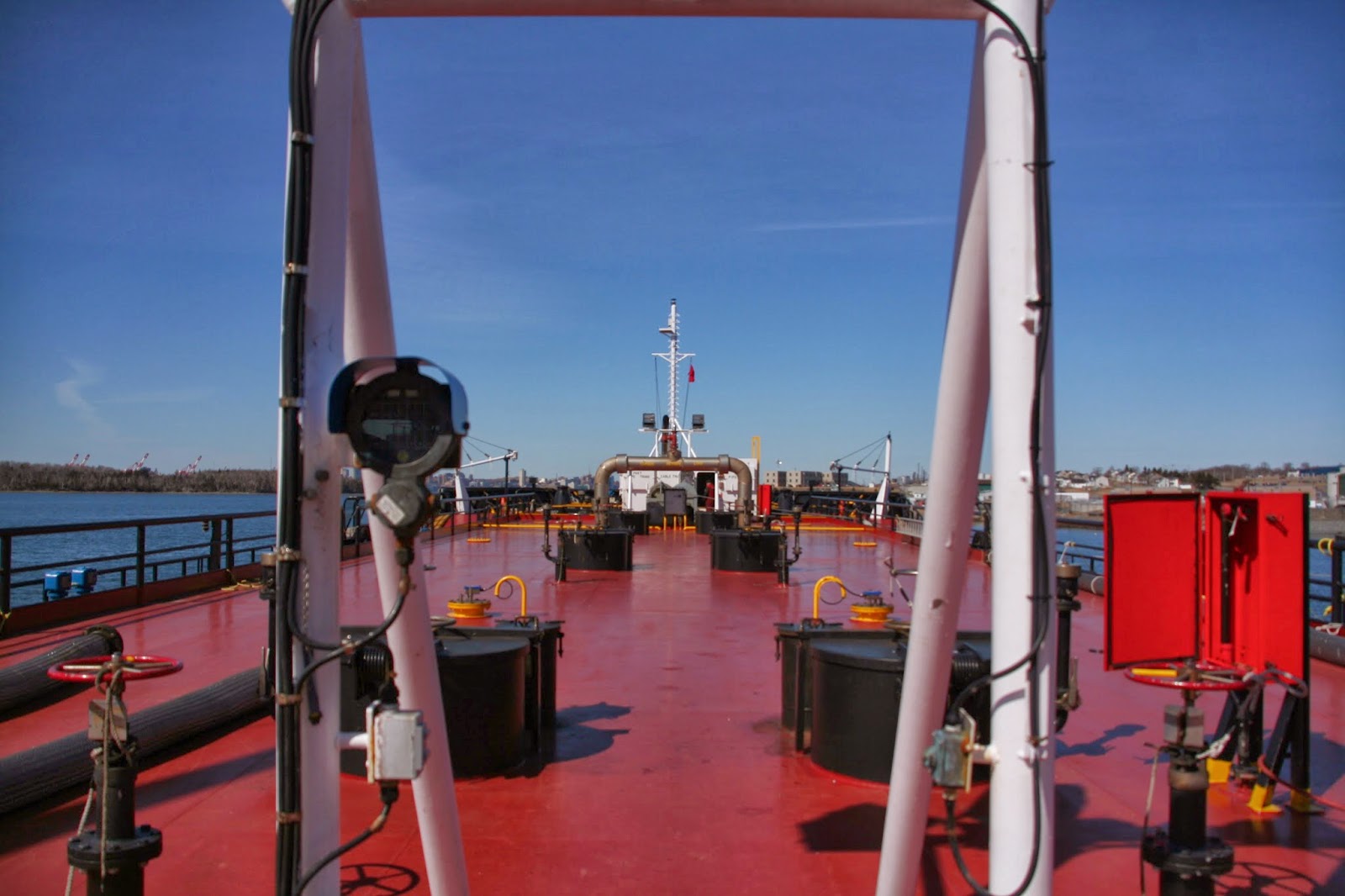
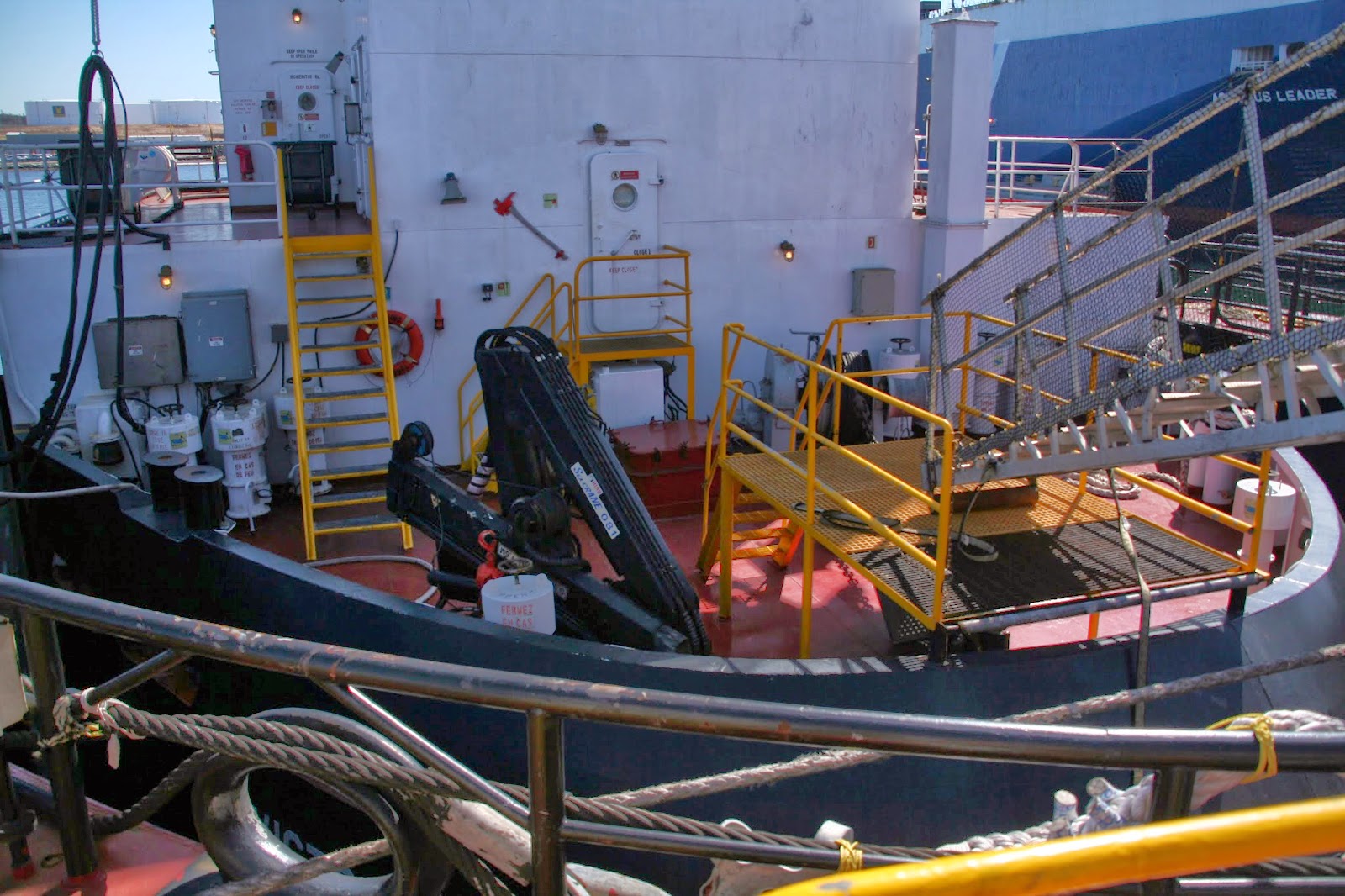
Looking out across the Deck of the John J Carrick, Take a Moment to notice how clean it is. I spent 45 minutes aboard, and my hands end up dirtier after paying for gas.

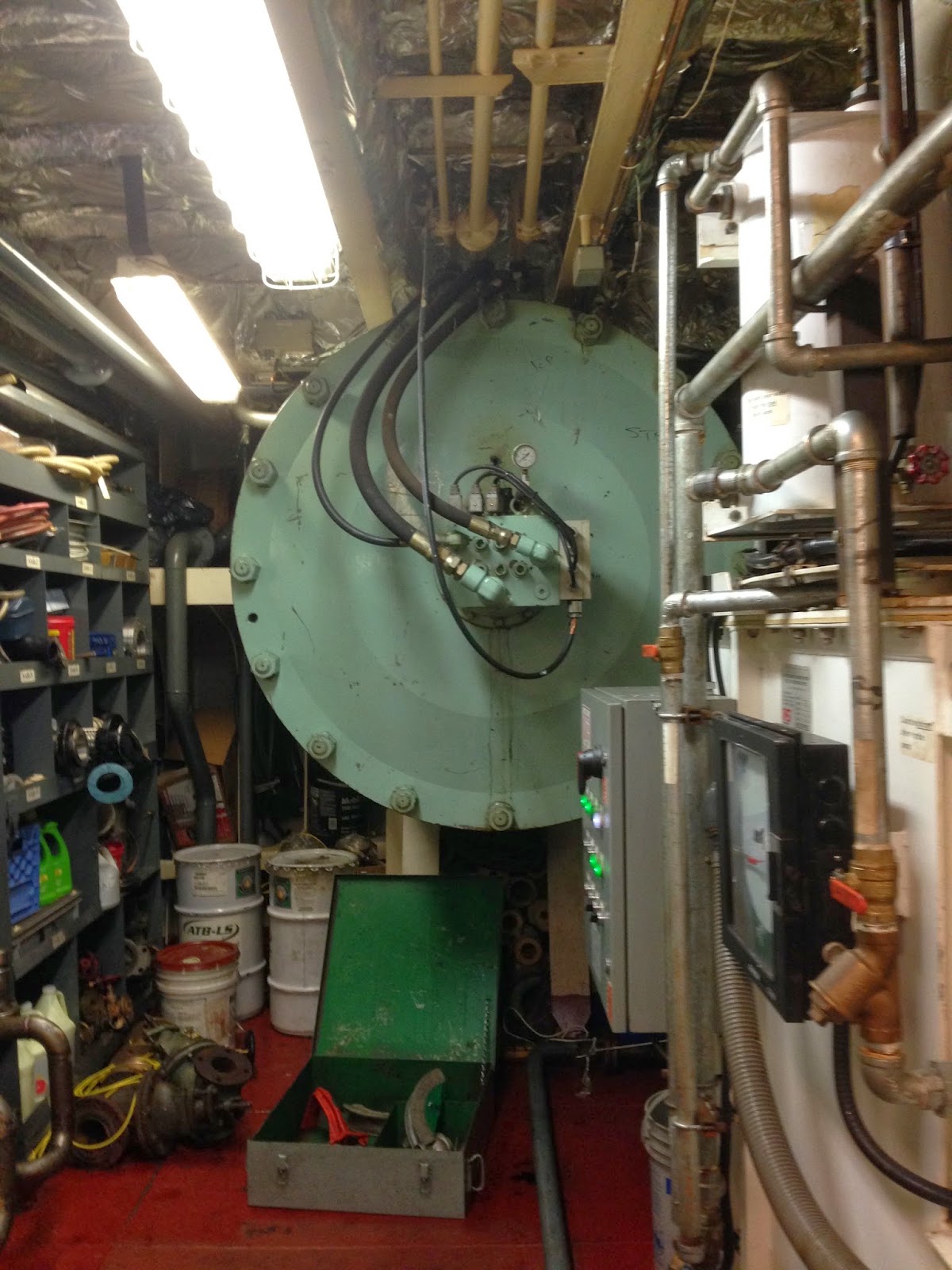
Looking across the deck, the John J Carrack has 12 tanks, 6 port and 6 starboard. she is capable of carrying 11000 tons of product. compared to other tankers she is relatively simple as she is only equipped to handle one commodity at a time. The hatches protruding allow access to the tanks for cleaning, maintenance and sounding. At the stern of the barge, are 2 pump rooms, and an engine room that contains heaters to warm the product so it flows.

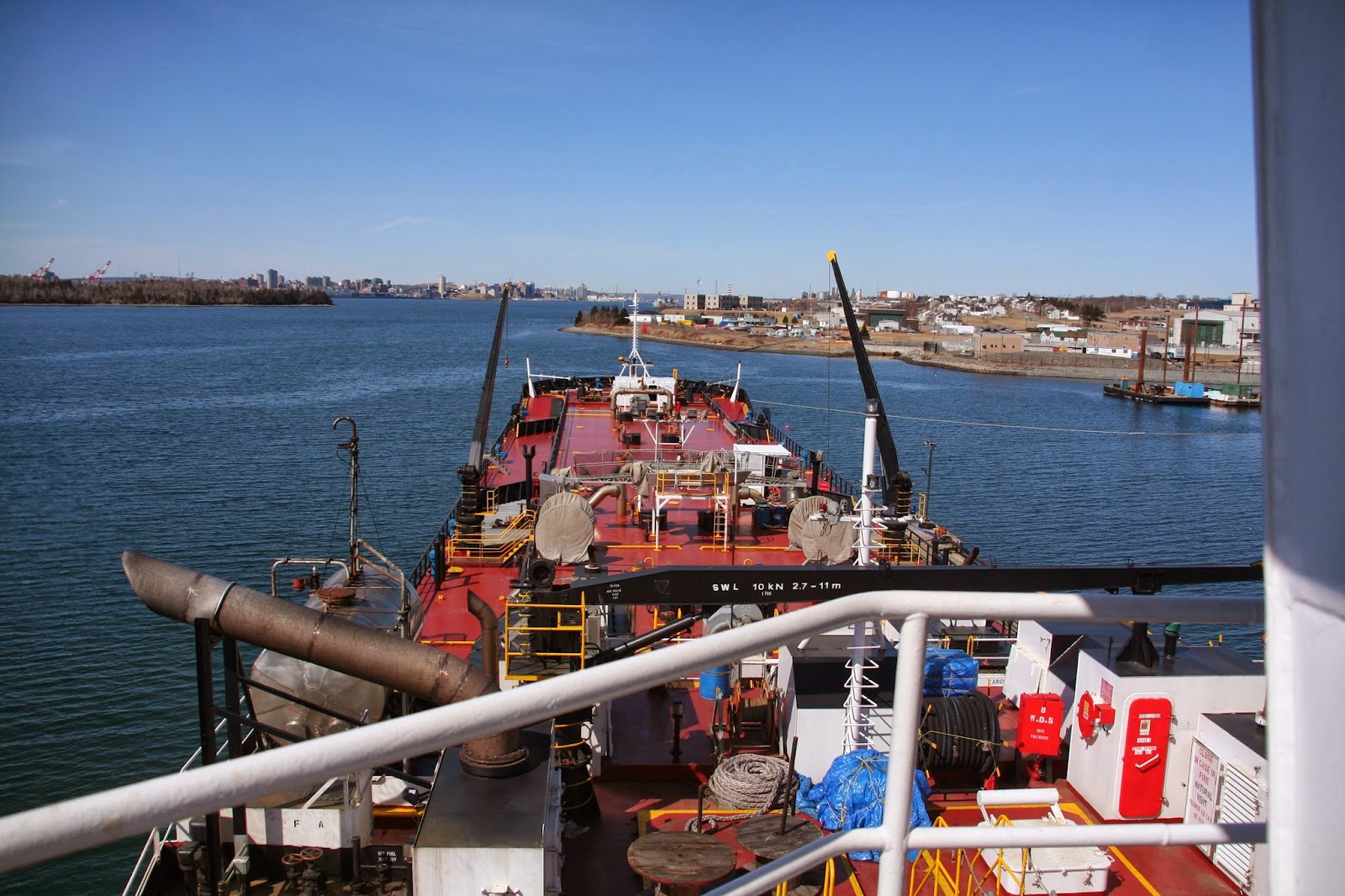
(Above) View forward from the bridge wing. (Below) the tug inserted in the notch from the barge

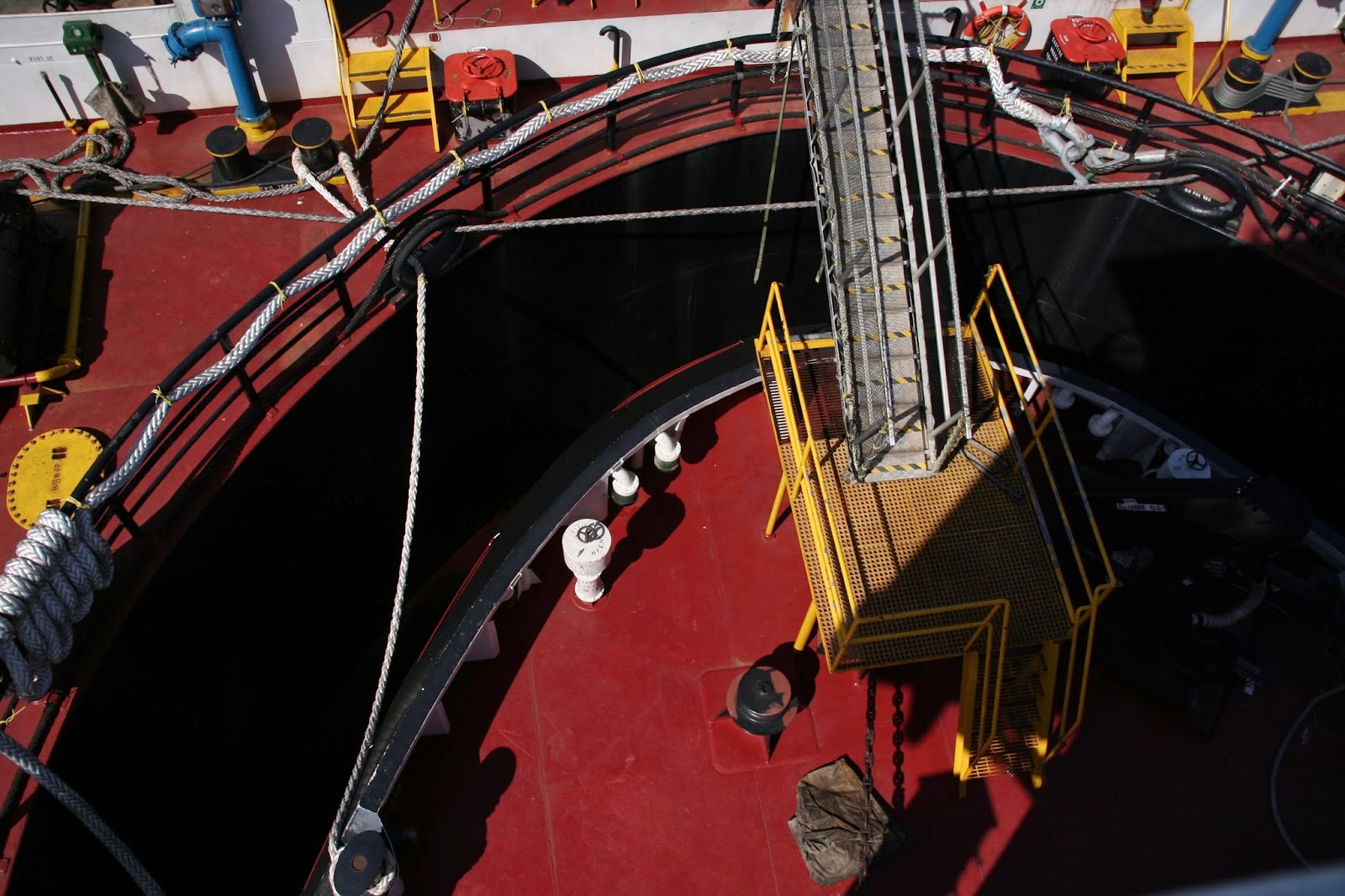
(below)The Bow of the tug from the bridge. the gang plank allows the crew to walk between the tug and barge.

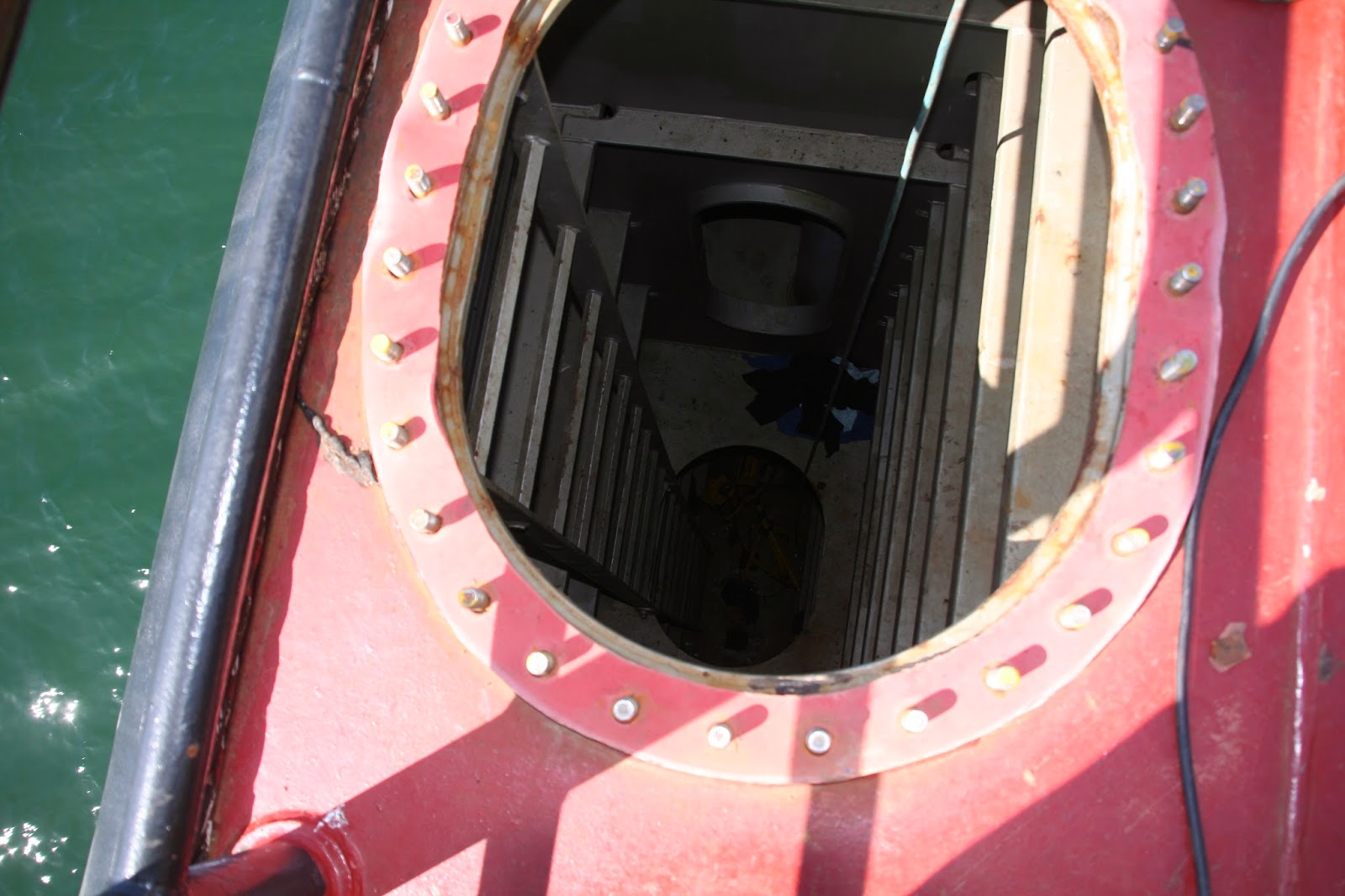
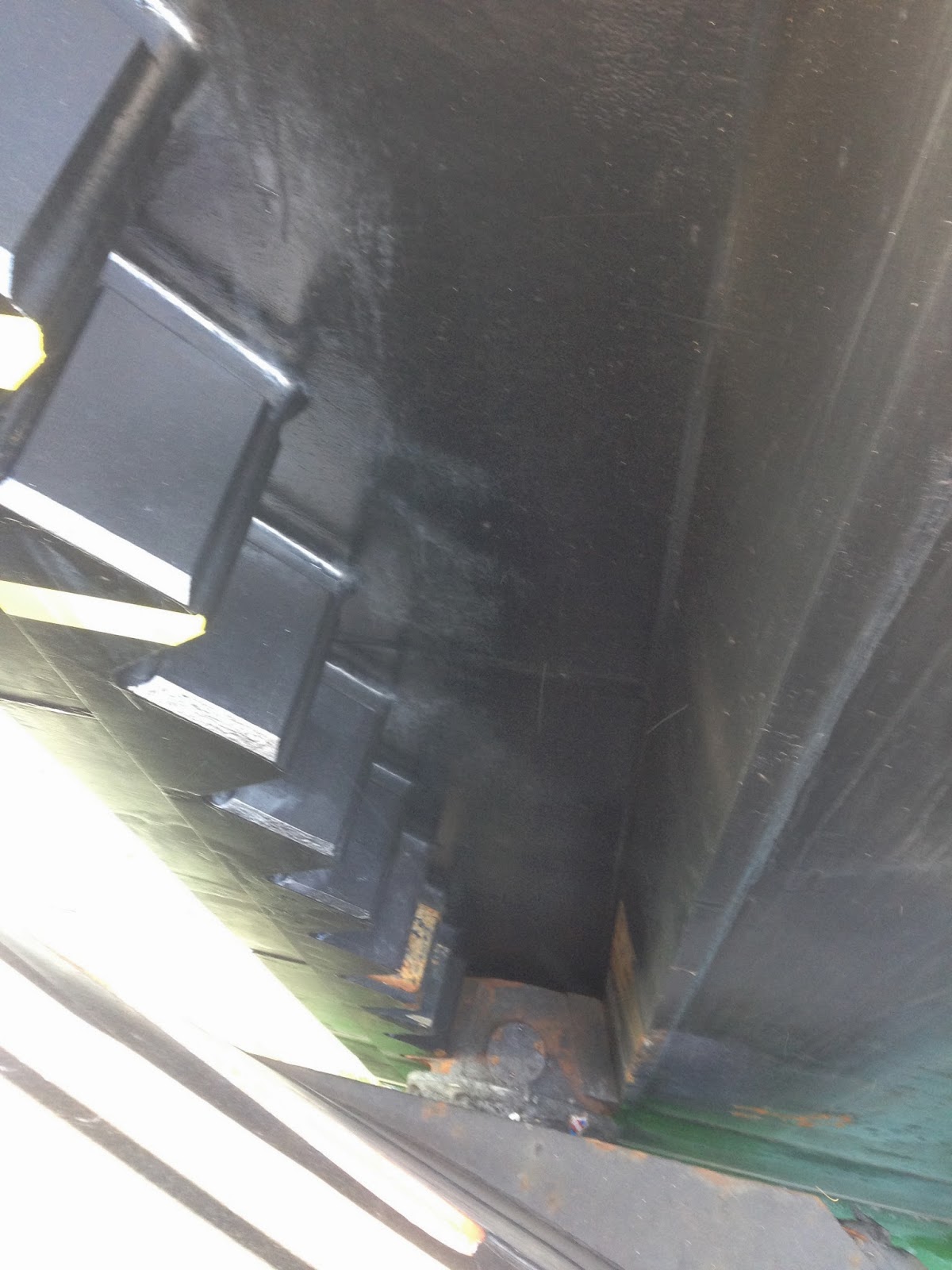
(Below) Bolt down hatch removed opening to the Void space leading to the ballast tanks.

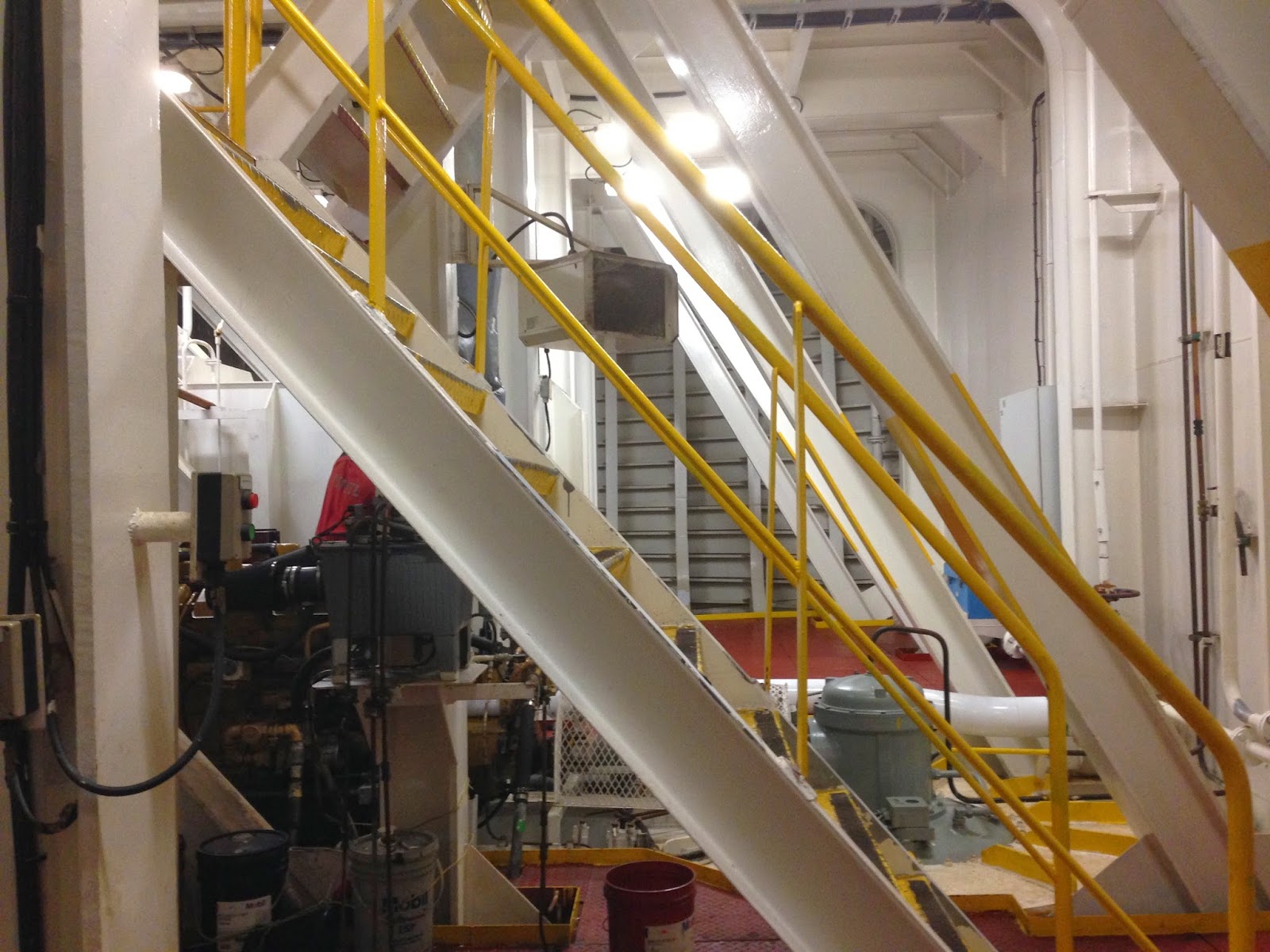
(Above and Bellow) the Bow thruster compartment in the bow of the barge 4 decks down. the thruster uses a Jet of water unlike other vessels with a sideways mounted propellor.

(Above) the pin in the notch on the outside. note the various levels based on the draft of the barge. (Below) the machinery that retracts the pin the pin is housed in the cylinder when retracted.
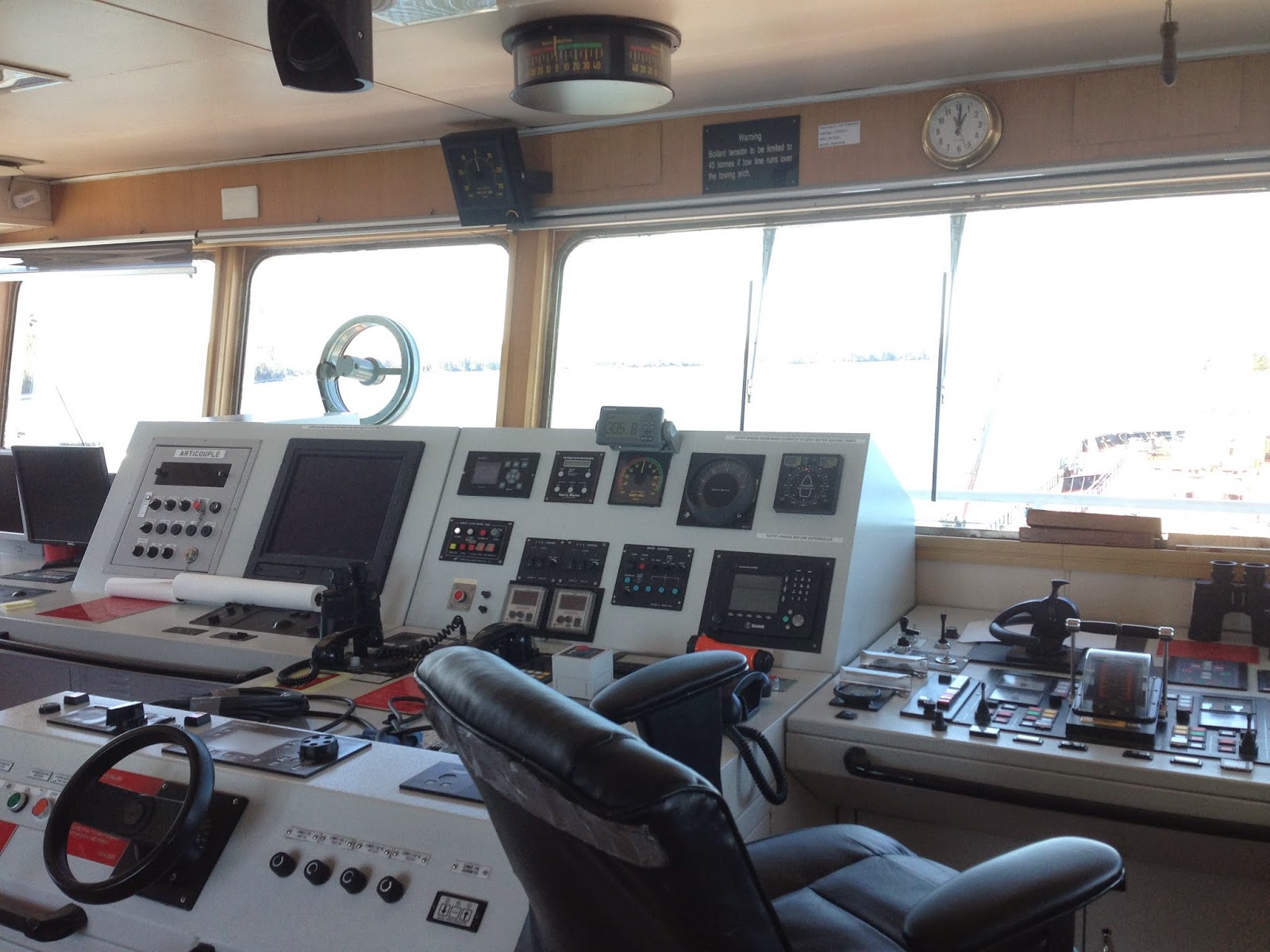
(Above) the bridge, note the ships wheel to the left, and the throttle controls to the right. Not shown are 2 radar displays on the far right, and the engine room displays on the far left.
A
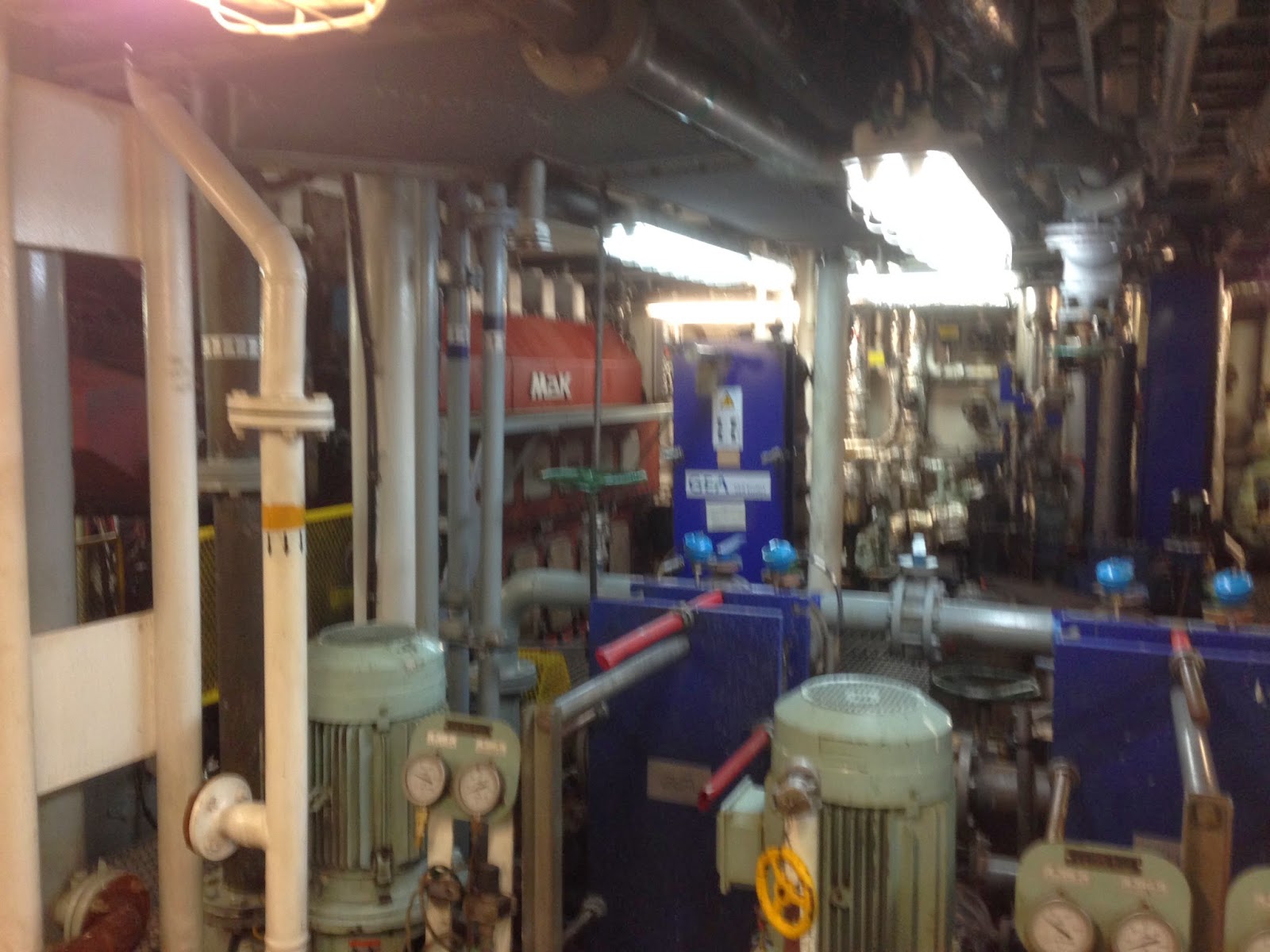
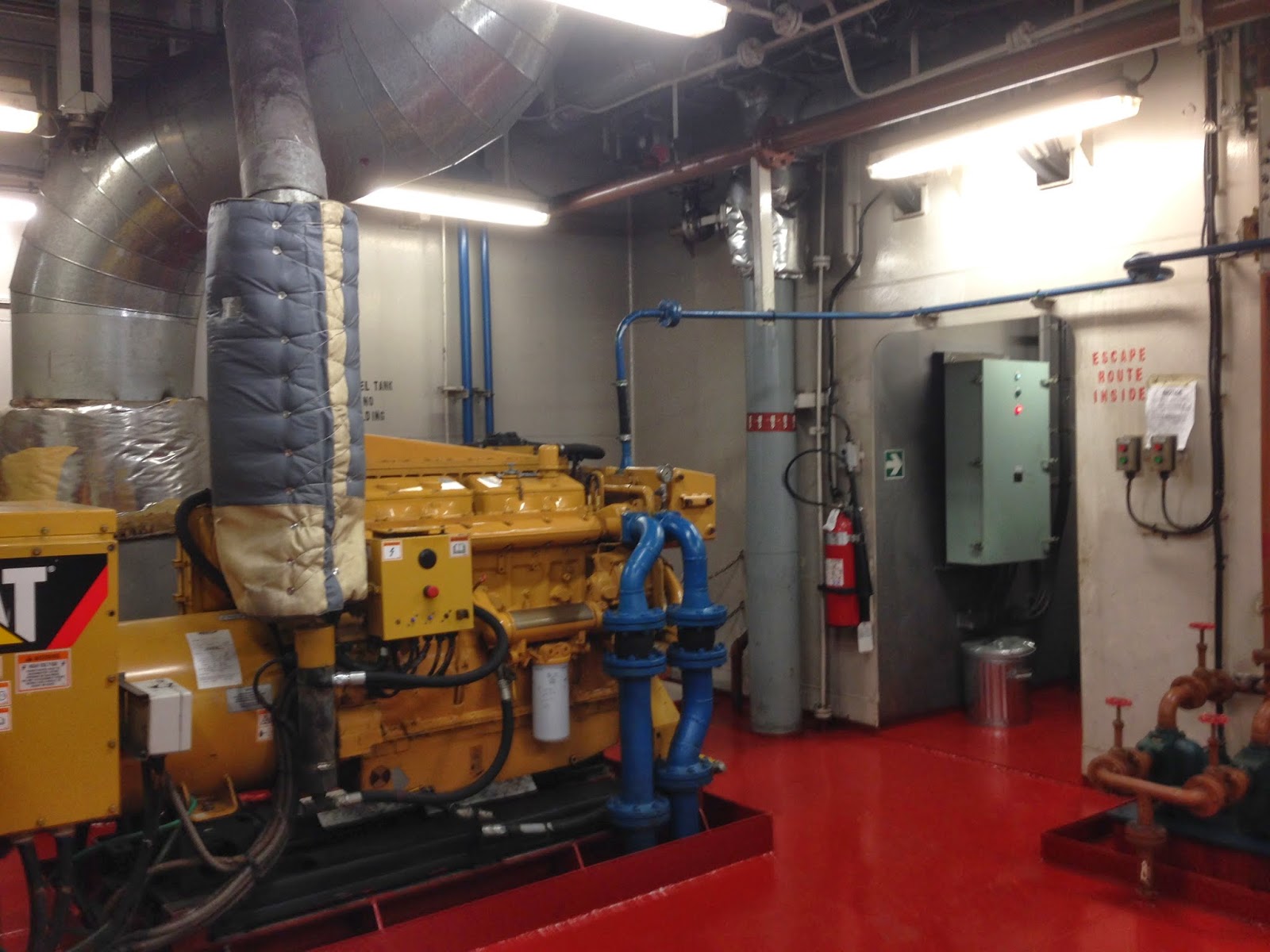
(Above) Inside the engine room. note the Red MAK engine on the left (there is also one on the right)
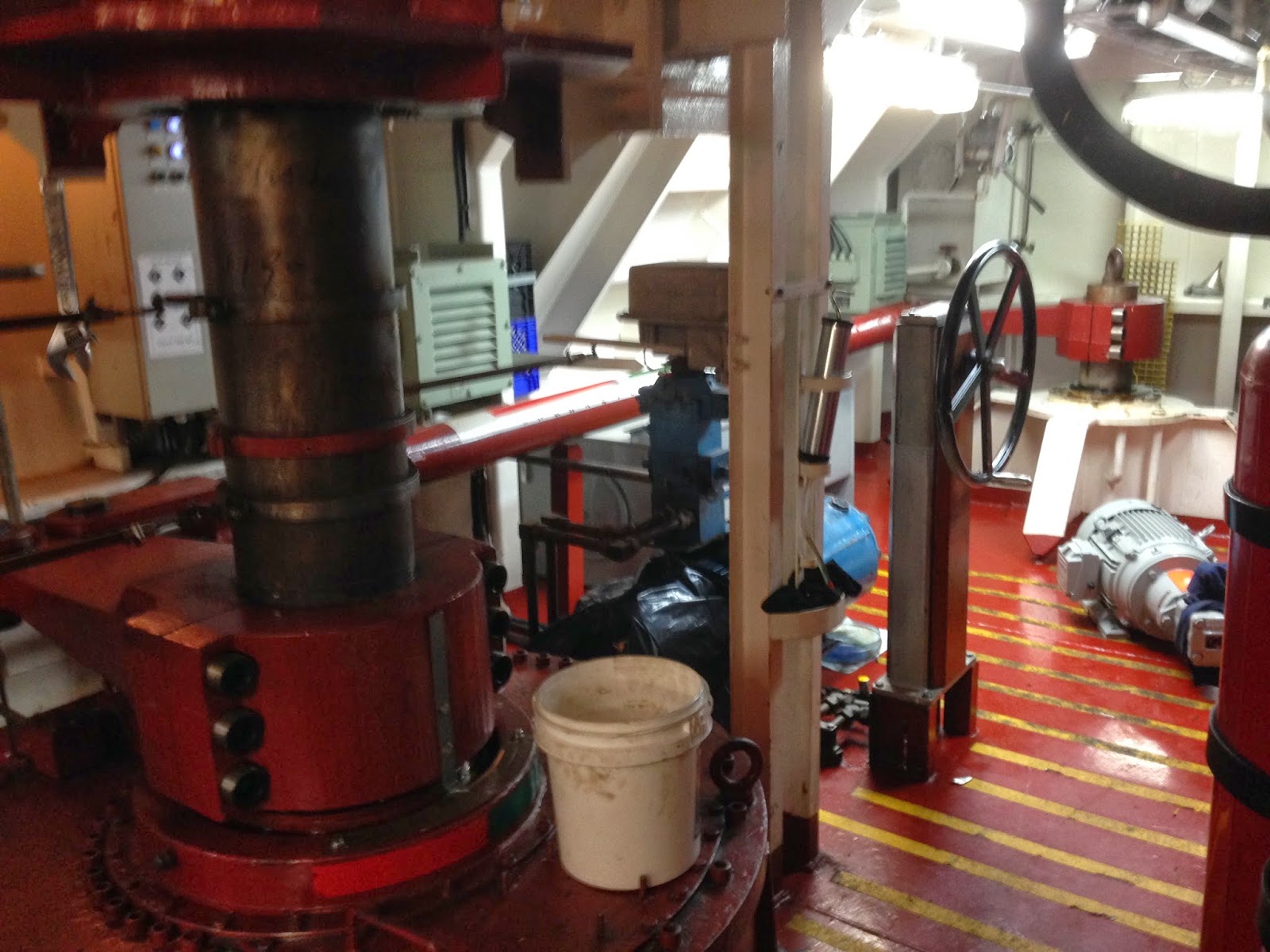
(Below) Rudder compartment. note the linkage to the port rudder, there is another to starboard not shown.

The remainder of the tug Contains a Large galley and mess, as well as Sleeping Quarters for the crew.

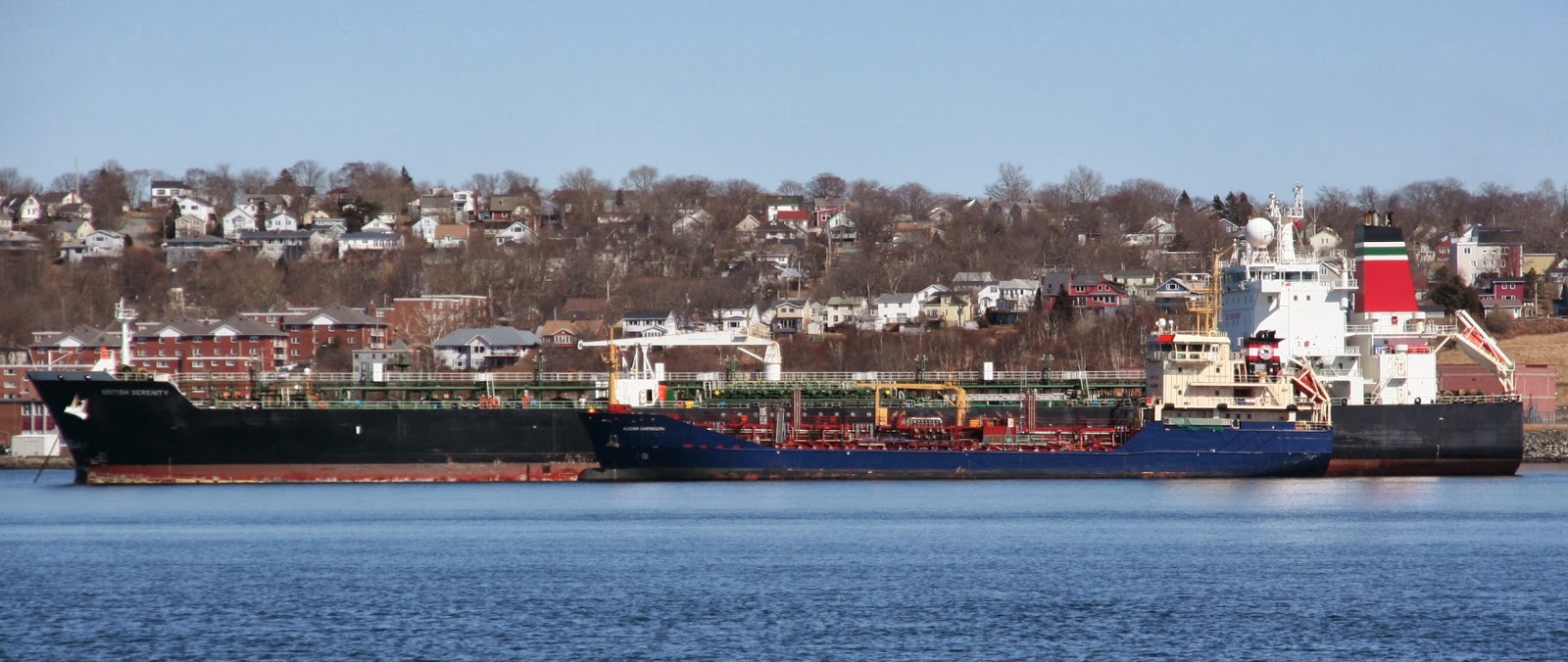
Tanker British Serenity for Bunkers

The Tanker British Serenity made a brief stop for bunkers today, before sailing for Guayanilla, Puerto Rico. A British Flagged vessel, she is owned by BP Shipping, and is of their Virtue Class. She was delivered in 2005, and comes in at a respectable 47,000 tons. She sailed At 15:00

Eastern Passage – Aquarious Leader at Autoport

The NYK line PCTC Aquarious Leader tied up at Autoport. She is a regular caller to autoport, as part of NYK RORO’s USCX service. She was built in 2008 and can carry 5980 cars.

The observant of you may notice a more head on angle then normal. The Tug Victorious and barge John J. Carrick are docked at the McAsphalt Dock, just forward of Autoport. Stay tuned for a post on that.

Oceanex Ends Service to Corner Brook

Oceanex vessels will no longer be sailing to Corner Brook NF. Cargo will be delivered to St. John’s and shipped over land. The company sighted dropping traffic levels and subsidized competition from Marine Atlantic as the cause.

Oceanex Runs 3 vessels, Connraiga and Oceanex Avalon sailing from Montreal, and Oceanex Sanderling from Halifax.

(Above) Oceanex Avalon departing St John’s (file photo)

Did the CCGS Louis St Laurent Spend its fuel budget already?

After a previous post  mentioned concerns about icebreaking delays impacting shipping; and the fact that the Largest CCGS Ice breaker was tied up for the past month, A reader emailed me to say that As a result of heavier ice then in recent years, the Louis St. Laurent has already spent their fuel budget, and are waiting for the budget year to roll over March 31.

The Louis St. Laurent Burns fuel at a rate 80 cubic meters per day breaking ice. 80cu m is aprox 80000 liters /day.  Given that recent years have been light on ice, the budget was likely lower then what it should have been for a full ice year.  Being the largest and oldest ship in the fleet, high full consumption is not surprising.

UPDATE: I received 2 notes to say that its actually more likely to 80 cubic Meters and not 80 cubic feet. I corrected the post.

Ice Causing Delays.

Ice has been a big issue this year, And Halifax based CCGS Craft have been working in Newfoundland and the Gulf of St Lawrence this winter.  Earl Grey responded to the grounding of John 1, and Edward Cornwallis and Sir William Alexander are also both working that area. Newfoundland sent CCGS Cape Roger to fill in here.

The one Oddity in all this Is the Louis St Laurent. The Largest icebreaker in the CCGS Fleet, she has been tied up at BIO since arriving on February 11th.  In January, She put in to port for a week for crew change, so she may be expected to sail in the coming days, but that still begs the question why the largest icebreaker in the fleet took a full rotation off.

The Canadian Ice Service, has stated that there is 10 per cent more ice this year compared to the 30-year average referring to both the amount and thickness of the ice.

CSA Release:

With the Great Lakes and St. Lawrence Seaway facing the thickest and broadest ice cover in years, the Canadian Shipowners Association (CSA) is extremely concerned that Canada’s ice-breakers will not be able to create and maintain the routes needed to move key cargo to Canadian and American industries.  The Canadian Coast Guard is doing its utmost to work with resources across a large geographical area subject to heavy ice, but this situation is rippling into Canada’s transportation and economic system.

Concerns over ice conditions and the ability of the Canadian Coast Guard to provide sufficient ice-breaking has delayed the opening of the St. Lawrence Seaway past opening dates achieved in recent years. Despite Canadian government efforts to encourage the movement of Canadian grain, it will remain stored in ports such as Thunder Bay until ice breakers open ports and support ship movements. Not only are Canadian grain movements threatened by insufficient ice-breaking, so too are other industries with already low stocks of commodities such as iron ore, construction materials, salt and petroleum products which are moved by ships.
CSA and its members have advised the Canadian Coast Guard of the need to employ three ice-breakers to support the opening of the Great Lakes- Seaway system. Disappointingly, the Canadian Coast Guard’s effort to commit the necessary resources appears to be late as it manages challenging winter conditions in many regions.

The Canadian Coast Guard’s fleet of ice-breaking ships is aging and too few in numbers to support the economic and environmental benefits of short-sea-shipping in Canada. The CSA calls on the Canadian Coast Guard to fulfill its support to maritime commerce immediately by deploying three additional ice-breaking assets to support shipping throughout the Great Lakes – St. Lawrence Seaway system while also meeting obligations to support navigation in the St. Lawrence River and Maritimes. Furthermore, CSA encourages the Government of Canada to find a longer-term solution to augment assets.

what is ice like on the lakes, Check out this time lapse of the Laker Wilfred Sykes leaving winter layup.

Various Mechanical Issues.

its been a bad week for Bulk Carries and Mechanical issues.

1. The John 1 Lost power and went aground off Rose Blanche Newfoundland.

2. The Rt Hon Paul E Martin Waited out weather in the outer Anchorage before proceeding  to Shelbourn Ship Repair with the tug Atlantic Fir with a drive issue.

3. The Bulker Pioneer arrived at National Gypsum, appeared to load cargo, and On Friday was cold moved to Pier 25, with her bow Heavily ballasted down. This morning she appears to have propeller  work going on.

 (Above) Work On Pioneers Propeller (Below) Pioneer Ballasted down forward.

4. the Bulker Persenk Arrived to repair Ice damage at Anchorage 7. Her propeller was bent causing a bad vibration. Divers removed pieces to re-balance it.

The failed container

This is the container that failed shutting down Fairview Cove. From the photo it looks as though the side completely failed.

Note what a good one looks like below