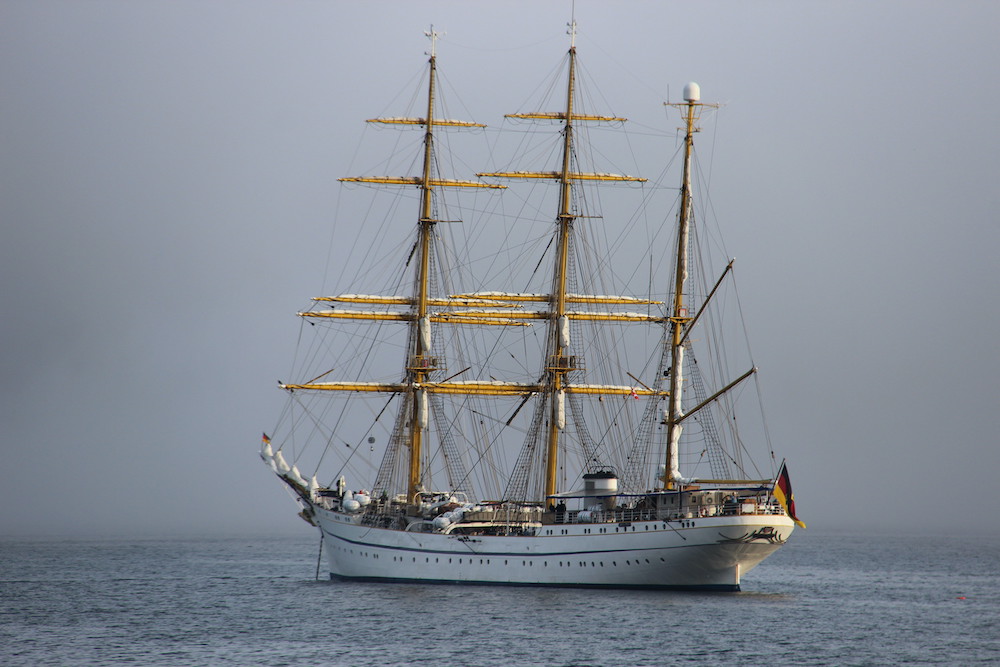
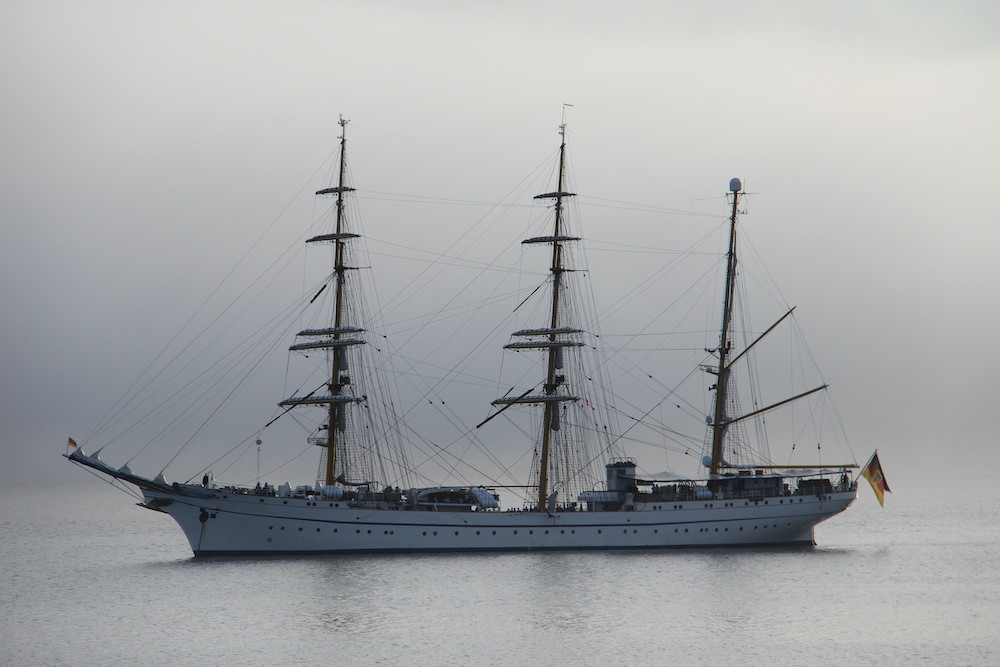
The German Navy’s Tall ship Gorch Fock took to anchor for a port visit. She will tie up on Thursday, and presumably be open to the public. This Gorch Fock was built in 1958. Built to a Blohm &Voss Design, she is a modern version of the original Gorch Fock, which was built in 1933, and was taken as war reparations from Germany after WWI. Her sisters include NRP Sagres, USCG Eagle, and Mircea. The 1933 Gorch Fock is now a museum in Germany.
Four additional ships were built to this design. Arc Gloria is the Oldest of the Modern Set of 4, Having been built in 1968 at the Astilleros Celaya S.A. shipyard in Bilbao. Her contemporaries Include Cuauhtémoc(1982 Mexico) , Guayas (1977 Ecuador) and Simon Bolivar (1980 Venezuela)
Mircea, Operated by the Romanian Navy was in port July 19-22
The Feds announced a new Stadler Rail Facility in Montreal this morning, to build 36 new long distance locomotives for VIA Rail. Additional early models will be built by Stadler in Spain. These locomotives will be used on the Non-Corridor routes, including the Ocean, Canadian, Prince Rupert and Churchill trains.
The renderings bear a resemblance to the EMD F125, which was built from 2015-2021 for Metrolink in California. EMD is now Progress Rail, and is owned by Caterpillar. The F125 was built with design assistance from Vossloh Rail Vehicles of Spain, which was acquired by Stadler in part due to their ability to build licensed designs from Progress Tail. The F125 is a Eurolite variant, Which are powered by a Cat diesel.
The new locomotives are hybrid, and feature ABB Battery technology that is also made in Quebec. Diesel locomotives are generally hybrid now, with the diesel motor turning a generator which delivers power to electric traction motors to drive the train. Through a process called dynamic breaking, the traction motors can become generators, and assist in slowing the train. the power generated is dissipated as heat in the large flared blister you can see on the top of Locomotives. The addition of a battery means that waste energy can be captured and stored and used to improve power efficiency on the train.
Stadler Manufactures thier FLRT series of trains in Utah for North American Sales. Ottawa’s O-Train Line 2 runs with 7 Stadler FLRT Train sets. Stadler trains also operate in the Swiss Alps (Bernina Express, Glacier Express, and others), Norway and kazakstan. Stadler also built dome cars for the Rockey Mountaineer, which means they have a good chance of supplying the long distance train sets for VIA Rail.
VIA Recently put Siemens Charger Locomotives and Venture trainsets into service on the corridor to replace the GE P42DC locomotives and mix of LRC, REN and BUDD coaches in use, all of which are past their service lives.
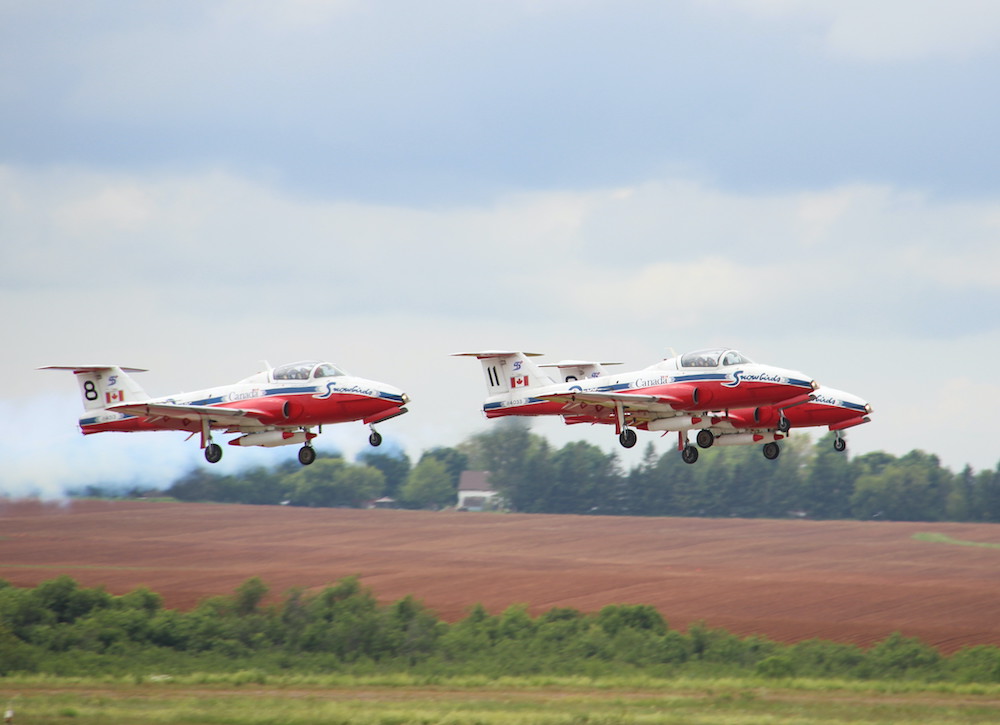
I caught the Snowbirds departing Summerside PEI at the end of June. In May, the Federal Government has announced the procurement of new aircraft for the team, and as a result they will be stood down after this season until the arrival of the new planes in 2030.
The current Canadair CT-114 Tudor jets date back to the 1960’s but are Canadian, and to my eye anyway look great. They were used as the primary jet trainer from 1963 to 2000, and the snowbirds have been flying them since 1971.
The new planes will be CT-157 Siskin II (based on the Swiss-made Pilatus PC-21 turboprop). A turboprop design, these planes have more power and beter performance then the tutors, and will be really unique in the Airforce demo squadron realm. I look forward to them.
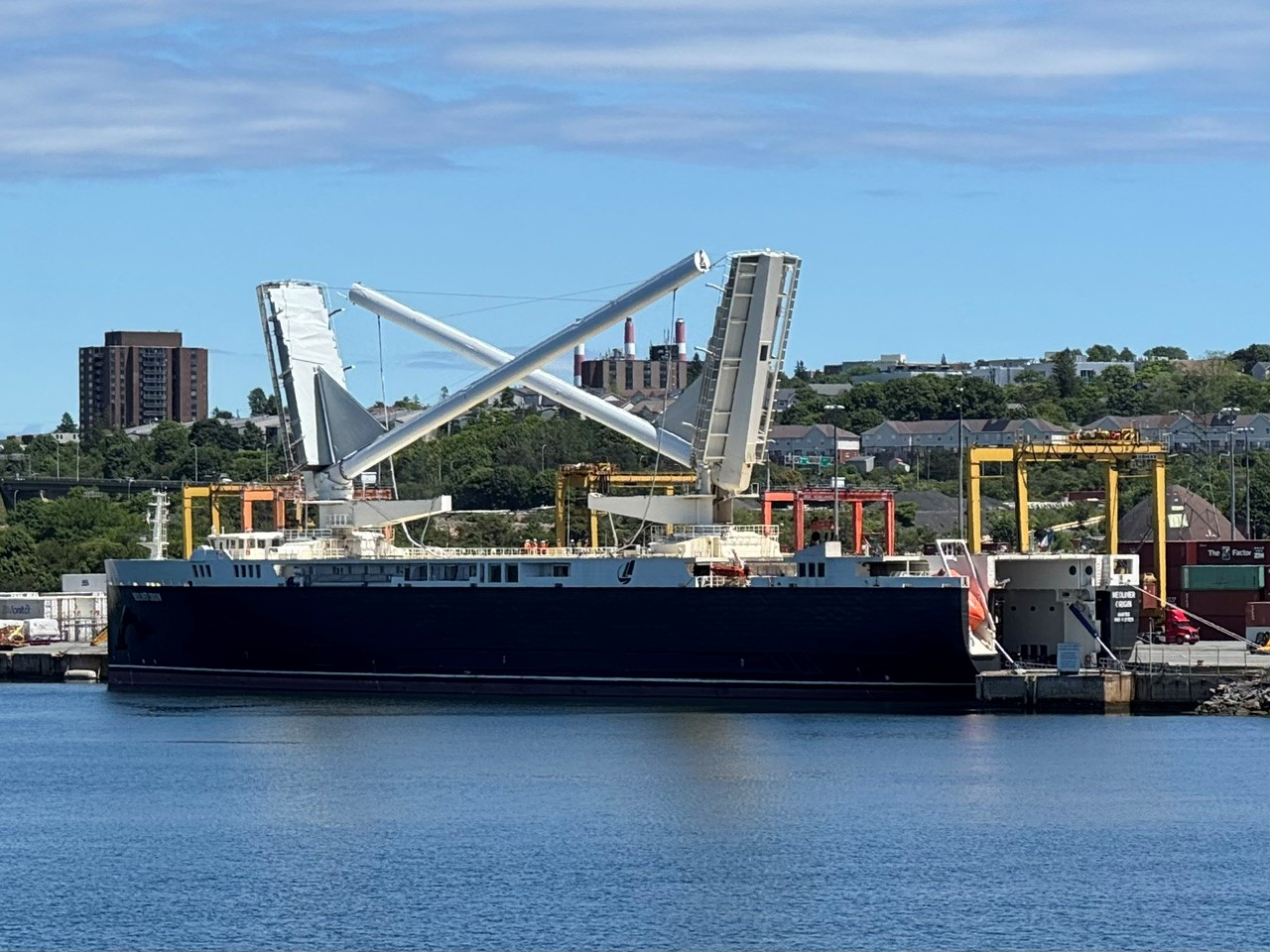
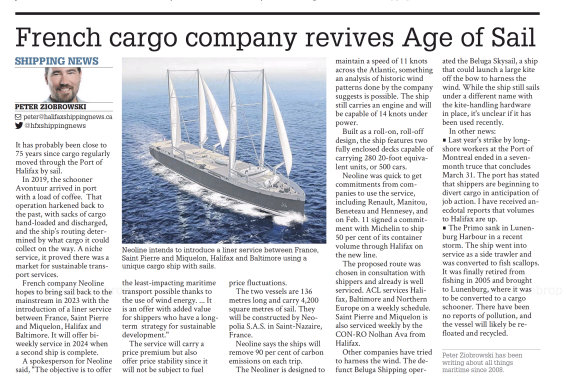
The Neoline Origin made her first call to Halifax. The French RO-RO Ship is powered by 2 large sails, and can cross the ocean while burning minimal fuel. The Ship began construction in 2021 this is its second voyage. the ships maiden crossing had stops in Saint Pierre and Miquelon, and Baltimore. Problems with the sail system sent the ship back to France.
A fully enclosed RO-RO vessel, the ship carries container internally, and has contracts with Michelin, so it should be a regular caller going forward.
With fuel cost rising, shippers are looking at other options. E-Ship One uses Fletner Rotors to supplement propulsion, and called at Pier 9 last year. Beluga Shipping also tried a skysail, basically a large Kite. I covered some of the advances in a return to sail video on Youtube.
I originally covered the Neoliner for the Herald in 2021.
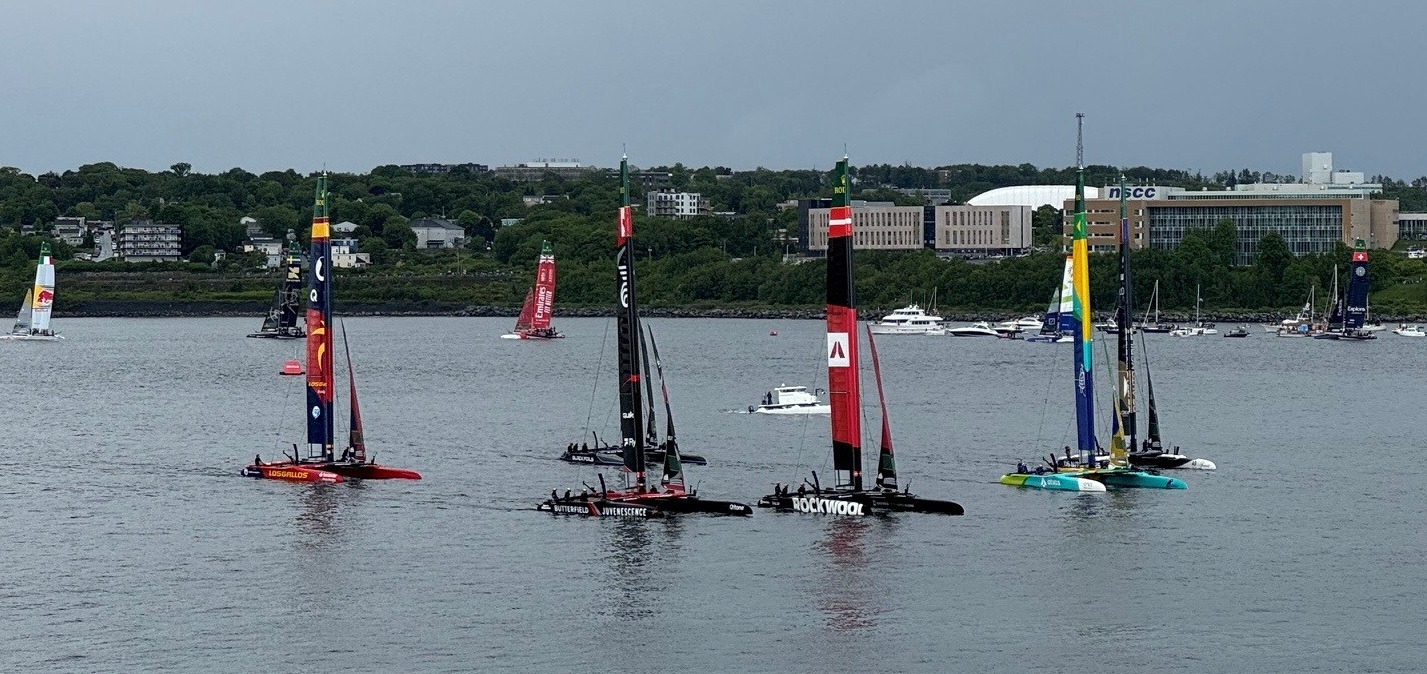
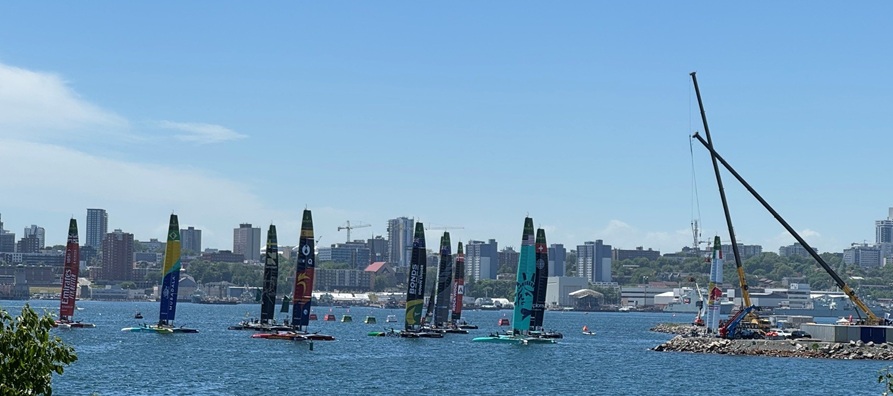
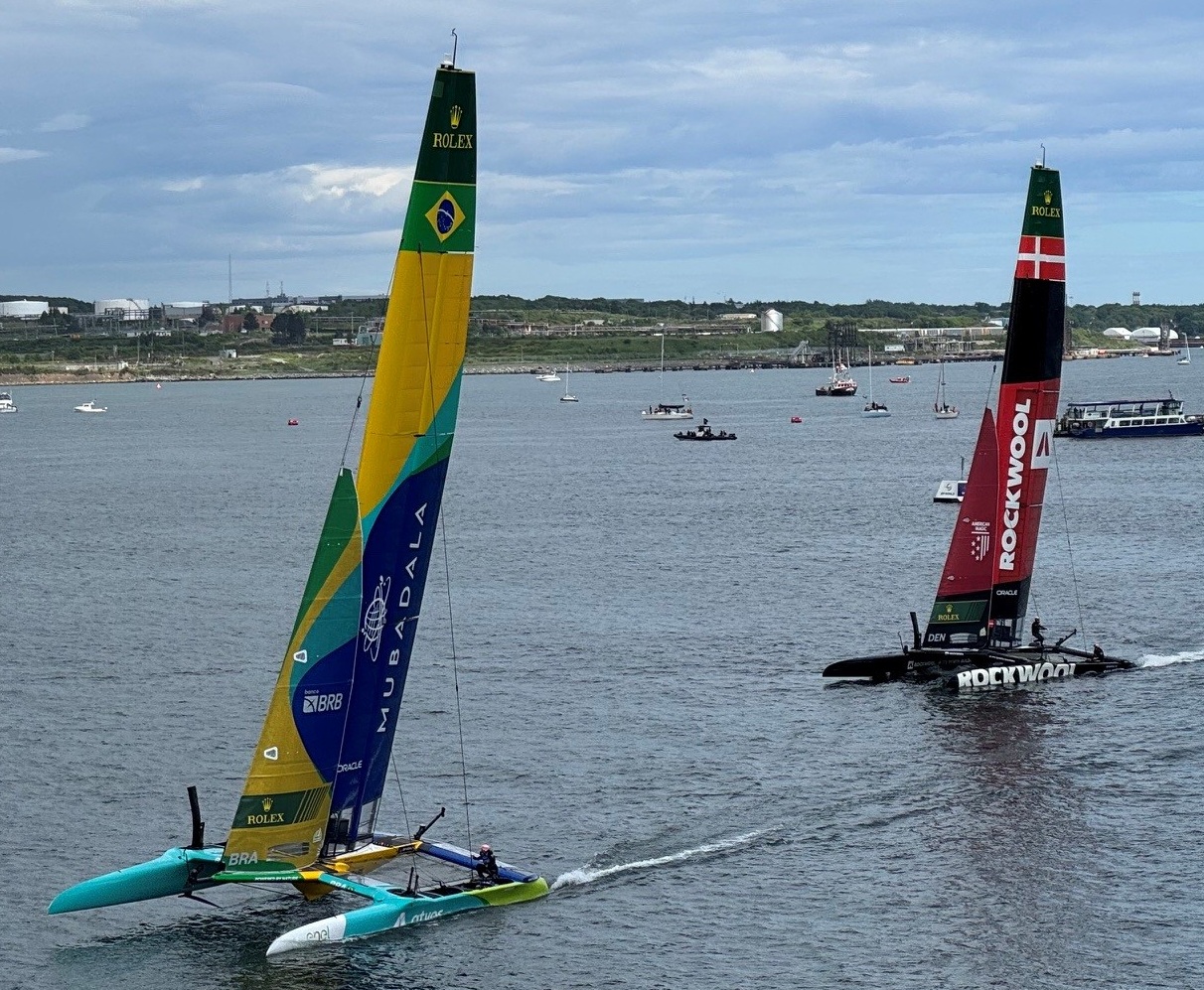
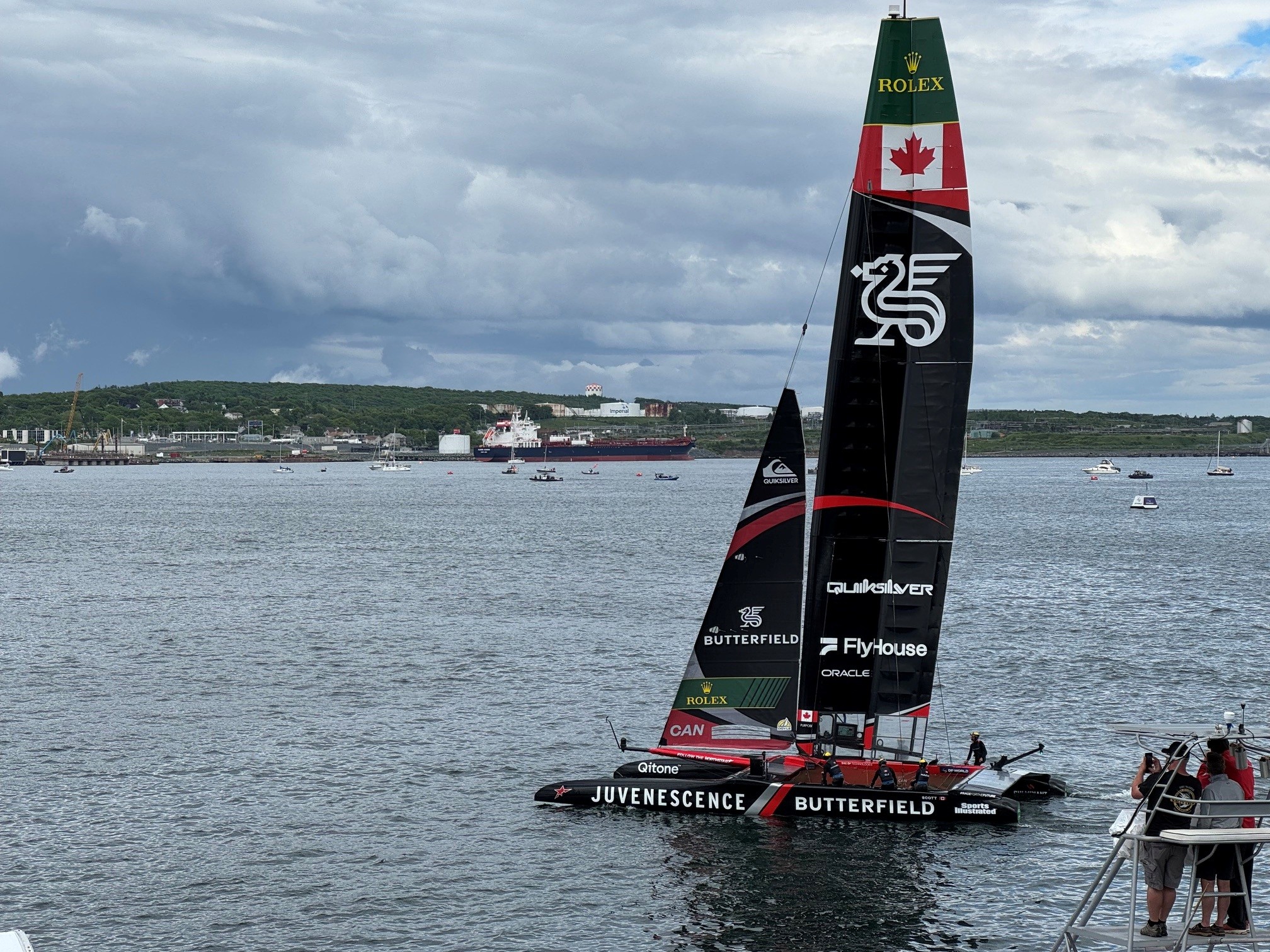
SailGP returned to Halifax, and once again the weather made things interesting. On Saturday, after strong gusts all day, by race time the wind died off. This led to a much shortened course, and for the first time a split fleet, where each race was run twice, with an A and B fleets. the Grand final featured 4 boats for the first time, the top two from the A and B fleets.
the A and B Fleets were arranged based on season point standings. Evidently this worked so well that sail GP Announced the rest of the season will be run this way.
the final Results were Spain with the Win, followed by Sweden and Switzerland. Perennial front runner Australia came in 4th. the Black Foils and GBR did not make the final, so the new format certainly mixes things up.
SailGP is back for 2027, this time May 15 and 16. This early event should also bring more questionable weather, and will take place a earlier then the inaugural 2024 event.
The NorthStar Canada boat spent much of the weekend tied up off Queens Marque.
Halifax does well hosting SailGP. it has one of the best venues, and runs with top international destinations. The City looks great, and if we are wanting to promote ourselves as a ocean technology hub, this is the exact sort of event we should be hosting. the Province would do well to put a sponsorship on the Canadian team.
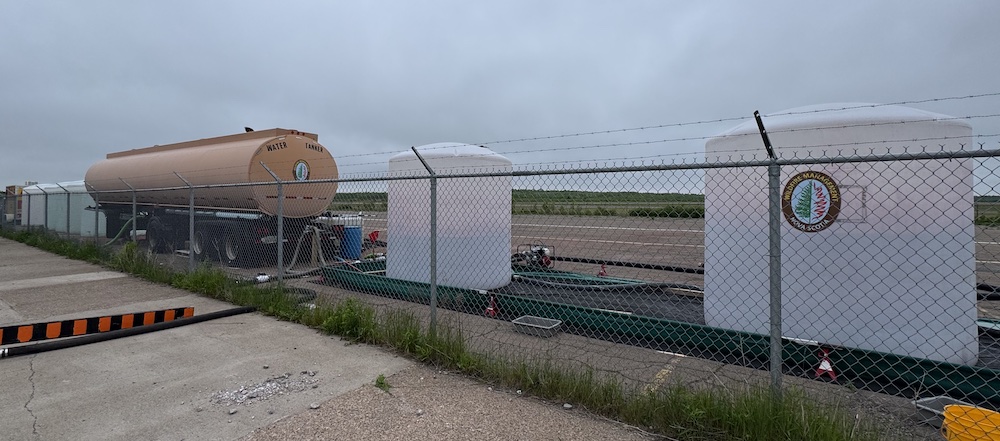
The Province of Nova Scotia contracted four Air Tractor AT-802 water bombers and one Cessna Caravan Bird Dog from Forest Protection Limited to supplement the provinces wildfire crews. Based in Debert, these aircraft can manage drops and place retardant to control the forward spread of flames. I found myself with an hour to kill in this area, so drive by to take a look.
The $6.5million contract for these planes was announced on May 13. It will run until September 30 but can be extended if needed.
the Air Tractors primarily drop retardant, and need to be reloaded on the ground with pumps. The Debert airport has a refilling setup established with a water supply and tanks for mixing retardant.
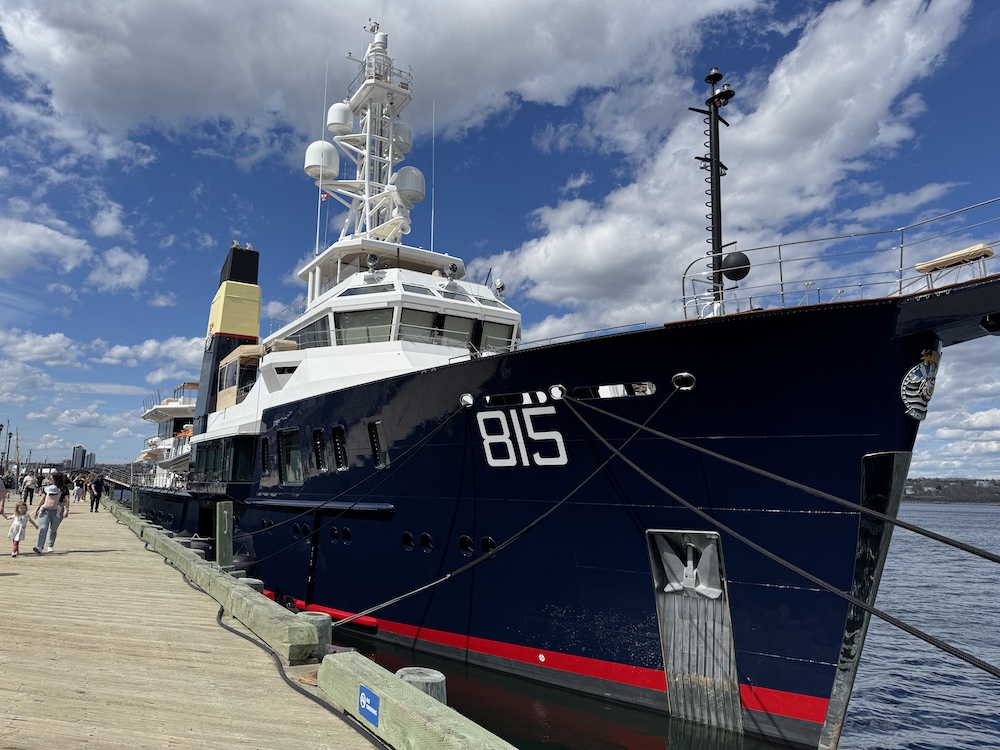
The Yacht Sherpa is owned by Sir James Arthur Ratcliffe is a British billionaire, chemical engineer, and businessman. Ratcliffe is the chairman and chief executive officer of the INEOS chemicals group, which he founded in 1998. In May 2018, Ratcliffe was the richest person in the UK, with a net worth of £21.05 billion. INEOS is a sponsor of the Americas Cup, and the yacht remained in town for Sail GP.
The 73.6m/241’6″ expedition yacht ‘Sherpa’ was built by Feadship in the Netherlands at their Kaag shipyard. Her interior is styled by British design house RWD and she was delivered to her owner in July 2018.
The Yacht Features 6 cabins for the owner and 12 guests. The yacht operates with a Crew of 22. Sherpa is built with a steel hull and aluminum superstructure, with teak decks. Powered by twin diesel 16-cylinder 2,038hp engines running at 1600rpm, she comfortably cruises at 13 knots, reaches a maximum speed of 15 knots with a range of up to 5,200 nautical miles at 13 knots.
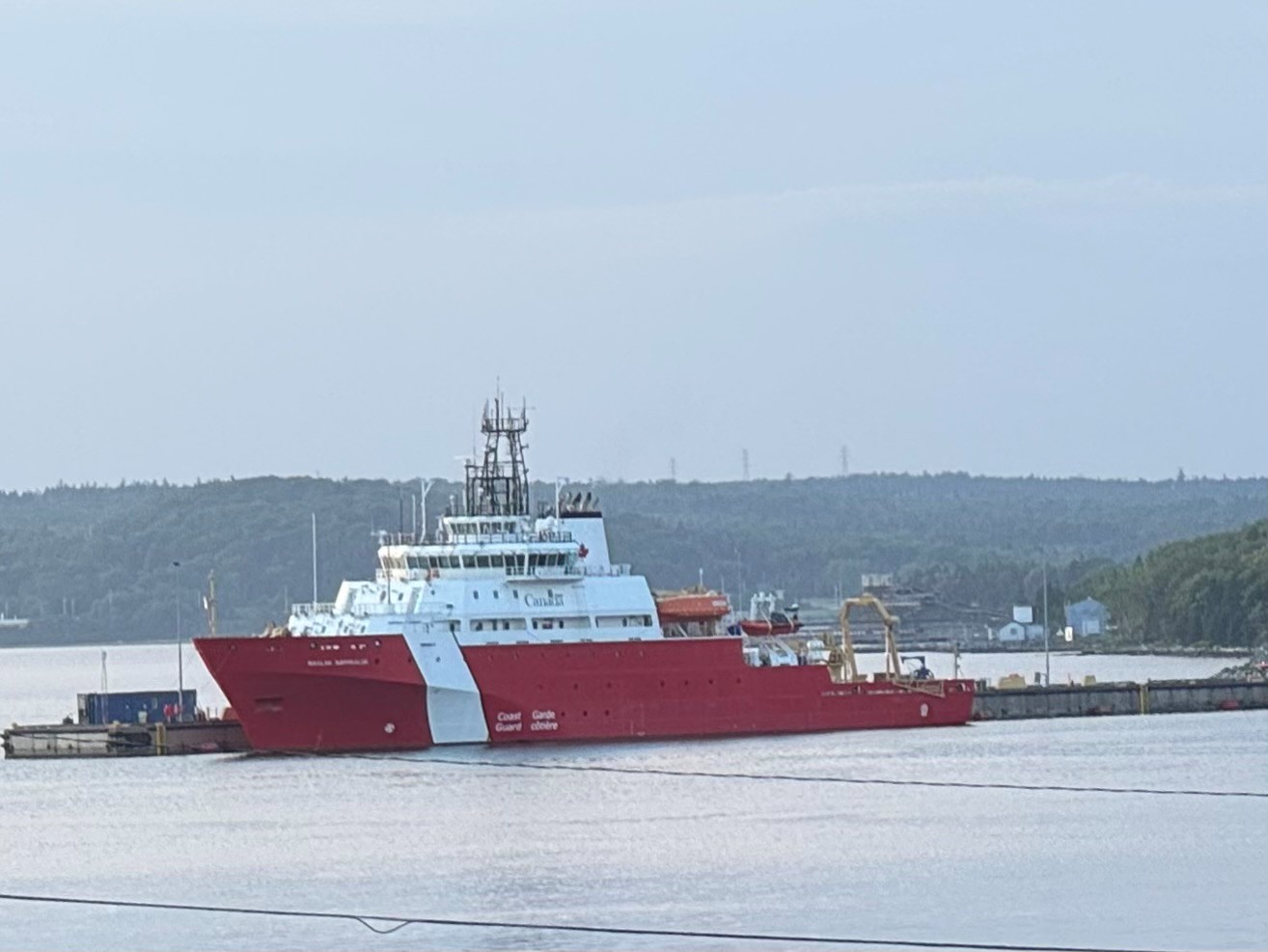
The CCGS Naalak Nappaaluk officially joined the Coast Guard fleet today. The Offshore Ocenagraphic Science vessel is the long awaited replacement for the CCGS Hudson, and was built by Seaspan in Vancouver. the ships keel laying cerimony took place in November 2022, and the completed ship was delivered to the Coast Guard in November 2025 and arrived in Halifax via the Panama Canal earlier in the year.
the ship can accommodate up to 34 crew and 26 scientists and will be stationed at the Bedford Institute of Oceanography.
The ship is is named after Nunavik elder Naalak Nappaaluk (1928-2010) who was known for his vast knowledge of animals, weather patterns, the sea and even the night sky. Nappaaluk was a skilled and respected community builder and harvester devoted to ensuring Inuit language, culture and knowledge of the natural world was preserved and passed on to future generations
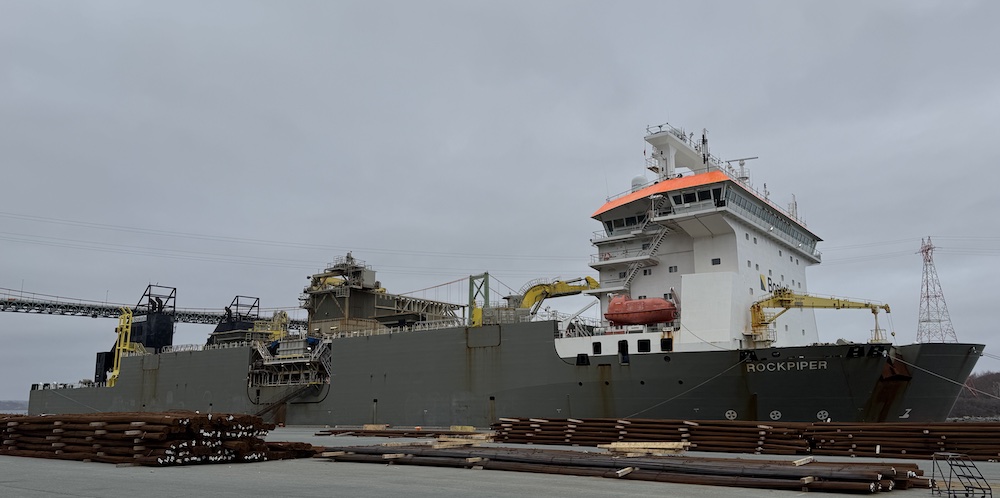
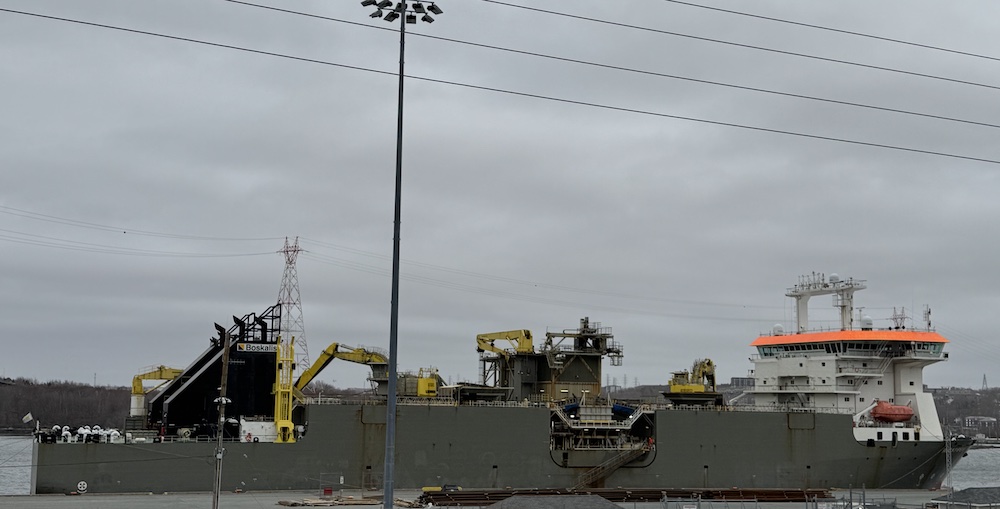
Rockpiper tied up at pier 9. the ship is a fall pipe vessel which is used to distribue gravel on the seabed by directing it through a fall pipe, allowing it to be placed with precision for offshore construction projects.
Owned by Dutch firm Boskalis, they have become experts in moving and installing offshore structures.
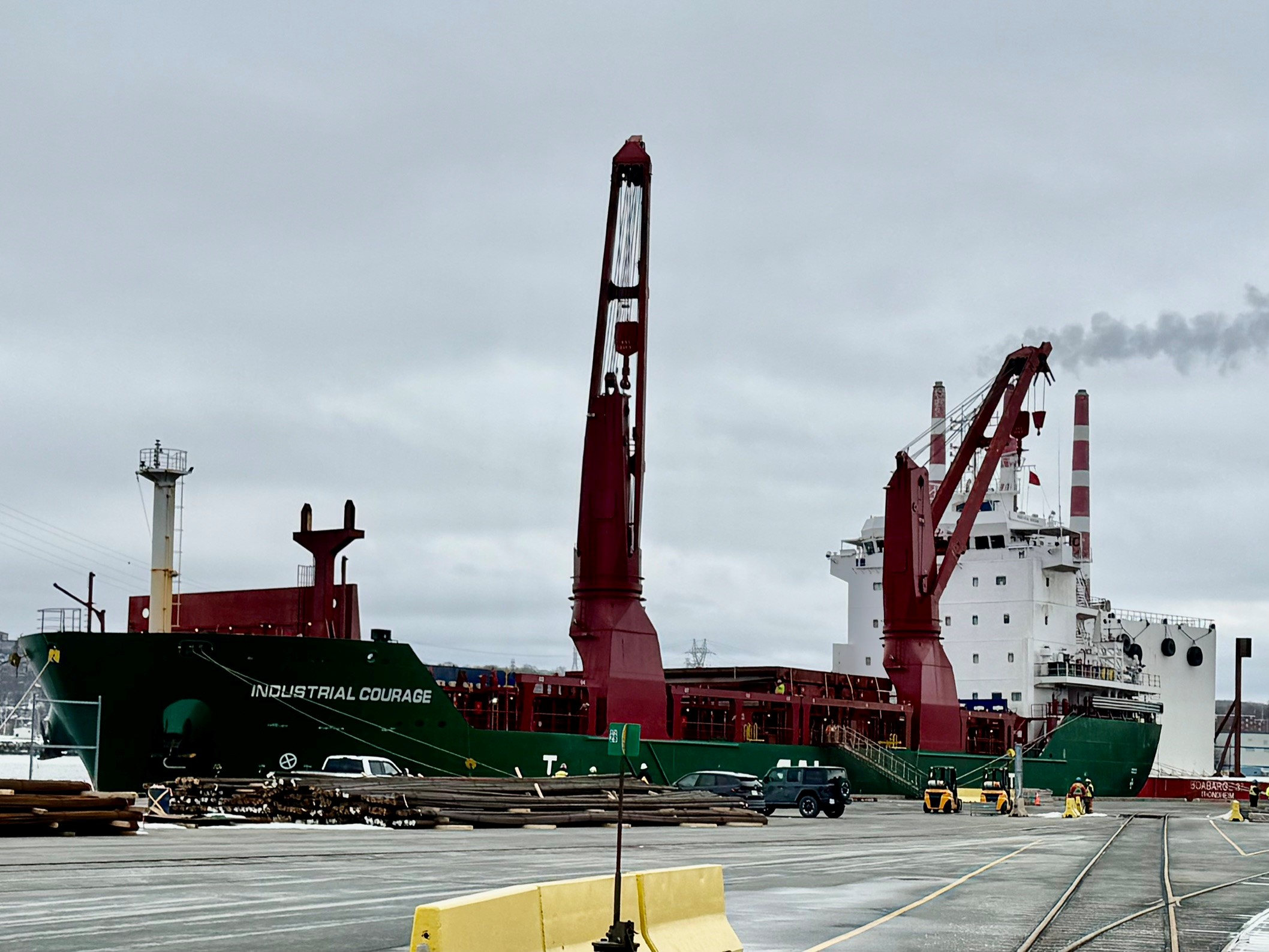
INDUSTRIAL COURAGE is a General cargo vessel built in 2018. Currently sailing under the flag of Portugal the ship features two 150ton cranes. When operating as a container ship, she has a 425 TEU Capacity.